FW
Invista launches Free F!t technology for denim and woven fabrics
Invista has launched a new Lycra Free F!t technology. The new material lends greater comfort to denim and woven fabrics while allowing apparel to maintain its shape without the potential loss of recovery more common in softer stretchy material. What makes this technology unique is that it combines two opposing concepts—soft stretch and excellent shape retention.
When creating Lycra Free F!t, Invista implemented its patented and patent-pending technologies in yarn, textile processing and fabric structure. Using Lycra Dual FX yarn, the fabrics are manufactured through Lycra Free F!t technology, which includes materials treated with Invista’s proprietary formula, and are woven according to the company’s specific processes.
Last year Invista conducted an extensive consumer research project across five countries and found the main issue with stretch jeans was how they lost their shape as people moved throughout their daily activities. Invista encourages consumers to look for styles with Lycra dual FX technology.
Invista’s Cool Max Natural Touch technology blends two types of Cool Max fiber with cotton and Lycra, which remains cool and yields a soft hand. With leading brands including Lycra, Coolmax and Cordura, Invista is one of the world’s largest integrated producers of chemical intermediates, polymers and fiber. The company’s technologies for nylon, spandex and polyester are used to produce clothing, carpet, air bags and other everyday products.
India’s apparel exports to Canada on the rise
India’s exports to Canada have increased at three per cent year on year. However, over the last five years India’s share in Canada’s textile and apparel imports has declined. Apparel has a 50 per cent share in India’s textile and apparel exports to Canada. This is followed by home textiles and fabrics having a share of 50 per cent and eight per cent respectively.
Apparel is the largest imported category by Canada, representing 66 per cent of total textile and apparel imports. This is followed by home textiles, fabrics and others with a share of 16 per cent, six per cent and five per cent respectively. China is the largest supplier to Canada, accounting for a 34 per cent share, followed by the US and Bangladesh with a share of 16 per cent and eight per cent respectively. The top 10 suppliers account for 85 per cent of textile and apparel imports by Canada.
Over the years, apparel production in Canada has fallen while imports continue to increase. So India has a huge scope for expansion of apparel exports to Canada. To cater to this demand, Indian apparel manufacturers need to undertake suitable investments on product innovation. Focus on technology enhancement and manufacturing excellence will act as a key mantra for raising the trade flow between the two countries.
Cone Denim uses Archroma tool One Way, pushes sustainability
Cone Denim has partnered Archroma for One Way. Cone Denim is a mill with expertise in denim production and indigo dyeing. The mill’s initiatives include: reductions in water consumption and new water treatment techniques, and the design of authentic denim using sustainable components such as natural indigo and different types of post-consumer recycled content.
One Way is a tool offered by color and specialty chemical company Archroma. Launched in 2012, it helps mills and brand owners evaluate and quantify the environmental impact of various manufacturing inputs including chemicals, processing techniques and raw materials. The goal of One Way is to quickly determine the overall sustainability of a product.
The partnership combines Cone’s expertise in denim production and indigo dyeing with Archroma’s broad knowledge of chemical technology and processing. All One Way dyes and chemicals are measured against more than 15 textile eco-standards, like Bluesign, Oeko Tex and GOTS, by Archroma product stewardship specialists who then score their toxicological and ecological profiles. Additionally, an Archroma software, called the One Way Calculator, enables mills to assess the cost, performance and environmental profile of products almost instantly.
With One Way, Archroma is striving to lead industry efforts in demonstrating that sustainability can be a key driver of innovation and performance for customers.
India: Texprocil urges government to disburse Rs 3,000 crore TUFS funds
The Cotton Textiles Export Promotion Council (Texprocil) has urged the government to disburse the committed support of about Rs. 3,000 crore under Textile Upgradation Fund Scheme to help the industry tide over tough times. The Council has asked the government to include cotton yarn under Merchandise Exports from India Scheme (MEIS) as it is the only product that has been deprived of export incentives despite lot of value-addition within the country, while there is a strong case to double MEIS on fabrics to four per cent.
It also urged for the inclusion of cotton yarn and fabrics under ROSL (Rebate of State Levies) scheme for it faces many state levies as in the case of made-ups and garments. The central levies should also be factored under the ROSL as these levies are not being considered in duty drawback. Interest subvention should also be extended to merchant exporters as they contribute substantially to exports.
Cambodian apparel exports up 16 per cent
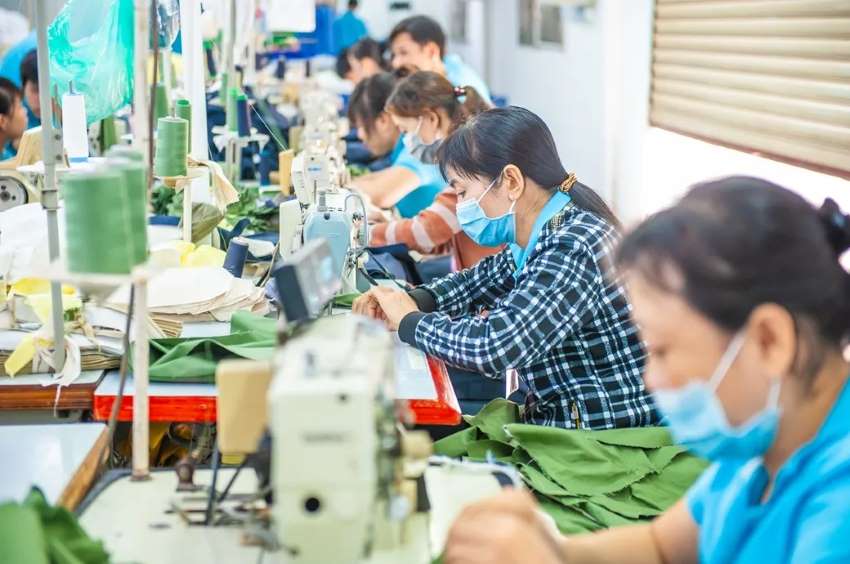
Cambodia’s exports of apparel and footwear products increased 16.1 per cent year over year during the first half of 2018. For the year through September, US imports of apparel and textiles from Cambodia rose 14.03 per cent over the same period the previous year. Exports surged in the second half of the year after a tepid first half, supported by strong demand in the US and the European Union.
The country’s economic growth rate is expected to be slightly higher than last year’s driven mainly by domestic consumption and a continued strong export market. However, risks in the financial sector persist, with particular exposure in the construction and real estate sectors. External risks include the potential withdrawal of the EU’s trade preferences for Cambodia. Losing these benefits, which provide Cambodia full duty-free and quota-free access to the EU for all its exports with the exception of arms and armaments, will likely slow Cambodia’s export growth, and negatively impact its labor market in the short term.
The EU which accounts for more than one-third of Cambodia’s apparel and footwear exports may suspend trade privileges over the country’s apparent disregard for human rights, attacks against critics and opposition parties.
Cambodia to drop pending charges against union leaders
To dispel pressure from the international community over human rights, Cambodia’s Ministry of Labor, has asked all union leaders and labor activists who have court cases pending against them to report to the ministry so it can work with justice officials to have the charges dropped. A statement issued by the labor ministry said those who have cases pending against them should submit relevant documents before Dec. 10.
The roughly 40 cases still outstanding against unionists and activists entail charges mainly related to organising and participating in labor demonstrations, including incitement, causing violence, destruction of property, and obstructing traffic. At least five prominent independent union leaders, have open cases on charges of crimes related to labor issues. Union member accused of crimes under the penal code, such as incitement, are forbidden to engage in activities with workers or access factory premises.
With China under pressure, Bangladesh looks to seize the opportunity
Bangladesh can gain from the ongoing trade war between the US and China. The US-China trade war has come as a boon to Bangladesh’s textiles and apparels. However, Bangladesh faces capacity constraints ranging from poor infrastructure to red-tape to skilled labor, which are barriers to reaping benefits arising from the trade war.
Western retailers and brands want a smooth supply chain in apparel business but the trade war has disrupted business in China. As China has been losing its apparel business due to new tariffs, many western retailers and brands are shifting their work orders to other countries like Bangladesh. China had already become expensive for US-based clothing retailers. The trade war is further pushing them in the direction of Bangladesh.
But it all depends on how the country utilises it. Garment exporters in Bangladesh will get cheaper raw materials as a result of cheaper cotton prices in the international market. Bangladesh has also benefited from lower cotton prices. These decreased ten per cent after China imposed a high duty on the import of the natural fiber from the US. Garment exporters hope to get more orders in coming days.
Bangladesh registers highest import growth for September 2018
As per latest figures by the Department of Commerce's Office of Textiles and Apparel (OTEXA), Bangladesh registered the highest growth amidst 10 countries in the US apparel imports for September, 2018. The country’s exports surged to 11.8 per cent with 171m Square Meter Equivalent (SME), surpassing Honduras (90m SME), India (81m SME), and El Salvador (65m SME).
Globally, Bangladesh is the second-largest ready-made garment (RMG) exporter, with net annual worth around $28 billion. The RMG Sector houses 41 per cent factories with moderate technologies and 20 per cent using advanced machinery.
Touted as a women-driven sector, male to female worker ratio stands at 39.2:60.8, with total employment of approximately 3.5 million people. While the textile sector is responsible for 83.5 per cent of the country’s exports, it plays a crucial role in the Gross Domestic Product (GDP) figures with 6 per cent contribution. This comes as the country has utilised the impetus received from the government as well as private companies like Beximco Textiles.
The government of Bangladesh has been instrumental in laying a strong foundation for the industry. They collaborated with the International Labor Organization (ILO) for enhanced protection of factory working environment and inspections were carried out across 3,780 factories under the same. In order to ensure this as a long-term measure, the Department of Inspections of Factories and Establishments (DIFE) was re-structured with a personnel and budget boost.
Fashion retailers adopting unique initiatives to reduce eco-impact
"Although the fashion industry has kept pace with changing consumer demands, it fails to cater to their most important need that of altering consumption patterns to ensure the survival of the planet. The industry produces 20 per cent of global wastewater and 10 per cent of global carbon emissions with textile dyeing being the second largest polluter of water globally. If this situation persists, by 2050 the fashion industry will have consumed almost a quarter of the world’s carbon budget."
 Although the fashion industry has kept pace with changing consumer demands, it fails to cater to their most important need that of altering consumption patterns to ensure the survival of the planet. The industry produces 20 per cent of global wastewater and 10 per cent of global carbon emissions with textile dyeing being the second largest polluter of water globally. If this situation persists, by 2050 the fashion industry will have consumed almost a quarter of the world’s carbon budget.
However, consumers are demanding change and the fashion world is responding. A-listers, like Duchess Meghan Markle are discarding traditional choices of clothing and designers and dumping the take-make-waste model. Fashion retailers are adopting initiatives to reduce fashion’s negative impact on the environment. For example, last year, Britain’s Stella McCartney teamed up with the Ellen MacArthur Foundation to launch a report on redesigning fashion’s future.
Across the United Nations, agencies are working to make fashion more sustainable, from the Food and Agricultural Organization protecting arable land, to the Ethical Fashion Initiative set up by the International Trade Centre to the work of UN Environment in fostering sustainable manufacturing practices.
Shoes from algae, recycled plastic and gum
Entrepreneurs are designing the fashion of the future. For instance Spanish footwear company Ecoalf is making shoes from algae and recycled plastic as a part of its Upcycling the Oceans collection. The company collects ocean plastics from 33 ports and turns the trash into shoes, clothing and bags.
Similarly, Amsterdam-based GumDrop turns gum into a new kind of rubber, Gum-tec, which is then used to make shoes in collaboration with marketing group I Amsterdam and fashion company Explicit.
Fashion from waste materials
Outdoor gear retailer Patagonia alongwith Polartec, a Massachusetts-based textile designer produces fleece jackets using polyester from recycled bottles while Gothenburg-based Nudie Jeans makes jeans from organic cotton. Cambodia-based Tonlé uses surplus fabric from mass clothing manufacturers to create zero-waste fashion collections.
In the Netherlands, Wintervacht turns blankets and curtains into coats and jackets. While San Francisco- and Bali-based Indosole turns discarded tyres in Indonesia into shoes, sandals and flip-flops, while Swiss firm Freitag upcycles tarpaulins, seat belts and bicycle inner tubes to make their bags and backpacks.
A zero-waste fashion model
Creating a zero-waste fashion model is the order of the day for many etailers. Canada-based Novel Supply is developing a take-back programme to find alternative ways to use garments at the end of their life. Lifestyle brand and jeans manufacturer Guess is teaming up with i:Collect, which collects, sorts and recycles clothes and footwear worldwide, to launch a wardrobe recycling programme in the US. Under this programme, wearable items will be recycled as secondhand goods, while unwearable items will be turned into new products like cleaning cloths or made into fibres for products like insulation.
Focusing on rental market
As recycling is an energy intensive process and does not address our throwaway culture, the rental market offers a viable alternative. However, for the rental model to be successful, companies need to offer sufficient choice of brands and styles that would engage consumers and tempt them away from outright purchase. Also, the rental service needs to be smooth and faultless.
Some pioneers of the rental market include: Dutch firm Mud Jeans, which leases organic jeans that can be kept, swapped or returned, Rent the Runway, Girl Meets Dress and YCloset in China.
Sourcing shifts from China to neighbouring countries
There has been a big shift in cross-border supply chains. The shift is creating stiff competition to secure new facilities in neighboring countries and rebuild supply chains outside China, home to a fifth of global manufacturing.
The scramble is driven by the risk of more, and higher, US tariffs on China, and fears that nearby emerging economies can only accommodate new businesses on a first come, first served basis. There is no choice but to as rapidly as possible look to move production away from China.
Re-sourcing and relocation efforts mark an acceleration of an already established trend as China’s economy shifts towards services, consumption and high-tech production. This is one of the biggest sourcing disruptions seen in a generation.
However, any relocation away from China is going to be very slow and uncertain. Shifting production can take years to complete: firms need to secure funding, find the right suppliers, sort out new logistics - all while dealing with new legal and accounting issues in a country they may not know well.
Low tech goods and low value manufacturing would be the quickest to migrate while higher value-added exports in the machinery, transport and IT category would likely take decades to relocate due to high R&D costs and competitive Chinese labor costs.