FW
Levi’s to open new stores in Bangladesh
Denim lifestyle brand Levi's plans to expand its international presence by opening new stores in key locations in Bangladesh including Chittagong in the coming months.
The brand recently forayed into the Bangladesh market in partnership with DBL Group. It opened its first store across 2.270 sq ft in Dhaka to offer a wide range of products including denims, non-denims, and tops for both men and women tailored to regional preferences.
Amisha Jain, Managing Director, South Asia-Middle East and Africa (SAMEA),Levi Strauss, says, the brand’s first store in Dhaka supports its focus on the direct-to-consumer retail and aligns it with a dynamic market propelled by the consumer base and swift urbanisation in cities such as Dhaka and Chittagong.
Levi’s strategic entry into the Bangladesh market and distinctive strategies position it to forge a robust presence and foster sustainable growth, adds Jain.
Levi Strauss & Co’s products are sold in more than 110 countries worldwide through a combination of chain retailers, department stores, online sites with a global footprint of around 3,200 brand-dedicated stores and shop-in-shops.
Brunello Cucinelli projects 10% rise in revenues during FY’24
Known for its cashmere products, high-end Italian clothing brand, Brunello Cucinelli has projected a 10 per cent rise in revenues in FY’24.
The brand’s revenues in Q1FY’24 ended Mar ’24 rose by 16.5 per cent to €309 million, driven by growth in all regions, including Asia. The highest rise in revenues of 19.5 per cent was recorded in Americas while revenues in Europe increased by 13.9 per cent. The brand also reported a 16 per cent growth in its sales in Asia.
The brand has received abundant orders for the autumn-winter 2024 collections, reiterating its expectations for 2024 full year with renewed convictions, says Brunello Cucinelli, Executive Chairman.
With the demand for luxury goods slackening, the gap between the performances of different groups is widening, with those focusing on the higher-end consumers tending to perform better.
A profit warning issued by Kering last month shows, a slump in Asia sales of its star label Gucci cast a cloud over its reporting season while quarterly sales at LVMH rose by only 3 per cent.
NCTO responds to House Ways and Means De Minimis reform
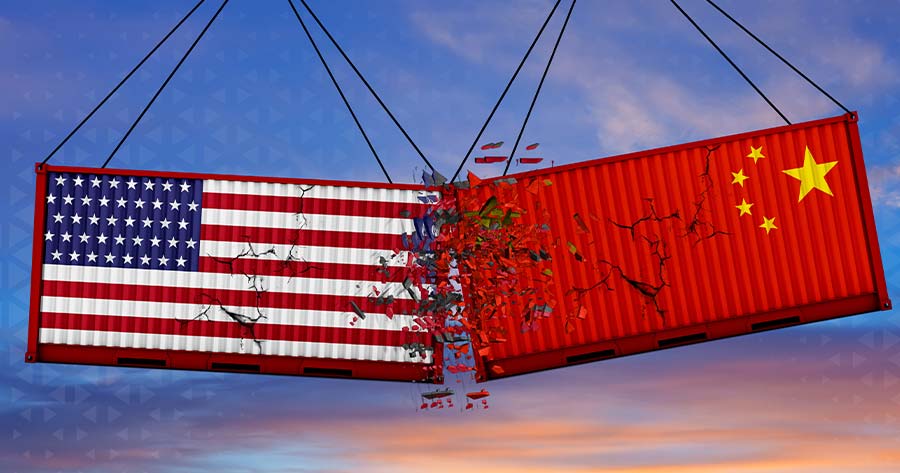
The National Council of Textile Organizations (NCTO) has emphasized the need for urgent and comprehensive reform to US de minimis trade laws to combat China's abuse of the current system, which adversely impacts American manufacturers and supports forced labor in China's Xinjiang region.
The statement was made by NCTO President and CEO Kim Glas following the House Ways and Means Committee's markup of HR 7979, legislation related to de minimis trade.
Glas acknowledged the efforts of Chairman Jason Smith (R-MO) and Rep. Greg Murphy (R-NC) for addressing China's exploitation of US trade laws, but insisted on stronger measures to prevent China from taking advantage of loopholes. Glas expressed concern that half-measures could allow China to continue harming American industries and workers.
The textile industry has suffered significantly from duty-free imports from Chinese e-commerce retailers like Shein and Temu, leading to the closure of 14 manufacturing plants in recent months. Glas called the situation a "five-alarm fire" and reiterated the urgent need for a robust, enforceable solution.
NCTO urges Congress to fully address the abuse of the de minimis loophole, highlighting the importance of excluding trade-sensitive sectors such as textiles and apparel from de minimis benefits. Glas praised the work of Ways and Means Trade Subcommittee Ranking Member Earl Blumenauer (D-OR) for proposing the Import Security and Fairness Act, which would block all Chinese products from qualifying for de minimis benefits.
In summary, NCTO seeks stronger reforms to end China's exploitation of de minimis trade laws and protect American industries from unfair competition and forced labor practices.
Upcoming edition of Denim PV to host new talk show on the industry
A talk show titled ‘Denim Titans: audacity, madness and revolution!’ will be organised within the upcoming edition of Denim PV. The talk show will host three denim veterans and longtime industry innovators including Francois Girbaud, Adriano Goldschmeid and Jimmy Tavaerniti.
The panel will take place in Milan’s Superstudiopiù and will reveal the audacious, the mad, and the revolutionary side of denim culture.
Chairing the panel will be Marco Lucietti, Director - Strategic Projects, Sanko Holding Isko Division.
Aimed at the insiders of the jeanswear industry, the trade show Denim PV is scheduled to be held in Milan from June 05-06, 2024.
LVMH starts 2024 with 3% revenue growth in Q1
Luxury giant LVMH reported a solid start to 2024 with overall revenue growth of 3 per cent. While the economic and geopolitical climate remains shaky, LVMH benefited from strong performances in key areas.
Fashion and leather goods, the company's largest division, saw a 2 per cent increase. Louis Vuitton, buoyed by creativity and new collections, led the way. Dior continued its impressive momentum with record-breaking viewership for its fashion show. Celine and Loewe also saw positive results.
The perfumes and cosmetics division grew 7 per cent, driven by innovation and selective distribution. Christian Dior's fragrances and makeup lines thrived, while Guerlain saw success with its new products.
Watches and jewelry dipped slightly (-2 per cent), but Tiffany & Co. continued its global expansion with a successful new store concept and communication campaign. Bulgari showcased its iconic collections and launched a foundation dedicated to cultural preservation.
Sephora, in the selective retailing sector, achieved impressive 11 per cent growth, particularly strong in North America and Europe. DFS, however, remained below pre-pandemic levels due to limited travel recovery.
Looking ahead, LVMH acknowledges the uncertain environment but remains confident. The company will focus on brand development, innovation, product quality, and controlled distribution. With its talented workforce, diverse businesses, and global presence, LVMH aims to solidify its leadership position in the luxury goods market throughout 2024.
Superdry proposes rescue package to avoid bankruptcy
Led by Julian Dunkerton, CEO, Superdry, a prominent British fashion chain, has proposed a comprehensive rescue package to avoid potential administration. The plan includes a fundraising initiative, delisting from the London Stock Exchange, and a strategic restructuring.
Under this rescue plan, Superdry aims to secure substantial cash savings by renegotiating rents for 39 of its 94 stores in the UK. Additionally, the company plans to extend the maturity of loans provided under its debt facility agreements, as it grapples with both weakened consumer demand and a pressing cash shortage.
Dunkerton emphasises, the proposed plan represents the most suitable course of action for all stakeholders. To facilitate the equity raise, Dunkerton aims to underwrite the entire process. Investors can participate in either an open offer, to raise the sterling-equivalent of €8 million, or in a placing intended to generate gross proceeds of £10 million.
Dunkerton clarifies, Superdry has no immediate plans to return to public listing as it aims to shift away from the scrutiny of public markets for the foreseeable future.
Renowned for its distinctive jackets and apparel blending American vintage styles with Japanese graphics, Superdry acknowledges the persistently challenging trading conditions. Despite heightened marketing efforts, the brand has experienced a decline in popularity, particularly among younger demographics.
Analysts Danni Hewson from AJ Bell, hopes, Superdry is able to rejuvenate its brand away from the public spotlight.
AAFA supports renewal of GSP Reform Act
The American Apparel and Footwear Association (AAFA) has declared its support to the renewal of the Generalised System of Preferences (GSP) Reform Act. The association opines, the renewal will enhance the competitiveness of US firms while aiding global economic development.
Steve Lamar, CEO, AAFA, thanked Representative Adrian Smith for introducing the bill and urged Congress to swiftly pass it. According to him, the bill’s retroactive renewal would enhance the competitiveness of trusted partners than relying on tariffs during a period of ongoing disruptions in supply chains.
Describing the GSP Reform Act as the oldest and largest US trade preference program, the AAFA says, it would foster economic development in selected developing countries by eliminating tariff barriers on qualifying products.
Beth Hughes, Vice President - Trade and Customs Policy, AAFA also welcomed the proposed reforms, including updates to the competitive need limitation mechanism and a process to consider currently ineligible products. She stressed the necessity of such reforms for GSP to effectively assist companies in diversifying their supply chains away from China.
Furthermore, AAFA also supported the new legislation aimed at investigating price discrepancies between everyday products for women and men.
In December 2023, the Federation of the European Sporting Goods Industry expressed satisfaction with the signing of legislation extending the current rules of the GSP amidst concerns over stalled negotiations.
Adidas surprises with strong Q1, raises full-year outlook
Adidas defied expectations with a robust first quarter in 2024, boasting an 8 per cent increase in currency-neutral revenue compared to the same period last year. This translates to a euro figure of €5.458 billion, a 4 per cent year-over-year rise. The company's financial performance wasn't just driven by sales; gross margin also saw a significant improvement, jumping 6.4 percentage points to a healthy 51.2 per cent.
This positive momentum extends to profitability. Operating profit for Q1 reached €336 million, a substantial increase from the €60 million reported in the first quarter of 2023. This impressive performance has prompted adidas to revise its full-year guidance upwards.
The company now anticipates currency-neutral revenue growth to land in the mid-to-high single-digit range for 2024, exceeding their previous mid-single-digit forecast. Additionally, operating profit is now expected to reach around €700 million, significantly higher than the previously projected €500 million.
The Yeezy brand continued to be a bright spot for Adidas. The latest Yeezy drop generated a significant €150 million in revenue and a cool €50 million in operating profit during Q1. However, future Yeezy sales are expected to play a more neutral role. Adidas anticipates selling the remaining Yeezy inventory throughout the year at cost price, resulting in an additional €200 million in sales but no further profit contribution.
Looking ahead, a potential headwind exists in the form of currency fluctuations. Adidas acknowledges that unfavorable currency effects are likely to continue impacting profitability throughout 2024. These effects are projected to negatively affect both reported revenue and gross margin.
Despite this challenge, Adidas' strong Q1 performance and revised guidance paint a picture of a company exceeding expectations and navigating the year with cautious optimism.
US apparel imports increase 12.9 % in Feb’24: WTO
US apparel imports increased by 12.9 per cent increase in quantity and a 2.9 per cent increase in value in Feb 2024 compared to the same month previous year.
Seasonally adjusted US apparel imports also increased by 10 per cent in February 2024 compared January 2024, according to a report by the World Trade Organisation.
The import surge was particularly surprising given that the value of US clothing sales in February 2024 was only 1.3 per cent higher than a year ago and even 0.5 per cent lower than in January 2024.
The correlation between US apparel retail sales (NAICS code 4481) and apparel imports remains strong, with over 98 per cent of clothing sold in the US being imported. In 2023, the US clothing sales to clothing import ratio increased to 4.0-4.5, possibly with the rise of e-commerce sales, accounting for about 40 per cent of the US apparel retail sales in 2023.
The increase in imports in February 2024, bringing the sales to import ratio back to 3.8, may indicate a shift in import procedures, with more imports likely entering through standard channels rather than de minimis, due to US customs tightening controls.
Some suggest that the lower US apparel import volume in 2023 was due to retailers managing inventory levels. While there was a slight decrease in the stock-to-sales ratio compared to pre-pandemic levels, it wasn't significant enough to dampen import demand, especially considering apparel's seasonal nature and the importance of stocking new items during critical selling seasons like the fourth quarter.
Denim brands explore performance fabrics for new menswear collections
To cater to the everyday needs of modern-day wearers seeking comfort and versatility, denim brands are delving into the realm of performance fabrics.
Prominent Los Angeles-based denim brand AG recently unveiled its activewear capsule collection for men. Incorporating premium stay-dry performance jersey and lightweight polyester fabrics, the collection ensures wearers stay cool and comfortable while on the move.
AG's focus on a commuter fit underscores the collection's versatility, seamlessly transitioning from work to weekend wear. The bottoms in this collection, including the Mckenzie Active Performance Short, the Spring Active Performance Jogger, and the Tellis Active Performance pant, are designed with an elastic interior waistband and crafted from quick-drying, water-resistant bi-stretch ‘lightweight endurance woven fabric,; effectively combating wrinkling.
The collection also features a sage green swim trunk and a black bomber jacket, both constructed from the same performance fabric. In terms of tops, AG offers the Ace Active Performance Polo and the Marathon Active Performance Crew, utilising a cotton-blend fabric with moisture-transport construction for enhanced comfort and dryness. Notably, AG ensures that the moisture-wicking properties remain effective throughout the lifespan of the crew T-shirt.
Meanwhile, Levi's, a prominent denim giant, has launched its own performance product, the 511 Slim Tech men's pant, as part of its newly established Levi's Tech program. This pant, based on one of Levi's popular denim fits, boasts tech stretch warp knit fabric crafted from recycled polyester, offering a four-way stretch, moisture-wicking capabilities, and UPF 50+ sun protection. Additionally, it features a secure zip back pocket for convenient storage of essentials.
Levi's sister brand, Dockers is also joining the tech pant trend with its Dockers Go Collection that focuses on providing flexible, moisture-wicking features for high-movement days. Utilising Coolmax Ecomade technology, made from recycled materials, Dockers Go products ensure wearers stay cool and dry throughout their daily activities.