FW
Research shows new methods of graphene use in wearable textiles
The University of Manchester has developed a simple and cost-effective method to manufacture graphene-based wearable electronic textiles on an industrial scale. This could easily be scaled for many real-life applications, such as sportswear, military gear, and medical clothing.
Graphene is predicted to be one of the most prominent materials in wearable e-textiles. The new technique could allow graphene e-textiles to be manufactured at commercial production rates of 150 meters per minute. In the new method, the researchers have reversed the previous process of coating textiles with graphene-based materials. Conventionally, the textiles are first treated with graphene oxide, and then the graphene oxide is reduced to its functional form of reduced graphene oxide. Instead, the researchers first reduced the graphene oxide in solution and then coated the textiles with the reduced form.
By making coating the ultimate step, it becomes possible to use a coating technique termed padding, which is currently the most commonly used method of applying functional finishes to textiles in the textile industry. For instance, water-repellent and wrinkle-free clothing are often made by padding.
E-textiles made by a laboratory-scale pad-dry unit, exhibit excellent electrical and mechanical characteristics. The reduced graphene oxide forms a uniform coating around the individual cotton fibers, which results in good electric conductivity, tensile strength, breathability, flexibility, and overall comfort of the fabric.
The CanopyStyle initiatives adds new members
The CanopyStyle initiative has reached 170 brand partners with the addition of companies Abercrombie & Fitch Co., Allbirds, ELK, Reformation and Selfridges. Now eight new companies will work with Canopy to bring their innovative technologies to market at scale, with next generation enterprises Nanollose and Tyton Biosciences joining the CanopyStyle initiative.
All these partner brands will eliminate their use of Ancient and Endangered Forests, as well as advancing conservation solutions in landscapes of hope such as Sumatra’s Leuser Ecosystem, Vancouver Island’s rainforests and the Broadback Forest in the Canadian Boreal.
Over the last year, Canopy and its brand, retail and design partners have catalysed significant transformation of the viscose supply chain. Through work with producers and other industry stakeholders, companies representing 52 per cent of global viscose supply have completed the CanopyStyle Audit process, which assesses supply chain risk, recommends measures to reduce impact on forests and tracks corporate progress on innovative fibers.
The Big Plastics Debate to discuss future of plastics
To be hosted on the dedicated Ecopack stage, The Big Plastics Debate will welcome industry experts to discuss the future of plastics and reflect on the pledges made by brands over the last 12 months. Experts from some of the world’s biggest brands, including Marks & Spencer, Pepsi Lipton, together with British Plastics Federation, A Plastic Planet and WRAP, will come together at Packaging Innovations 2019 to discuss plastics in packaging.
The highly anticipated debate will be held from February 27-28, 2019 in Birminham. Day one of the debate will kick off with the Ecopack Challenge, welcoming six companies, who will present their innovative sustainable packaging solutions for the chance to work with Marks & Spencer, and the crown of Ecopack Challenge Winner for 2019. This will be followed by The Big Debate, where two teams will go head to head to debate whether plastic packaging will always play a fundamental part in our everyday lives.
Day two will see expert panels tackle two key areas of the circular economy, ‘Designing Packaging for a Circular Economy’ and the ‘Recruiting Consumers for a Circular Economy’.
Now Farfetch goes fur-free
Farfetch, an online fashion retailer based in the UK, has stopped the sale of fur. Farfetch has traditionally been a fur-heavy retailer. Other retailers who have banned fur are Net-a-Porter, Gucci, Michael Kors, Versace, Burberry, DKNY, Coach, Chanel, Jean Paul Gautier and Jimmy Choo.
Each new fur-free announcement continues the domino effect of designers and retailers seeing the importance of distancing their brands from the fur industry’s cruelty. However fashion houses like Fendi and Dolce and Gabbana are still selling fur.
The UK currently allows the import and sale of furs from a variety of species, including foxes, rabbits, minks, coyotes, raccoon dogs and chinchillas. Under existing EU regulations, import and sale of fur from dogs, cats and commercial seal hunts are banned, and campaigners want those bans extended to protect all species.
Brands like Calvin Klein, H&M, Marks & Spencer, Tommy Hilfiger, and Topshop have dropped angora wool from their clothing lines. Angora rabbit fur is being used for sweaters, hats, gloves, and more. Angora rabbits have long, soft fur. Most angora comes from rabbits on Chinese factory farms. The rabbits writhe in agony as workers tie them down and rip out their fur. So far more than 300 major retailers have banned angora.
Chennai hosts Leather Fashion Show
Leather Fashion Show was held in Chennai on January 31, 2019. A showcase of what’s trending in the world of leather, it had vegan leather, leatherite along with trendy biker jackets, handbraided bags, rivets and rhinestones.
From casual wear to boho chic, stylish models sashayed down the ramp in some interesting styles--hot pants, skirts, biker jackets, athleisure and even chic formals. But the real stars were the handcrafted bags, footwear and accessories, from home-grown industries and a few international players.
The Indian leather industry accounts for 12.9 per cent of the world’s production of hide, with a massive three billion sq ft of leather produced annually. The leather fashion industry, though, is still taking baby steps. Big players are slowly moving from the export space into the domestic retail market.
The leather garment industry is still trying to make its foray into fashion, while leather bags and shoes fly quicker off the shelves. The industry offers better options than China and is now focusing on soft skills and increasing value so that it can market products under our own brand identity.
Indian consumers look at leather as a practical buy not luxury. So, natural leather jackets with a vintage, distressed look are not an easy sell.
Bangladesh wants better prices
Bangladesh’s apparel exporters are hoping US retailers and brands pay a fair price for their products. For one, exporters say, they have spent huge amounts on beefing up workplace safety and that has increased the cost of production 25 to 30 per cent. Their complaint is buyers always demand higher compliance at the factory level but do not want to increase the price of products. The US is the single largest export destination for Bangladesh.
Factories in shared or non-purpose built premises need to relocate. Firms in such premises which were not able to meet the new standards had to move and often ended up in more remote regions. Such factories have to bear the relocation costs and do not receive financial support from buyers, the government or their industry associations.
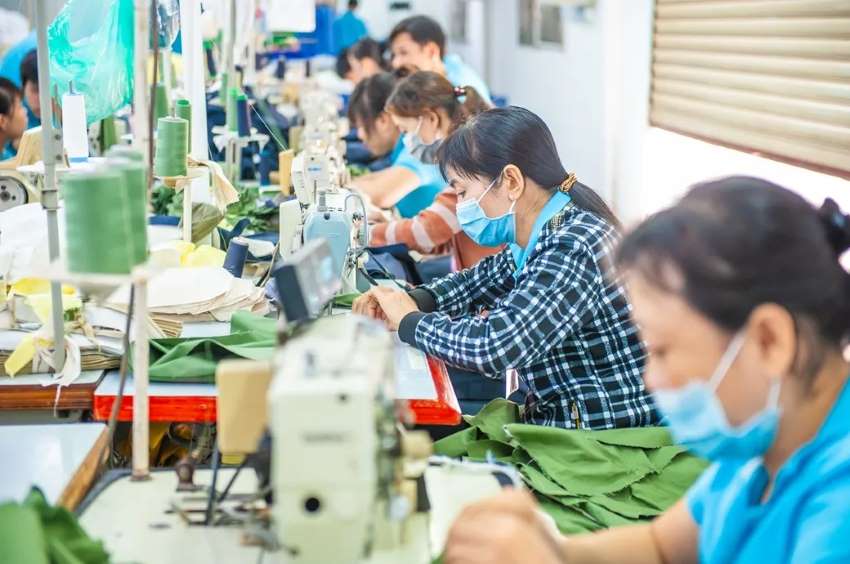
Another reason Bangladesh’s exporters do not get fair and reasonable prices for their products is lack of negotiation skills. Exporters get lower prices for readymade garment products than what Cambodian and Vietnamese exporters get from global buyers. Buyers do not want to pay higher prices, although the cost of production will go up further with wage hike, port congestion and higher transportation cost.
Ethiopia misses textile export targets
As per report by Ethiopian Ministry of Trade & Industry (MTI) and the Industrial Parks Corporation (IPC), Ethiopia continues to miss export targets for textiles due to a shortage of raw materials – including cotton – hampering output. Ethiopia’s export performance was $135 million less than the previous year for the same period. The export target for the past six months was U$1.21bn – well below the US$1.96 billion target set.
The IPC presented a performance audit report for the period 2015-18. According to the evaluation in 2015-16, exports of products originating at the Bole Lemi industrial park – a significant garment hub on which the government had pinned high hopes – was about $16.9 million. The original plan was to export products worth $130 million from the park, which offers an indication of the extent to which targets are being missed.
Similarly, for the fiscal year of 2016-17 export from the Bole Lemi Park was expected to be $40 million while actual export was $23.8 million. For 2016-17 exports from Hawassa Industrial Park – another major textile hub was $1.4 million against a planned performance of $50 million.
Ethiopia has pinned huge hopes on its textile and apparel export sectors and created a number of major industrial parks to attract inward investors. However, the rate of progress so far is far slower than had been anticipated.
Bangladesh: Liberty Fashion Wears urges Accord to withdraw unsafe tag
Management of the Liberty Fashion Wears a forcibly shut Bangladeshi apparel maker has asked the Accord on Fire and Building Safety to withdraw unsafe tag as the factory building is termed safe by BUET engineers. The factory is in operation but due to Accords’ embargo, buyers cannot buy products from the factory neither can it produce apparel goods for the European brand. In last couple of years, the factory has incurred production losses worth Tk490 crore due to the unethical shut by the Accord
After Rana Plaza incident that killed over 1,135 workers in 2013, Tesco, one of Liberty Fashion Wears buyers hired Medway Consultancy Services (MCS) to assess the structural design of the building. In May 2013, the MCS conducted a visual and observational inspection and made a report identifying the building with “Red” mark stating that the building would collapse within 60 hours. Aftermath of the report, the factory was declared unsafe for workers by the Accord.
Later, based on MCS’ report, Accord, a platform of European Union apparel buyers to improve safety standard in the apparel sector, served letter to its signatory brands not to buy products from the factory terming it unsafe to workers safety.
Brexit may hit Cambodia hard
Cambodia could be the biggest sufferer among developing economies as a result of Brexit. Cambodia’s garment industry is a major supplier to the UK fashion industry and it has favorable entry terms. But with the UK being one of the top three economies in the EU and a huge consumer market for fashion, tariff-free access to its roughly 60 million people will be cut off at least temporarily in the event of a no-deal Brexit.
Cambodia has the biggest trade with the UK of all the 49 least-developed countries that can export to the EU without any tariffs and 7.7 per cent of its exports go to Britain. So the UK has to reach some kind of agreement with the 49 countries as not doing so could seriously disrupt its own economy.
However, it’s unlikely any agreement will be reached fast enough to completely remove the chance of damaging disruption either to the UK or to the millions of workers in Cambodia’s garment sector. The European Union accounts for 40 per cent of all Cambodian exports. These exports have risen sharply in recent years, increasing by 227 per cent between 2011 and 2016.
The EU is Cambodia’s main export destination. Of Cambodia’s garment exports, 46 per cent goes to Europe, 24 per cent to the United States, 16 per cent to Japan and nine per cent to Canada.
Why global brands are racing towards 3D knitting solution
With the potential to automate production, reduce labor and inventory costs, and localize production, 3D knitting is changing the way shoes are made.
 In recent years, consumer preferences have quickly swayed towards knitted shoe uppers due to two different, yet related phenomena. First, as environmental consciousness penetrates societies around the world, demand for leather shoes is also declining considerably, resulting in a subsequent increase in demand for textile-based shoes. Second, an acute cultural shift towards athleticism and wellness has manifested itself in rising demand for athletic footwear. In response, manufacturers began focusing even more heavily on knitted shoe upper production.
In 2012, Nike and Adidas both launched a line of virtually seamless, knitted shoes, and were met with incredible success. Not only does the seamless design provide an almost “second-skin” feel, but removing cutting from the production process has significantly cut down on waste – 60% in the case of the Nike FlyKnit – while simultaneously reducing labor hours and environmental impact, improving inventory management, accelerating to market time, and allowing for ultimate customization.
However, there are still distinct limitations to the current seamless knitting technology. First, while the process is markedly less labor intensive than the traditional cut-and-sew methods, it is not yet fully automated. In search of a more perfect solution, shoe upper manufacturers are looking to 3D knitting, which promises to all but eliminate human labor from the production process and break through the seamless knitted shoe bottleneck.
Fully automated production
At present, a factory with 100 flat knitting machines will need at least 200 people to handle subsequent finishing work, because current production processes continue to rely on labor-intensive cutting and sewing steps. As such, labor costs for global shoe manufacturers remain stubbornly high.
While the seamless knitting production method demonstrated by Nike and Adidas has eliminated cutting from the post-production process, significantly reducing labor, it is not yet fully automated. After a seamless shoe upper is knitted, each shoe upper still needs to be individually heat-set and then sewn to the insole. This labor-intensive post-production process presents a considerable obstacle towards further developing seamless shoe upper manufacturing.
3D seamless knitting technology may be exactly what the industry needs to solve this problem. This new technology enables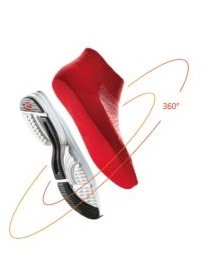 flat knitting machines to produce a complete shoe upper, ready to be directly connected to the sole, with a single machine. This leap in knitting technology presents an exciting possibility of completely eliminating labor-dependent cutting, sewing and heat-setting from the shoe production process – and fully automating shoe upper manufacturing.
Raw materials also represent a considerable expense in the shoe manufacturing process, which is only aggravated by extreme fabric waste. Warp knitting machines, for example, waste around 20-25% of fabric during production (an equivalent of approximately 132.6 tons per million pairs). Using 3D knitting solutions, each upper is completed individually and requires no cutting or sewing post-production, resulting in a completely seamless shoe upper — and reducing waste by as much as 60%, in the case of the Nike FlyKnit.
Furthermore, replacing leather with textiles has a positive impact on the environment. While leather shoes only account for a quarter of overall footwear production, they are responsible for an estimated 30-80% of global impacts on all metrics, including climate change, resource use and freshwater withdrawal. This is in stark contrast to textile shoes, which only represent 6-21% of total impact in the same categories.
Faster to market time
Matt Powell, a well-known sneaker expert and Vice President of the market-research firm NPD, believes traditional marketing and distribution plans are unable to keep pace with modern consumer preferences. In an interview with Quartz, he noted that the average concept-to-market time is approximately 18 months if everything goes smoothly (which it rarely does). At the same time, fashion cycles are compressing. He provides the notable example of performance basketball shoes, which began to catch on in early 2012 and died by mid-2015.
If the lifecycle of modern trends has been compressed to just 3.5 years, the concept-to-market process will need to be adjusted accordingly. The Adidas Speedfactory is one attempt to close this gap. By bringing production closer to consumers, Adidas has managed to accelerate to market time by a factor of 3. In the future, Adidas hopes their Speedfactory will be able to complement their original production lines by quickly producing limited runs of customized products, or replenishing certain products that are selling more quickly than expected. 3D knitting opens the possibility of streamlining concept-to-market time by implementing a realistic local production solution.
On an average, inventory costs generally represent 20-30% of the total inventory value. Even the most accomplished inventory managers are unable to bring inventory costs down to zero, partly because it’s so difficult to accurately predict how well or poorly a certain item will sell. Overstocking unpopular items is a big source of loss for many retailers, and is a pain point many are looking to resolve.
3D knitting offers a solution to the inventory problem. Rather than estimate consumer demand months ahead of time – and risk losses due to unsold inventory – 3D knitting opens the possibility to manufacture locally according to real-time demand. While this particular solution is still in its infancy, there is plenty of potential for 3D knitting to begin developing in this direction.
As professional service companies Deloitte, McKinsey and Company, and PWC all indicate global consumers are demanding more personalization. As such, manufacturers the world over are finding ways to deliver customized products, which has led to new sales models such as PAM, speed factory, and in-house production – all of which emphasize local production and faster distribution.
This is one of the major advantages of 3D knitting. Because 3D knitting solution offers a local production option, customers can order customized shoes and have them delivered within a few days, cutting down manufacturing and distribution time from several months to just a few days. The Adidas Speedfactory is beginning to realize this concept on a smaller scale; in the future, they are hoping to equip each retail store with a 3D knitting machine so customers can take their foot measurements and order customized shoes in store.
The future of 3D knitting
Although the entire shoe manufacturing industry is marching towards 3D knitting solutions, they still have a long way to go before they develop a comprehensive solution. For a 3D knitting solution to truly become practical, it needs to be able to knit a double-sided upper while maintaining the versatility and flexibility of shoe uppers. The seamless shoe uppers that are in existence today have been manufactured using a slightly improved sock machine, producing an end product that is much too thin, ‘tongue-less’, and rather limited in terms of design possibilities. As such, current technologies still require a certain amount of processing post-production. There is still a lot of room for improvement, but it’s certainly an exciting industry to watch.
Pailung products and solutions
Pailung, an internationally renowned knitting machinery company, is one of the first brands in the world to launch a 3D seamless knitting technology that can truly meet industry’s growing need for a fully automated shoe production line. They are one of the only companies that currently provides a full 3D knitting solution that can knit the entire shoe structure, ready to be attached to the sole.
Their ShupperKnit featuring 3D knitting solution is quite straightforward. The operator can easily load the desired parameters into the program, after which a single, seamless shoe upper, including the insole, with be produced immediately in a process that is as seamless as the shoes themselves.