FW
Britishers amass £32,951 worth of unworn clothing in their wardrobes
According to True Fit, a global data platform for fashion industry that decodes personal style, fit, and size for consumerism Brits amass £32,951 worth of unworn clothing in their wardrobes over a lifetime. This is equivalent to the average cost of a wedding or university fees for undergraduate degree.
Research involved over 2,000 consumers. According to the report, the average British woman will stash £22,140 worth of unworn clothing in their wardrobes - the equivalent to a house deposit for a first-time buyer - while men accumulate on average £10,811 of garments they will never wear.
With British women forecast to spend £29.4 billion on clothing this year alone, nearly half of UK female shoppers (45 per cent) admit to having bought something online that they have never worn or have only worn once (44 per cent) because of difficulties choosing items in the right style, fit, and size for their unique personal characteristics and preferences.
With only 1 in 2 (44 per cent) of the UK's garments fitting them properly, the average Brit admits they only wear three quarters (74 per cent) of the clothing in their wardrobes. When it came to finding clothes they love, and choosing the right style, fit, and size, jeans proved the trickiest item to shop for online for both men (15 per cent) and women (21 per cent), followed by trousers (12 per cent), boots (5 per cent), dresses (4 per cent) and heels (4 per cent).
Durst forms JV with Koeing & Bauer
Durst, a manufacturer of advanced digital printing and production technologies, has entered into a 50/50 joint venture with printing press manufacturer Koenig & Bauer for the joint development and marketing of single-pass digital printing systems for packaging industry.
Durst will combine its expertise with the market presence and mechanical engineering of the Koenig & Bauer Group, which, with more than 5,700 employees, is one of the world's major suppliers of packaging and banknote printing.
The joint venture will develop fully automated production lines and distribute worldwide. The digital transformation is also in the packaging industry, as the ever-changing requirements can no longer be met with conventional production technologies. Unlike in the graphics industry, an inkjet press alone is not enough, but there is a need to integrate different peripheral systems into a fully automatic production line.
The new joint venture company will be based in Germany and will also manage the service and ink business in close cooperation with the global network of both companies.
Wage Management System of H&M offers better pay package
In 2018, the difference in take-home salary amongst the workers under Wage Management System (WMS) and other workers ranged from 2 percent in Turkey to 11 percent in Indonesia. These increases were not driven by a difference in overtime hours. In 2017 the difference ranged from 8 percent higher take-home wages in Bangladesh to 29 percent in Indonesia.
H&M introduced the improved Wage Management System (WMS) in 2013 in factories where it sources apparel items from and it implemented the "fair wage method" in 20 garment units in Bangladesh.
Around 930,000 garment workers work in factories that are either implementing improved WMS or have democratically elected worker representation -- or, as in most cases, both.
The WMS helped factories become fairer and more transparent in the way they work with individual wage setting.
Made-in-Rwanda campaign tackles trade imbalance
The Rwanda government is on track to deal with the trade imbalance. The Made-in-Rwanda programme has made a significant contribution towards realising this goal.
Statistics from the Ministry of Trade and Industry show that since the start of Made-in-Rwanda campaign in 2015, Rwanda’s total exports have increased by 69 per cent, from $559 million to $944 million in 2017 while total imports decreased by 4 per cent, from $1.849 billion in 2015 to $1.772 billion in 2017. As a result, the total national trade deficit has decreased by 36 per cent since 2015.
Rwanda had a trade deficit (imports outweighing exports) of $1,017.32 million as of September 2018, according to central bank statistics. This is largely because the country does not produce everything that it needs.
To put this into perspective, Rwanda imports mainly food products, machinery and equipment, construction materials, petroleum products and fertilisers. Moreover, its exports are dominated by traditional products such as coffee, tea and minerals like tin, coltan, wolfram and cassiterite.
Bangladesh hosts DTG, textile and apparel machinery show next week
DTG, an apparel and textile machinery show will be held in Bangladesh, January 9 to 12, 2019.
This showcases the latest machinery, technology, chemicals and raw materials for the garment and textile industry of Bangladesh. Some 1,200 companies and brands are expected to take part.
Among the participating countries are Bangladesh, China, Germany, Hong Kong, India, Indonesia, Italy, Japan, Malaysia, Singapore, South Korea, Spain, Switzerland, Taiwan, and Turkey.
This exhibition connects local apparel and textile manufacturers and exporters with foreign manufacturers, dealers and suppliers. It will also focus on the untapped markets that are flexible and important for Bangladesh.
Also, the participants will be able to identify business contacts with the prospect of entering into subsequent business negotiations with manufacturers in Bangladesh. The exhibition provides an opportunity for apparel and textile manufacturers to have a practical knowledge of technological advances available without having to go abroad. Local and foreign manufacturers, dealers and suppliers can showcase their products and Bangladesh garment and textile factory owners and exporters can connect with them.
Bangladesh’s apparel industry is progressing with a vision of being a 50 billion dollar industry by 2021. One of the core strengths of the country is the mass automation brought about within the industry which not only brings down costs, but also ensures quality output.
New technologies help cotton replace synthetics as new performance fabric
"With its inherent properties of breathability, insulation, anti-allergenic and odor control complementing new technologies, Cotton is setting its sights on the performance sector. In the sports and outdoor market, conventional cotton can’t compete with synthetic garments as it cannot manage moisture across its surface on being wet. This is now being addressed, with R&D focused on spinning technology and innovative finishes. Another allegation made by the advocates of synthetics is that cotton isn’t as environmentally friendly as it appears and requires massive amount of water, chemicals and arable land to grow."
 With its inherent properties of breathability, insulation, anti-allergenic and odor control complementing new technologies, Cotton is setting its sights on the performance sector. In the sports and outdoor market, conventional cotton can’t compete with synthetic garments as it cannot manage moisture across its surface on being wet. This is now being addressed, with R&D focused on spinning technology and innovative finishes.
Another allegation made by the advocates of synthetics is that cotton isn’t as environmentally friendly as it appears and requires massive amount of water, chemicals and arable land to grow. The cotton industry is responding to this with responsible and sustainable measures, with Cotton USA and BCI (Better Cotton Initiative) making the biggest moves, especially with traceability.
Circular economy transforms raw materials into fabrics
There is continuing development for man-made cellulosic, derived from tree branches. Lenzing has embraced the circular economy with the pioneering REFIBRA technology. This involves up cycling a substantial proportion of cotton scraps e.g. from garment production, in addition to wood pulp, where the raw material is transformed to produce new virgin Tencel Lyocell fibers to make fabrics and garments.
Digital printing to save water
Zero-D Reactive Pigment, developed by Intech Digital is a reactive pigment digital printing process which requires only one per cent of the water. The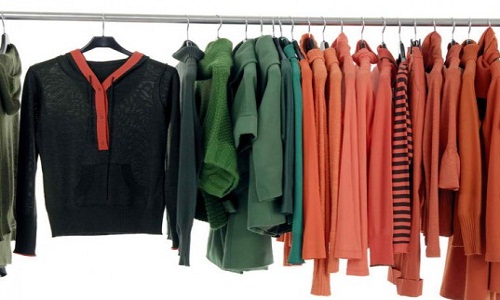 printing process helps companies’ stock base fabric and print when necessary in order to deliver on demand. Sustainable and dye-free, these pigments are high wash resistant, similar to textile dyeing. This digital printing isn’t just confined to cotton but can be applied to other natural fibers.
Finishing process to optimise clean surfaces
Portuguese textile mill Tintex, a regular participant and winner at ISPO Textrends, has incorporated a smart alternative and responsible finishing process into its collection. Naturally Clean takes a cost-effective modern approach that eliminates aggressive treatments and optimises clean surfaces, vivid colours, and beautifully smooth to the touch feel The company maintains the original characteristics for an extended period of time by using Oeko-Tex and Bluesign certified materials, thus eliminating harmful substances.
Nanotex, a Crypton Company & Cotton announced Nanotex Dry Inside technology for cotton apparel. The patented technology enables effective moisture transfer away from the skin, eliminating dampness and chaffing, in 100 per cent cotton apparel, while maintaining the additional comfort aspects of garments made from the natural fiber, especially the soft touch. The processing technology enables cotton to effectively compete with synthetic fiber fabrications in the active and athleisure markets.
With circular economy featuring at the yarn form, a similar process is being achieved at the earlier stage of the textile chain, the cotton seed. Asahi Kasei has relaunched Bemberg, its Cupro band ingredient. Cupro is developed by stripping the cotton seeds of fibers, with each cotton ball carrying up to 45 seeds, with approximately 10,000 and 20,000 fibers. Asahi Kasei has revised its process of retrieving the fibers through a new mechanical process rather than the previous chemical one.
With these new developments ensuring a higher level of performance cotton is soon set to become the latest performance player in the market.
Vietnam should rationalize policy to ride on new FDI wave
The new wave of FDI is a chance for Vietnam to deepen its industrialisation by encouraging the development of supporting industries.
The government should introduce new FDI projects on a selective basis, improve infrastructure and offer incentives to induce import substitution for high-tech components, parts and other intermediate industrial products. A list of the products that are particularly encouraged should be announced to stimulate the development of these industries.
Most FDI in Vietnam to date have been by wholly foreign-owned firms, with weak linkages to the local sector.
The new FDI policy should aim to correct this division. Local firms should be encouraged to create vertical linkages between FDI assemblers and local suppliers of intermediate goods. Joint ventures between foreign and local firms should also be encouraged. The government should not, of course, force foreign firms to set up joint ventures. Rather, local firms should be nourished and strengthened so that they are selected by foreign firms to be partners.
Chin state of Myanmar seeks investment in textiles
Chin, the remote state in northwest Myanmar bordering Bangladesh and India was closed to foreigners until 2015. But now, as the government seeks to attract investment, several high-end companies have started working with Chin weavers to create unique fabrics for sale overseas.
In early 2017, British homeware company Kalinko began working with a group of Chin weavers to create high-quality products that appeal to international consumers.
This has involved very simple changes, such as having the weavers work side-by-side in order to achieve consistency in the patterns, weaving in a clean environment and combining traditional patterns with color combinations chosen by Kalinko.
UK-based non-government organisation Turquoise Mountain has also started working with weavers in Chin State. It recently held a workshop in Hakha, the state capital, on colour and raw materials, which the organisation believes are critical to opening up higher value markets.
Turquoise Mountain has also established a central ‘cut and sew’ workshop in Yangon that keeps a crucial part of the value chain within Myanmar and focuses on product development and quality control.
The organisation’s work with textiles in Chin State and in other parts of the country is partly funded by the UK’s Department for International Development (DFID) through its DaNa Facility, which has been instrumental in launching an investment drive in Chin State.
China exports textiles to India through Bangladesh to evade import tax
China is exporting textiles to India through Bangladesh to evade import tax, undermining New Delhi’s efforts to support local manufacturers. Earlier this week, India doubled the import tax on more than 300 textile products to 20 per cent, marking the second tax jolt on textiles in as many months.
This is aimed at providing relief to the country’s domestic textile industry, which has been hit by cheaper imports. Total Indian textile imports increased by 16 per cent to touch a record value of $7 billion in the fiscal year ending March 2018. Of this, about $3 billion were from China alone.
Textiles are India’s second largest job provider directly employing nearly 51 million people and accounting for 5 per cent of India’s gross domestic product and 13 per cent of its export earnings.
Imports of clothing accessories and apparel from Bangladesh – the world’s second largest exporter of ready-made garments -rose over 43 per cent to $200.9 million during the year ended March 2018, according to Indian government data.
India, Bangladesh and Sri Lanka are among the signatories of the South Asian Free Trade Agreement (SAFTA) that created a in the South Asian region.
Pegasus showcases complete solutions for lingerie
Pegasus is known for high quality sewing machines as well as extra-high speed sewing machines, recently showcased complete solutions for lingerie in Dhaka
The company has complete solutions for lingerie or undergarment projects and has been making chain-stitch machines since 1914 for all kinds of knit items and some special machines for woven garments as well. The machines are equipped with automatic labor saving devices, which can increase productivity, enhance product quality and minimize the labor from production lines.
The company has an outstanding capacity for technological development and responds quickly to the market. Research and development is one of the most common strategies adopted by the market players and it helps companies stay afloat in the market by addressing the increasing competition.
The global sewing machine market is expected to grow at a CAGR of 4.6 per cent from 2018 to 2026. Asia Pacific is the largest market for sewing machines. The presence of a large number of sewing machine manufacturers headquartered in the region is an important factor propelling market growth in the region.
In recent years, sewing machines have witnessed significant technological advancements. Apparel manufacturers are transitioning from manual sewing machines to digital sewing machines. Moreover, sewing machines have been bestowed with a plethora of new features and functionalities.