FW
China cotton output up seven per cent
China’s cotton output increased 7.8 per cent this year.
The total area of cotton fields expanded 4.9 per cent and the yield per hectare edged up 2.8 per cent.
Northwest China’s Xinjiang Uygur Autonomous Region, the country's largest cotton growing area, saw an 11.9 per cent jump in cotton output and accounted for 83.8 per cent of the national total output this year, up three percentage points from 2017.
World cotton production for 2019 is forecast to be down, led by Pakistan, China, and India more than offsetting higher production in Brazil.
Trade is projected up with higher Brazil exports and rising Pakistan demand.
Global use is down sharply mainly because of China’s lower-than-expected annual growth amid uncertain economic prospects and textile exports.
China’s cotton stocks have drastically fallen, from 60 million bales in 2014 to just under 13 million bales.
This dramatic reduction has been due to three years of aggressive selling with 11.5 million bales sold in the latest annual round of selling which ended in September.
China was able to increase reserves dramatically as additional imports were allowed to offset purchases from the domestic crop.
In 2015-16, China’s shift away from a price support program for cotton caused internal prices to fall, which helped to boost consumption but also helped to lower production.
India creates a separate cell to promote small enterprises’ exports
An export promotion cell has been created to create a sustainable ecosystem for micro, small and medium enterprises. The cell will evaluate the readiness of these enterprises to export their products and services, identify areas where improvements are required in order to be able to export effectively and efficiently and attempt at integrating the enterprises into the global value chain.
In addition all companies with a turnover of more than Rs 500 crores (US$ 71 million) have to join the Trade Receivables e-Discounting System so that MSMEs don’t face troubles in cash flow.
GST-registered enterprises will get a two per cent rebate on an incremental loan of up to a crore. The interest subvention on pre and post shipment credit for exports by micro, small and medium enterprises has been increased from three per cent to five per cent.
A Rs 6000 crore(US$ 852 million) package has been announced for technological upgradation of these enterprises. About 20,000 hubs and 100 tool rooms will be developed around the country for this.
Mandatory sourcing by PSUs from small enterprises has been increased to 25 per cent from the previous limit of 20 per cent.
The share of micro, small and medium enterprises’ exports in India’s total exports was 48.56 per cent in 2018.
China seeks talks with India to push RCEA
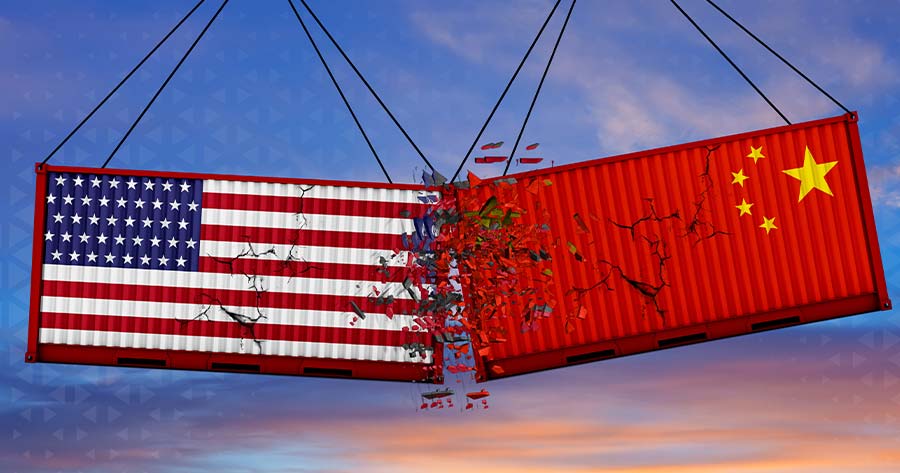
China has sought talks with India to allay concerns on the Regional Comprehensive Economic Agreement (RCEA) that it is spearheading as Beijing seeks newer markets amid the ongoing trade war with the US.
The 16-country RCEA has been in negotiations for some time now and China is keen to conclude it by end of 2019. India’s wariness about a possible flood of Chinese goods, and its demand for looser immigration rules for its tech professionals remain sticking points.
China’s inability to close the trade deal highlights the continuing suspicion among its Asian trading partners over Beijing’s effort to increase its influence in the region. RCEP, along with the Belt and Road Initiative to build investment and trade links with countries along the old Silk Road to Europe, is a key element in China’s efforts to seize the geopolitical advantage following what many in the region see as a US retreat under President Donald Trump.
The meeting is likely to take place before the end of this month, and New Delhi has drawn up a list of issues it will take up with Asia’s largest economy. That includes providing zero-duty access to fewer Chinese goods as opposed to those offered to other members of RCEP. It also will seek a longer period to phase out levies on Chinese goods compared to 20 years offered to the others.
Denim popularity fuels apparel growth
According to Mastercard, denim’s rising popularity has fuelled an 8 percent increase in apparel sales this holiday season — the biggest jump since 2010. Some of the hottest athleisure brands, including Lululemon Athletica and Gap’s Athleta brand, are diversifying into the denim business, as athleisure seems to be losing market to jeanswear.
Lululemon has added more five-pocket jeans to its offerings for men, including the $128 ABC and Commission pants, which are made from stretchy material but shown with leather dress shoes.
Athleta is offering more dresses that can be worn to work, including the $108 Wilder long-sleeve or the $89 Santorini high-neck dress.
American Eagle recently witnessed a record-setting season for its jeans business. It was the best quarter for denim sales in the history of the 41-year-old company with the trend continuing into the fourth quarter.
According to the data by NPD, the sale of sneakers, sporty and fashion-focused alike, increased by 12 percent year to date through November, to $9.4 billion, but that was a third less than their growth rate over the same period last year.
Meanwhile, sales of fashion boots increased by 9 percent from September to November this year compared with a 7 percent decline over the same period last year, according to NPD. Customers also are buying shorter sweaters to pair with their jeans and boots instead of the longer tops that typically go with leggings.
Bangladesh aims at using Lankan port
In the absence of a deep sea port, exporters in Bangladesh cannot send goods directly to final destinations in Europe and the US.
Vessels take goods to Singapore, from where they are taken to their final destinations. But the port at Singapore is running past its capacity, so goods are stuck there for long.
So garment exporters are keen on using the sea port in Colombo as it would save them time and money. In the era of fast fashion a shorter lead time gives them a competitive edge.
If goods bound for Europe can be shipped via Sri Lanka instead of Singapore, exporters will be able to cut the lead time by 15 to 20 days. The cost of shipping would halve too. Up to 30 days can be shaved from the lead time as well.
As Colombo port is running at only 30 per cent of its capacity, using this port instead of the port at Singapore is very much a practical choice for exporters now.
Bangladesh and Sri Lanka plan to collaborate in boosting apparel exports to Europe. One possible area for cooperation is export of some products to the EU through Sri Lanka for getting better prices. Another is value addition in export products.
Millennials driving luxury market in China, elsewhere
"A survey by Bain & Company reveals, millennials, who make up one-third of China’s total consumers, were responsible for a growth in the Chinese market to 142 billion yuan in sales in 2017, about 20 per cent higher than the year before. Millennials are the generation born between in the early 1980s and early 2000s. In China, millennials comprise two distinct groups: those born after 1980 and those born after 1990. These millennials are referred to as the single most important demographic on the planet today by Goldman Sachs. Some luxe brands have caught the attention of millennial customers."
 A survey by Bain & Company reveals, millennials, who make up one-third of China’s total consumers, were responsible for a growth in the Chinese market to 142 billion yuan in sales in 2017, about 20 per cent higher than the year before. Millennials are the generation born between in the early 1980s and early 2000s. In China, millennials comprise two distinct groups: those born after 1980 and those born after 1990. These millennials are referred to as the single most important demographic on the planet today by Goldman Sachs. Some luxe brands have caught the attention of millennial customers.
An amalgamation of manufacturing expertise with business acumen
Alexandre Arnault , the youngest CEO in luxury fashion, has re-launched collaborations with artist Olafur Eliasson, Fendi, M/M and cult streetwear brands Supreme and Off-White, to make the century-old suitcase brand one of the most sought-after names among his peers.
In June, Arnault released a couple of transparent polycarbonate suitcases costing $1,000 in partnership with the streetwear sensation Off-White by Virgil Abloh.
In 2016, Bernard Arnault’s LVMH bought an 80 per cent stake in Rimowa for US$716 million and immediately appointed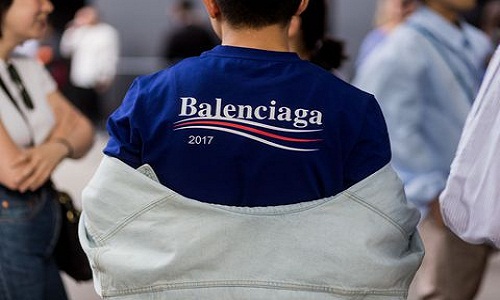 Arnault as co-CEO, alongside Dieter Morszeck, the grandson of the suitcase’s founder. Today, it’s extending its reach to become more than a travel companion by marrying the “made in Germany” concept with LVMH’s business acumen.
Men’s fashion drives Balenciaga’s growth
Balenciaga is another brand that has caught the eye of millennials. In the Lyst Index, Balenciaga raced ahead of Gucci for three quarters in a row to become the most popular fashion brand. According to Cédric Charbit, the brand’s CEO, Balenciaga is also the fastest-growing brand at its parent company, Kering. Last year, Balenciaga saw a growth of over 100 per cent in several categories, thanks to the millennials who account for 60 per cent of the consumer base of the iconic label.
Men’s fashion is also becoming a strength for the couture-turned-edgy brand. In 2016, Gvasalia brought the men’s line back to the house after 17 years. The brand is no longer the couture house that Cristóbal Balenciaga founded in 1919, nor the elegant brand imagined by former creative director Alexander Wang. They now offer flea-market vintage, cool hoodies, big logo prints and off-the-shoulder parkas.
Balenciaga products that have made the biggest impression are sneakers. Its sock-sneakers infiltrated the wardrobes of celebrities and fashionistas, especially the limited-edition, bright-red pair reinvented by Parisian retailer Colette. The stacked-sole Triple S, which costs US$850, is a global bestseller online and offline.
Millennials to continue dominating luxe market
Nowhere is Balenciaga’s influence more noticeable than among China’s millennials. In late April, an incident involving Chinese customers being mistreated as they were queuing for the new Balenciaga sneakers in a Paris department store went viral on Weibo. It led to a short boycott of Balenciaga, and prompted an apology from the brand.
Right now, the luxury industry is being universally disrupted by the young game changers, from the sellers to the shoppers. The young, affluent, savvy yet ephemeral millennials have taken the industry off guard. The Chinese cohort will continue to dominate the market as the nation’s economy booms and the balinghou and jiulinghou take over as the consuming class. Capturing the coterie is crucial for luxury companies. A distinctive brand identity with high-quality products is just an essential start; a cultural understanding of their needs and desires is the key for brands to win the battle in this hefty fashion reshuffle.
Luxe brands dominate Top 50 Most Valuable Brands rankings
"Accounting for 47 per cent of the total value in Top 50 Most Valuable French Brands 2019 ranking, the luxury sector demonstrates the powerful position of traditional fashion houses within the country's corporate landscape. The rankings, released by WPP and Kantar, boasts of six new entries along with legendary brands Louis Vuitton, in the first position, Chanel at second and Hermes third. The new entries include: Céline at the 38 position, Van Cleef & Arpels 43rd , Vichy at 41st , Tefal on 46th Carte D’Or on 44th and Maisons Du Monde on the 49th position."
 Accounting for 47 per cent of the total value in Top 50 Most Valuable French Brands 2019 ranking, the luxury sector demonstrates the powerful position of traditional fashion houses within the country's corporate landscape. The rankings, released by WPP and Kantar, boasts of six new entries along with legendary brands Louis Vuitton, in the first position, Chanel at second and Hermes third.
Low innovation score dips total brand value
The new entries include: Céline at the 38 position, Van Cleef & Arpels 43rd , Vichy at 41st , Tefal on 46th Carte D’Or on 44th and Maisons Du Monde on the 49th position. The total value of top 50 brands rose 12 per cent, which though significantly ahead of the 2.3 per cent increase in the country's GDP, is less compared to the 21 per cent rise in total brand value seen in the BrandZ Global Top 100 Brands earlier this year.
A primary reason for this is comparatively low perceived innovation score for France's top brands. Taking 100 as the benchmark for this measure, the Top 50 most valuable French brands average 103 compared to 113 for both BrandZ Global Top 50 and the US Top 50 rankings.
Innovating with responsibility
Some French brands are emphasising on innovation by encouraging staff to act as brand ambassadors on social media and providing opportunities for consumers to test products. The number of brands that aim to be socially responsible has also grown 14 per cent over the past year, double the rate for brands that are low scorers. Brands in the Top 10 for CSR include: Decathlon, Michelin, Air France and Credit Agricole.
Trend alert
One of the best ways brands can boost innovation is through partnerships between traditional and new brands. The BrandZ French Top 50 study highlighted a few industry trends that included:
Dior, with its growth of 58 per cent over the last year, was the fastest riser in the ranking with Rémy Martin growing 39 per cent and Saint Laurent by 34 per cent.
French shoppers are opting for quality over quantity. From 29 per cent, the percentage of shoppers who preferred better fresh produce has grown to 33 per cent.
French consumers who preferred online shopping have reached 34 million, increasing 13 per cent over last year.
Technology and fashion are the most preferred sectors for online shopping
Shoppers are seeking ways to support local food producers with 58 per cent opting for local products.
Commissioned by WPP, the valuation behind the BrandZ™ Top 50 Most Valuable French Brands was conducted by brand equity research experts Kantar Millward Brown. The methodology is similar to the one used to calculate the annual BrandZ Top 100 Most Valuable Global Brands ranking, which is now in its 13th year.
Bangladesh exports to EU faces challenge
Bangladesh’s export receipts in fiscal 2018 were up 5.81 percent from a year earlier. But constraints hindered it from exploiting its full potential. The major constraints were low productivity, poor infrastructure and low price negotiation capacity.
Bangladesh may lose 1.6 billion dollars worth of apparel business from the EU once the country graduates from the least-developed country bracket to developing country in 2027 as local exporters have to pay eight percent to ten percent duty upon export to the EU.
Currently, the EU is the largest export destination for Bangladesh, accounting for 21 billion dollars worth of shipments.
Every year Bangladeshi exporters face a five percent higher cost of production for different reasons and secondly buyers always pay five per cent to six percent lower prices due to the exporters' low price negotiation capacity.
Currently, Bangladesh garment shipments face 15.62 percent duty in the US and yet they perform well. Garment manufacturers are therefore confident that if they can perform well in the US, they will also be able to perform strongly in the EU even after facing a ten percent duty upon graduation.
Bangladesh hopes to capture a significant share of the garment business that is moving out of China.
Alliance ends work in Bangladesh
Alliance has ceased operations in Bangladesh effective December 31, 2018.
Following the Rana Plaza building collapse in April 2013, that killed more than 1,100 people, mostly garment workers, North American fashion brands and retailers formed the Alliance for Bangladesh Worker Safety, which would run for five years, setting time frames and accountability for inspections, trainings and worker empowerment programs in Bangladesh’s readymade garment sector.
The platform inspected more than 700 readymade garment factories in Bangladesh from where they procure products. About 93 per cent of faults identified in the factories were corrected, while 428 factories completed 100 per cent remediation work.
The buyers’ group removed 178 factories from its compliant factory list because of their lack of progress in ensuring safe working conditions.
Fortifying safety in factories and equipping workers with empowerment tools was Alliance’s focus. Alliance designed a safety training workshop for senior factory managers and partnered with the Bangladesh University of Engineering and Technology on a graduate-level short course for Bangladeshi engineers, both designed to build in-country capacity on safety.
More than 1.4 million workers were trained in basic fire safety, and 1.3 million participated in refresher courses. Nearly 27,000 security guards were trained in fire safety leadership while about 20,000 received refresher training.
Shima’s latest solutions on show at DTG 2019
Leading computerised knitting machine manufacturer Shima Seiki of Wakayama, Japan, is exhibiting at the 16th Dhaka International Textile & Garment Machinery Exhibition (DTG 2019) in Dhaka, Bangladesh, in cooperation with its partner Pacific Associates. Operating in Bangladesh since 1996, this is the twelfth time the Japanese manufacturer will participate at DTG.
Shima Seiki will be exhibiting its latest solutions to meet the current needs of the Bangladeshi market, as well as advanced solutions for future market needs. The company will show a comprehensive line-up of Wholegarment knitting machines. MACH2X features four needle beds and Shima Seiki’s original SlideNeedle, capable of producing high-quality fine gauge Wholegarment knitwear in all needles.
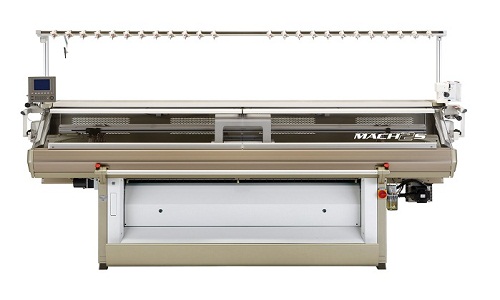
MACH2S is a V-bed machine that offers the flexibility of producing Wholegarment knitwear using every other needle, as well as conventional shaped knitwear using all needles. SWG091N2 provides opportunities in Wholegarment knitting across a wide range of items in a compact, economical package. In conventional shaped knitting, SVR123SP and SVR093SP each feature a loop presser bed mounted above the rear needle bed and is capable of inlay technique for producing unique, value-added hybrid knit-weave fabrics.
Each also features such Shima Seiki innovations as DSCS Digital Stitch Control System, spring-type moveable sinker system, stitch presser, yarn gripper and cutter and takedown comb. “Made in Japan quality, reliability, productivity, user-friendliness and cost performance all combine to satisfy the high expectations of the world’s fashion industry,” the company reports.
SVR123SP at DTG features the new i-Plating option, capable of alternating yarn colours in any pattern, producing jacquardlike designs using plain jersey stitch. Plating can be performed within the same course and for individual needles for even greater diversity in knit design.
“Shima Seiki will also show its all-around strength as a textile machine manufacturer by displaying its P-CAM series computerized multiply cutting machine and prototype P-SPR2 automatic spreading machine as part of its Shima Cutting Solutions strategically developed for the Asian and South Asian markets.”
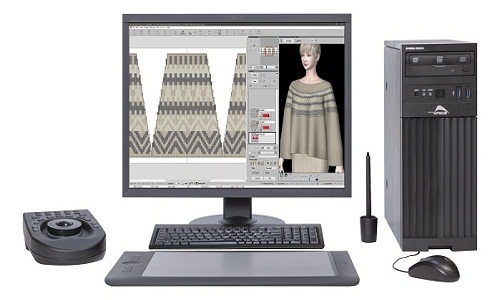
Also shown will be the SDS-ONE APEX3 3D design system. At the core of Shima Seiki’s Total Fashion System concept, APEX3 integrates all stages of apparel production into one smooth and efficient workflow from planning and design to production and sales promotion. With ultrarealistic product simulations, APEX3 is also capable of Virtual Sampling that minimises time, material and cost from the sample-making process. Also demonstrated at DTG is Shima KnitPLM, specialised PLM software for the knitting industry.
Exhibition details
Date: 9-12 January 2019
Hours: 12:00 Noon 8:00PM (Final day 7:30PM)
Location: International Convention City Bashundhara (ICCB), Kuril Bishwa Road (Next to 300ft. Purbachal Express Highway), Dhaka 1229, Bangladesh
Tel: +880 2 58970100
Organiser: Chan Chao Int’l
Tel: +886 226596000
Booth No.: Hall 7, Booth 311
Exhibited technology:
MACH2X 15L / MACH2S 8G / SWG091N2 15G Wholegarment knitting machines
SVR123SP-SV 14G / SVR093SP-SV 14G computerised flat knitting machines
SDS-ONE APEX3 3D design system
P-CAM223SA computerised cutting machine
P-SPR2 (prototype) automatic spreading machine
Shima KnitPLM PLM software for knitting