FW
Shima Seiki to exhibit latest solutions at DTG 2019
Leading computerised knitting machine manufacturer Shima Seiki will exhibit its latest solutions at the 16th Dhaka International Textile & Garment Machinery Exhibition. The exhibition will be held from January 09-12, 2019 in Dhaka, Bangladesh, in cooperation with its partner Pacific Associates.
Shima Seiki will showcase a comprehensive line-up of whole garment knitting machines. One of these, the MACH2X features four needle beds and Shima Seiki’s original SlideNeedle, capable of producing high-quality fine gauge whole garment knitwear in all needles.
MACH2S is a V-bed machine that offers the flexibility of producing whole garment knitwear using every other needle, as well as conventional shaped knitwear using all needles. SWG091N2 provides opportunities in whole garment knitting across a wide range of items in a compact, economical package. In conventional shaped knitting, SVR123SP and SVR093SP each feature a loop presser bed mounted above the rear needle bed and is capable of in lay technique for producing unique, value-added hybrid knit-weave fabrics.
SVR123SP at DTG features the new i-Plating option, capable of alternating yarn colors in any pattern, producing jacquard like designs using plain jersey stitch. Plating can be performed within the same course and for individual needles for even greater diversity in knit design.
Shima Seiki will also display its P-CAM series computerised multiply cutting machine and prototype P-SPR2 automatic spreading machine as part of its Shima Cutting Solutions strategically developed for the Asian and South Asian markets.
Self-Assembly Lab develops technology for mass customisation
According to a report by Fast Company, the Self-Assembly Lab at MIT has developed a technology that provides a clever solution to the problems of mass customisation. The collaboration between Ministry of Supply and the Self-Assembly Lab approaches the problem from a different perspective: Their sweater, coming to stores within a few months, can be mass-produced in standard sizes. The customisation process happens in-store, instead of during the production process.
This smart sweater doesn’t need a battery, nor is it robotically knitted using metal thread or shape memory alloy, which would traditionally be used to make a material change its form. Instead, the fabric shrinks when exposed to heat, thanks to both the structure of the knit and the combination of materials used. The shape-shifting technology depends on the way that two different off-the-shelf materials interact together when they’re exposed to heat.
The Self-Assembly Lab developed the fabric through hundreds of experiments, combining different types of materials together and then trying out different knitting patterns to see how they would react to each other when exposed to heat. The research, which is part of a grant from the MIT-based non-profit organisation Advanced Functional Fabrics of America, was originally aimed at creating reversible transformations when it comes to shape and porosity, to make garments more breathable or waterproof based on temperature and moisture.
Pakistan textile and garment exports up one per cent
Pakistan's readymade textile and garments exports grew by less than one per cent in July to November 2018.Readymade garment export growth grew by 21 per cent in July to November 2018.
Exports of readymade textiles fell by one per cent in November 2018 compared to November 2017. Export volume of readymade garments however shot up by 18.06 per cent in November 2018 compared to November 2017.
Pakistan’s exports of textile and clothing increased 0.86 per cent during the first quarter of the fiscal year.
Raw cotton exports declined by 76.21 per cent. Exports of cotton yarn decreased by 2.25 per cent. Exports of towels fell 0.55 per cent. Exports of readymade garments decreased by 1.55 per cent.
On a yearly and monthly basis textile exports in September recorded a decrease of 4.91 per cent and 18.53 per cent when compared to exports during September 2017 and August 2018 respectively.
Textile exports make up around 60 per cent of the country’s total exports. The textile sector has the largest share in Pakistan’s exports.
Pakistan’s competitors are upping the ante on textile exports to make inroads into more global markets. While China’s share in global textile exports is 36 per cent, Vietnam contributes 12.4 per cent, and Pakistan 1.7 per cent.
Indian exporters hope for drawback hike
Indian apparel exporters are looking forward to a hike in duty drawback of about four to 4.5 per cent to mitigate the embedded taxes paid by exporters.
This is expected to translate to around a Rs 5,000 crore boost for the sector.
Indian exporters pay embedded taxes in products like seeds, besides electricity duty and taxes on diesel, but are unable to recover them, which is weakening their competitiveness.
In the first nine months of the current fiscal, the sector registered a decline in exports compared to the previous fiscal. Exports of apparel have declined after the implementation of GST due to lowering of the duty drawback rate from 11 per cent to 3.7 per cent and non-disbursement of the drawbacks. Fiscal 2018-19 is likely to be flat for apparel exports.
The old duty drawback rate which was very attractive, that came to an end in September 2017. Because of this attractive scheme, Indian exporters advanced their delivery schedules to avail of the duty drawback scheme. Consequently, textile and apparel exports skyrocketed in September 2017. Exports one year later, in September 2018, declined sharply.
India’s share in world trade in textile and clothing is estimated to be 4.95 per cent. With these exports, India is ranked second among suppliers in the world.
E-commerce boosts fashion business, AI aiding segment
"At the recent seminar held hosted at the 26th Hong Kong Fashion Week for Spring/Summer, industry leaders discussed latest trends in fashion and how the industry can identify new opportunities in this industry. The seminar was organised by the Hong Kong Trade Development Council (HKTDC). Titled "New Retail Era: 'Fashion x E-commerce' Strategies", the seminar was attended by Alin Dobrea, Head of Brand Partnerships at Zalora; Eddie Lee, Regional CEO, Taiwan, Hong Kong and Southeast Asia, ECMS Express"
 At the recent seminar held hosted at the 26th Hong Kong Fashion Week for Spring/Summer, industry leaders discussed latest trends in fashion and how the industry can identify new opportunities in this industry. The seminar was organised by the Hong Kong Trade Development Council (HKTDC). Titled "New Retail Era: 'Fashion x E-commerce' Strategies", the seminar was attended by Alin Dobrea, Head of Brand Partnerships at Zalora; Eddie Lee, Regional CEO, Taiwan, Hong Kong and Southeast Asia, ECMS Express; Edwin Wong, Founder & CEO, Cloudbreakr; and Raymond Yeung, Senior Sales Manager, Publications & E-Commerce Department at the HKTDC.
Boosting boost through AI
Dobrea said, the information provided by e-commerce channels can be used to identify the latest market trends which can further help retailers to improve their procurement processes and boost sales. Online fashion retailer Zalora boasts of a pool of over seven years' data that gives the company a better understanding of the differences and similarities between the Indian and Southeast markets besides highlighting the most popular items, patterns, colors and brands in these markets.
One way e-commerce companies can boost businesses is through cost, speed and reliability of logistics, which can be elevated through artificial intelligence (AI). Cross-border logistics solutions enable customers to track their orders even if the delivery process is outsourced to different suppliers. This reduces their costs significantly.
Logistics firms have now entrusted the entire responsibility of managing their returned goods to e-commerce companies to manage returned goods. This constitutes a considerable portion of sales which significantly impact their profitability. These firms can set up their returns centre around the world to collect the goods, inspect and repackage them, or even directly send them to neighboring countries from the centers to satisfy new orders. This enables them to operate in areas where they do not have an operations office and rely solely on remote monitoring, resulting in significant savings in money and time.
More companies investing in e-commerce
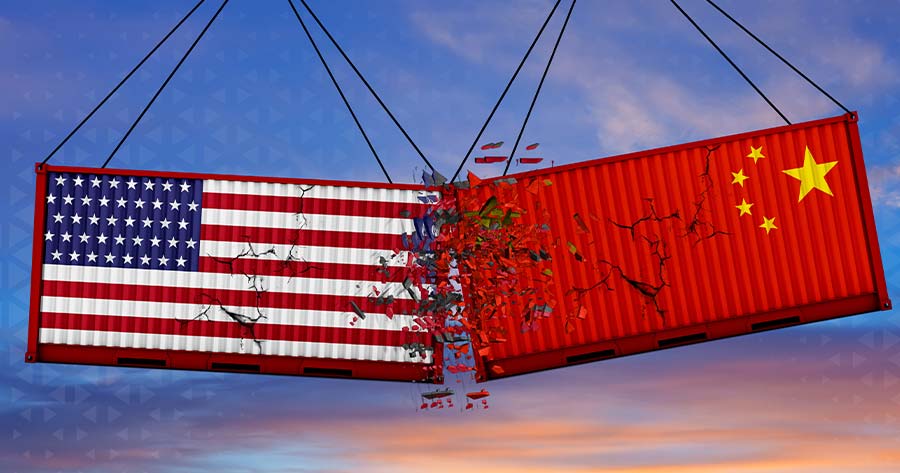
The trade friction between the United States and Mainland China has prompted many companies to develop their own e-commerce businesses. As Eddie Lee, Regional CEO, Taiwan, Hong Kong and Southeast Asia, ECMS Express explains, the infrastructure of a single website can cater to many markets like Japan, Taiwan and Singapore. While this new e-commerce business might only constitute a small proportion of a company's overall revenue, it may be the only sector that sees strong growth compared with the largely stagnant traditional markets. This makes it natural for companies like Giordano to allocate more resources to e-commerce.
Influencer marketing to boost conversion rates
Since it is important for brands to raise their influence in the market, e-commerce companies need to use influencer market and tell the right story on the most appropriate social media channels. This will help brands to increase their influence in the market and boost conversion rates. Tools like AI can help social media companies analyse the most relevant topics based on what people post on their pages using natural language processing and image recognition. These companies can identify everything from brand matching, interest affinity, audience group, social performance metrics and content style.
Edwin Wong, Founder & CEO of digital marketing firm Cloudbreakr feels, brands can use a mix of different content such as an instant video feed, short video clips, an image on a post or even a long video tutorial. He cites the examples of video sliders using66 multiple images to grab fans' attention and drive viewership. He views instant video polling, before-and-after trials and full product tutorial videos as other good ways to boost fan awareness. Wong believes the way people interact on various social media platforms can differ markedly. He points out that since that fashion and accessory brands are highly appeal-driven and affected by peer opinions, they are more inclined to give free samples to multiple influencers at the same time to drive an instant trend.
Pakistan aims at PTA with Tunisia
Pakistan and Tunisia are working on a Preferential Trade Agreement.The two countries share warm, cordial and brotherly relations.
Tunisia is interested in exporting olive oil, dates and fertilizer to Pakistan. Pakistan desires to make Tunisia a hub for enhancing its exports to North Africa.
Both sides want to translate excellent brotherly relations into meaningful economic and trade cooperation. An early conclusion of the PTA and frequent engagements at the G2G and B2B levels coupled with trade promotional activities will be ensured. Both sides have also agreed on cultural exchanges/ participation of cultural troupes in major events in the near future.
The textile and clothing sector in Tunisia accounts for 35 per cent of the country’s GDP and offers 161,425 jobs.
The textile and clothing industry in Tunisia plays a critical role in the socio-economic development of the country.
Tunisia is among the top 15 garment suppliers in the world, and has the advantage of being close to the European market. It is the fifth largest supplier to the European Union as well as the leading trouser supplier to the EU. Other important products are work wear and lingerie. The main foreign investors in the apparel sector in Tunisia are France, Germany, Belgium and Italy.
China turns to Australian and US cotton
China has resumed cotton buying, shipments of Australian cotton into China are on the rise again.
Just over 50 per cent of the 2018 Australian cotton crop shipped to date was bound for China. Including the consumption of Chinese owned mills operating in Vietnam this figure rises to closer to 70 per cent of the crop.
China is very important to the Australian cotton industry. China’s focus on depleting its strategic reserves of cotton dramatically reduced its imports of foreign cotton over the past few years. However, this may well be drawing to a close.
China is the second largest buyer of US cotton, making up 16 per cent of total recorded US sales to date. In addition to this China has purchased a further one million bales for shipment in the 2019/2020 crop year.
The spinning mills located in China free trade zones are exempt from paying import tariff on raw cotton. Total raw cotton consumption of these mills is estimated to be in the vicinity of two million bales a year. Shipments to these mills will account for some of the existing US sales of cotton to China.
Chinese free trade zones also contain an inordinate number of warehouses many of which are used to store foreign cotton.
Challenges continue for UK retail
The challenges that have plagued the UK retail sector this year are expected to intensify over the course of 2019.
Factors include changing consumer behavior, oversupply of bricks-and-mortar stores, high levels of legacy debt, regulatory costs, economic and political challenges, and a lack of talent at the top of retail businesses to help deliver change.
Retailers have to brace for uncertainties in the year ahead by controlling the controllable. Many retailers are already too late to put in place contingency plans in the case of a no-deal Brexit.
The heavy discounting of non-food items could lessen in 2019. Retailers have reached the point where they cannot discount any deeper. Those who are left have to protect their margins and they may accept fewer sales at a higher price. In some cases, no sale is better than a bad sale.
While online continues to dominate, there is a definite potential swing back toward bricks-and-mortar stores as shoppers seek out a more tangible experience, and awareness grows around the true cost of home delivery.
Fashion retailers may continue to see the value of investing in store teams via training programs, as employees play an important role in converting browsers into buyers.
Cotton processing market to reach $72.6 billion by 2023
"Cotton processing market, estimated at $59.7 billion in 2018, is projected to grow at a CAGR of 4.0 per cent to reach $72.6 billion by 2023. Growth is being driven by increasing demand for cotton in the textile industry and rising animal feed. The Asia Pacific is projected to be the fastest-growing regional market with countries like India and China, emerging as leading players due to the increasing cotton production. However, one of the major restraints in this growth is the high cost of production due to obsolete equipment."
 Cotton processing market, estimated at $59.7 billion in 2018, is projected to grow at a CAGR of 4.0 per cent to reach $72.6 billion by 2023. Growth is being driven by increasing demand for cotton in the textile industry and rising animal feed. The Asia Pacific is projected to be the fastest-growing regional market with countries like India and China, emerging as leading players due to the increasing cotton production. However, one of the major restraints in this growth is the high cost of production due to obsolete equipment.
Rising urbanization, changing lifestyle fuels lint growth
Rising urbanisation and changing lifestyle is likely to fuel the growth of lint segment, which is estimated to account for the largest share in the cotton processing market in 2018. However, rising number of accidents and chronic diseases will also increasing the consumption of processed cotton and cotton bandages globally. The rising exports of lint and cotton products are generating export income across many countries.
Spinning to be fastest-growing textile segment
Changing preferences of consumers towards different types of apparels in developing countries is likely to fuel growth of textile segment, which is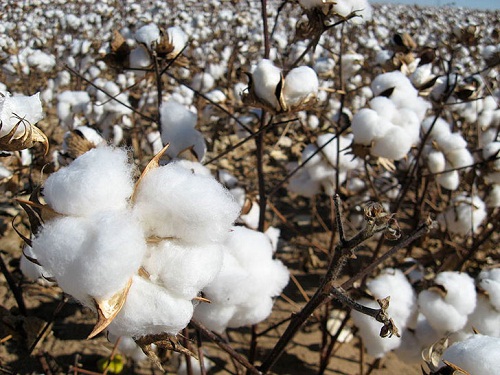 estimated to account for the largest share in the cotton processing market in 2018. Moreover, the increasing investments and policy support by governments is expected to fuel the growth of the textile industry in countries such as India and China.
Based on type, the spinning segment is projected to be the fastest-growing segment during the forecast period. Spinning is considered one of the most important processes in the textile and pharma industries and is used to convert baled cotton into yarn or thread to produce high-strength yarns. The rising textile and medical & surgical industries have increased the demand for spinning machinery in APAC, Europe, and African countries.
Automation to lead cotton processing ginning equipment market
High productivity provided by automatic machines in less time will make the automatic segment the largest shareholder in the cotton processing ginning equipment market in 2018. Installing, fully automated processing equipment leads to accurate processing, quick and reliable production processes, optimum utilisation of time, reduced labor costs, and controlled operations. These are some of the factors that are driving market growth. With the availability of fully automated and integrated processing lines, operational efficiencies and proper control of production processes have been achieved.
Asia Pacific to be fastest-growing market
Asia Pacific is projected to be the fastest-growing market for the period considered for this study, due to the rising disposable income, changing lifestyle of consumers and rapid urbanisation of the region. Increase in demand for cotton products such as clothing, cotton bandages, home furnishing products, animal feed, and paper is also driving the market growth.
Labor abuses continue to plague major global brands
"A new report by NGO KnowTheChain reveals the fashion industry lacks in its efforts to address forced labor. The NGO surveyed 43 of the world’s largest clothing and footwear companies’ efforts to address the issue. These companies scored only 37 out of a possible 100, with more than two-thirds scoring below 50. Be it slavery in cotton fields, human trafficking of factory workers or child labor, companies need to address a lot of issues to free their supply chains of labor abuses. The root cause of these abuses is the pervasive use of agencies to find workers for factories and workshops. These agencies often charge migrant workers large fees just to land a job, and there is ample evidence that these high fees push poor migrants into forced labor situations."
 A new report by NGO KnowTheChain reveals the fashion industry lacks in its efforts to address forced labor. The NGO surveyed 43 of the world’s largest clothing and footwear companies’ efforts to address the issue. These companies scored only 37 out of a possible 100, with more than two-thirds scoring below 50.
Right recruiting policy to curb abuses
Be it slavery in cotton fields, human trafficking of factory workers or child labor, companies need to address a lot of issues to free their supply chains of labor abuses. The root cause of these abuses is the pervasive use of agencies to find workers for factories and workshops. These agencies often charge migrant workers large fees just to land a job, and there is ample evidence that these high fees push poor migrants into forced labor situations.
In fact, companies that scored highest on the rankings, Adidas and Lululemon, employ their workers directly across the supply chain – a practice that KnowTheChain believes other companies should consider following.
Complex supply chain hampers growth
Another obstacle to progress is the complexity of supply chains, and the interconnectedness of the industry. Most major global brands engage the same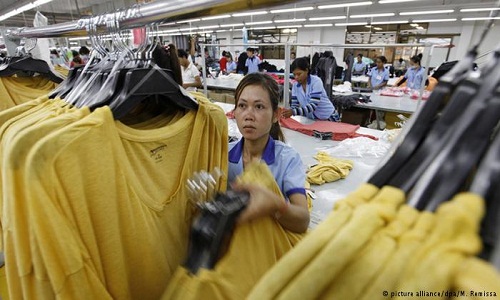 suppliers, or source from the same regions where textile factories and labor abuses are rampant, such as Bangladesh, Cambodia or Vietnam. Namely, one company can only do so much to solve this problem.
To address this issue, the American Apparel and Footwear Association, which represents more than 1,000 global name brands, retailers, and manufacturers, in October 2018, announced a commitment with the Fair Labor Association to address potential forced labor risks in their supply chains.
KnowTheChain will also continue to highlight relevant policies besides tracking progress on eliminating forced labor from the apparel and footwear supply chain. The NGO hopes to find a suitable solution to the issue by the publication of its next report.