FW
The problem of Chinese cotton subsidies
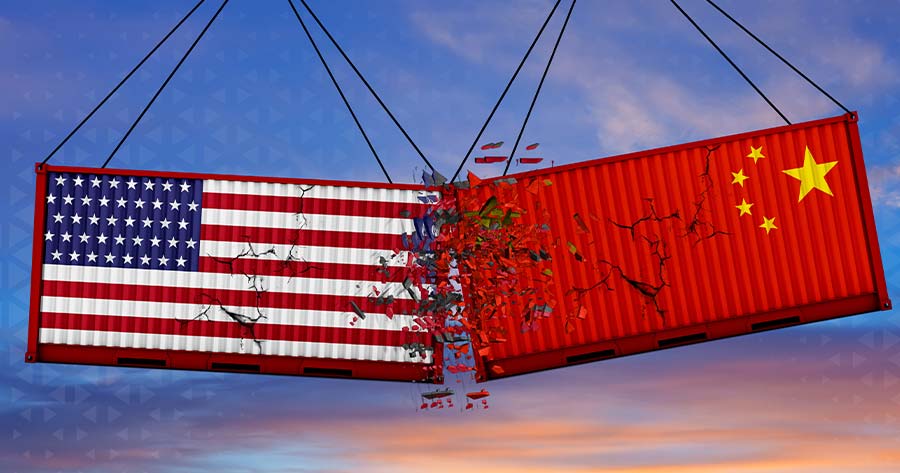
China’s subsidies in cotton and manmade fiber have created havoc. Chinese subsidies in 2018 represented nearly 72 per cent of all subsidies provided to cotton farmers worldwide. Overproduction in China forced Turkey to spend badly needed funds to support cotton growers. Even the African Franc Zone which is poverty stricken had to spend an estimated $81 million to promote cotton production.
Twenty-five million bales or more of cotton are produced annually because of the Chinese subsidies and if these subsidies did not exist global prices would have advanced and cotton prices would have been able to benefit from expanding cotton use as emerging market economies expand.
Instead growers outside of China suffered as China caused havoc with global supply and demand. The US has failed to challenge China at the WTO on its cotton subsidy level. This appears tied to China’s role as one of the largest cotton importers.
China is re-emerging as a major consumer of US cotton after years of stockpiling the fiber. The world’s most populous nation has purchased futures contracts covering more than 3,61,000 bales of US cotton for 2020. That is enough to make 400 million T-shirts. China has never booked this much cotton so far in advance at this time of the year since 1998.
Fashion profiling helps understand voters mindset
Fashion profiling is the practice of classifying and targeting individuals based on their brand preferences. Fashion profiling uses data analysis to identify the way brands are perceived. It assesses value systems and goals and priorities via the clothes people wear. Clothing preferences were a key metric for Cambridge Analytica, whose business was constructing and selling voter profiles drawn from Facebook data.
Preferences in clothing and music are leading indicators of political leaning. Fashion data was regularly mined by political candidates during the 2016 US elections. Purchases made through each candidate’s online store were used to identify potential issues that could galvanise a voter. For example, if an individual bought an infant onesie from Hillary Clinton’s campaign website, it was a clue that said person might be influenced by e-mails about maternal health. If someone bought a beer mug from Rand Paul, he or she might respond to e-mails about saving manufacturing in America. Personal data, given incrementally to products and platforms over years, can be used to manipulate individuals in unanticipated and potentially damaging ways.
Consumers may not be conscious of the narratives embedded in their branding. Most Instagram shoppers and selfie-takers are more concerned with credit card theft than being victims of targeted yet subtle political messaging.
Uniqlo named world’s simplest fashion brand
When it comes to fashion Uniqlo has been named the world’s simplest fashion brand by Siegel+Gale. Siegel+Gale ranks companies for delivering on their promise of simple, clear, and intuitive experiences.
Uniqlo was named the world’s simplest fashion brand due to its philosophy of simplicity, quality and longevity, which resonates around the world. Topping the overall ranking was Netflix, followed by German discount supermarket Aldi, then Google, Lidl and Carrefour. Siegel+Gale’s study reaffirms an increasing demand for transparent, direct, simple experiences that make peoples’ lives easier.
British retailer Marks & Spencer was ranked 77th, followed by department store chain Debenhams at 85, while sportswear brand Under Armour was 87th, and Topshop was ranked in the 94th place. Other key findings were that 55 per cent of people are willing to pay more for simpler experiences, while 64 per cent of people are more likely to recommend a brand that delivers simple experiences. The simplest global brands have outperformed the average of the major indexes by 679 per cent since 2009. The top performers in the study operate in crowded, highly competitive marketplaces. Their ability to consistently deliver their brands with simple, compelling experiences sets them apart. Companies will benefit greatly by keeping it simple for customers. Or suffer the consequences.
India: Sri Mahasakthi Mills to invest Rs 25 crore on apparel manufacturing
Sri Mahasakthi Mills, a leading company in spinning and other diversified industries, is planning to invest Rs 25 crore on manufacturing of apparels. The company will initiate a garment manufacturing unit in Ethiopia next year. As of now, it has the production capacity of 80,000 pieces per month in India. In garments, the company works for both the export and domestic markets. Some of its top clients are Arvind, Lifestyle, etc. The company is also exploring international buyers for tie ups. It currently produces 100 per cent knitted garments like t-shirts, briefs, etc.
Sri Lanka looks to obtain GSP+ concessions on Indonesian fabric
As per Sri Lanka Apparel Exporters’ Association (SLAEA) chairman Felix Fernando, Sri Lankan Embassy to the European Union (EU) in Brussels recently submitted a proposal to obtain GSP+ concessions on fabric imported from Indonesia. Sri Lanka was hopeful that agreements to obtain GSP+ concessions for South Korean and Indonesian fabric could be signed by the end of 2018. At the moment, apparel manufacturers could only get GSP+ concessions on fabric woven in Sri Lanka, the EU and SAARC countries.
According to the Central Bank, from January to September 2018, Sri Lanka imported textiles and textile articles worth $2 billion, up 4.7 per cent against the same period last year. The country has a great opportunity to expand its apparel exports, as China is expected to leave a $50 billion vacuum in the global apparel market from next year.
According to Joint Apparel Association Forum data, apparel exports to China were worth $60.2 million, contributing to only 1 per cent of total apparel exports from Sri Lanka. Exports to China in 2016 were $66 million.
Indian silk exports touch $123.05 million between Apr-Sep 2018.
Exports of silk and silk products from India reached $255.93 million in 2017-18 and $123.05 million between Apr-Sep 2018. The silk products exported include: natural silk yarns, fabrics, made-ups, readymade garments, silk carpets and silk waste.
Silk readymade garments formed the largest share of exports at $81.63 million, followed by fabrics and madeups at $27.34 million and silk waste at $10.70 million. Other products made up the rest of export earnings. In FY 2017-18 top five importers of silk carpet were the US ($1.40 million), UAE ($0.95 million), Belgium ($0.13 million), Germany ($0.04 million) and Italy ($0.03 million). Exports of silk waste stood at $15.69 million in 2017-18. India enjoys a unique global position in terms of production of all commercially useful varieties of silk. India is the second largest producer of silk. Sericulture provided employment to over 8.6 million people in India during 2017- 18.
Lacoste bans the use of mohair in its collection
After PETA Asia’s investigation of the mohair industry revealed abuse and exploitation of angora goats, Lacoste has decided to totally ban the material. PETA’s first-of-its-kind video exposé of angora goat farms in South Africa, the world’s top mohair producer, has pulled back the curtain on the violent industry, showing workers dragging, roughly handling, throwing around, mutilating, and even cutting the throats of fully conscious goats, some of whom cried out.
Lacoste joins an ever-growing list of brands/retailers including ASOS, Marks & Spencer, John Lewis, H&M, and, most recently, Notonthehighstreet – that have made this compassionate move. To date, over 330 brands have committed to a ban, proving that cruelty to animals is not in fashion. Famous for its crocodile logo and boasting 1,200 shops and 10,600 outlets spread across 120 countries, Lacoste had also previously committed to angora and fur bans.
India exports 10 lakh cotton bales this kharif season
India has exported close to 10 lakh bales of cotton so far to Bangladesh, Vietnam and Indonesia this kharif season. Total exports are likely to touch 65 lakh bales. So far this season, total cotton arrivals in India have been to the tune of 65 lakh bales against 70 lakh bales during the corresponding period last year.
Prices are expected to start rising once arrivals from the first picking are completed by the end of December. Mills also have been stocking up on cotton, anticipating a fall in supply in the not too distant future. The ginning industry continues to face shortage on weak arrivals. The daily requirement is around four lakh bales and barely two lakh bales are available on a daily basis. First pickings in Maharashtra, Madhya Pradesh, Gujarat and Telangana are in the final stages. Ginners are facing problems because there is no parity and there are payments issues in addition to fears about the quality of cotton from next month.
The country’s production in 2019 is estimated at 348 lakh bales, down nearly five per cent from a year ago. Cotton prices are hovering around minimum support prices of Rs 5,150 per quintal for the medium staple variety and Rs 5,450 per quintal for the long staple variety.
Indian wool exporters diversify
India is the seventh largest wool producer in the world. The industry can broadly be divided into 10 major product categories: worsted yarn, woolen yarn, wool tops, fabrics, shoddy yarn, shoddy fabrics, blankets, knitwear, handmade carpets and machine made carpets.
In the organised sector are composite mills, combing units, worsted and non-worsted spinning units, knitwear and woven garment units, machine-made carpet manufacturing units. In the decentralised sector are hosiery and knitting units, powerloom units and independent dyeing and process houses.
Woolen handmade carpets contribute more than 70 per cent to total wool exports. The wool industry is concentrated in Punjab, Haryana, Rajasthan, Uttar Pradesh, Maharashtra and Gujarat. Punjab accounts for about 35 per cent of wool production units, followed by Maharashtra and Rajasthan.
The US and the EU are key export destinations for Indian wool and wool-blended products. Indian exporters are however geographically diversifying their exports to other regions such as the Middle East, Latin America, south east Asia, and east Asia. Major buyers of Indian woolen yarn, fabrics and made ups are Italy, the UK, Japan, Korea, China and the US.
However, India has limited facilities to produce apparel grade wool, which makes it dependent on importing wool.
Fespa returns to Germany this May
Fespa will be held in Germany, May 14 to 17, 2018. Fespa caters to the screen and digital wide format, textile printing and signage markets. More than 700 exhibitors are expected to showcase the latest technology and applications for screen and digital wide format, textile and garment print, printed interior décor, vehicle wrapping, packaging and non-printed signage.
Fespa will once again dedicate an entire hall to substrates. The show is proving increasingly popular with Aussie and Kiwi print and sign businesses. Print service providers and sign-makers are continually looking at new openings and ways to grow their businesses. The industry is powered by technology and media innovations, and an irrepressible entrepreneurial appetite to experiment with new applications and enter new markets.
Visitors will also benefit from a host of educational features reflecting Fespa’s commitment to investment in education and promoting best-practice, including popular regular features from previous events and fresh initiatives guided by market trends and visitor feedback.
The event is regarded as a key destination for print and signage businesses looking for tools to fulfil their ambitions, and for inspiration from real stories of business transformation.
The co-located Sign Expo will give sign-makers and brand owners a dedicated exhibition for non-printed signage, while offering printers the opportunity to explore opportunities in visual communications beyond print.