FW
Clean Clothes Campaign reprimands H&M over false wage claims
A new report titled ‘H&M: fair living wages were promised, poverty wages are the reality’ from Clean Clothes Campaign states many garment workers manufacturing clothes for the brand live below the poverty line – despite its promise of a living wage by 2018. The report focuses on poor wages, excessive overtime and workplace faintings in the brand’s factories.
According to the new study, garment workers at H&M in India and Turkey earn about a third – and in Cambodia less than half – of the estimated living wage. In Bulgaria interviewed workers’ salary is less than 10 per cent of a living wage.
Overtime hours in three out of the six researched factories often exceed the legal maximum, and in Bulgaria workers reported that they have to work overtime just to earn the statutory minimum wage.
As reported by Ecotextile News, H&M’s combined figures claimed its “fair living strategy” now reaches 655 factories employing more than 930,000 garment workers, up from three factories in 2013.
Bangladesh wants easier access to US market for garments made with US cotton
Bangladesh wants its apparel products made from American cotton to get duty free access to the US market. The rationale is that both readymade garment manufacturers and cotton growers will benefit and consumers would also benefit as they will be able to buy the products at reasonable prices.
Bangladesh imports a huge amount of cotton from the United States and uses it to make garment products, of which significant portions are shipped back to the US as finished goods. The country also wants reinstatement of the Generalized System of Preferences (GSP) trade facilities for Bangladesh goods, which were suspended in June 2013.
But since 2013, with the help of Accord and Alliance, Bangladesh has dramatically transformed its garment and apparel factories, making them among the safest in the world. The country also has already met all three UN criteria necessary for graduating from LDC status in 2024. Bangladesh imported 4,59,000 bales of cotton from the US in the last fiscal year, which amounted to 6.85 per cent of the country’s total cotton imports of 6,700,000 bales.
The country’s exporters are among the highest tariff payers among the 232 exporting nations to the US. For Bangladesh, tariffs are 15.2 per cent of the value of all its shipments.
High Footfall Expected at Intertextile
 Intertextile Shanghai Apparel Fabrics will be held September 27 to 29.
It has lined up 4400-plus exhibitors, offering unparalleled sourcing for the season. High visitor footfall is anticipated at the industry’s leading trade fair.
For visitors looking for the industry’s latest apparel textile innovations, one particular must-see is the Functional Lab. The product zone has more than double the exhibitor numbers than the 2017 autumn edition and will feature the innovative Taiwan Pavilion along with pavilions from Invista and Hyosung as well as an events space.
The Functional Lab, along with other display areas and product zones, will present a curated collection of leading products, ideal for visitors who want to streamline their sourcing process.
Another way for visitors to fast-track their sourcing experience at the fair is the Trend Forum, which will feature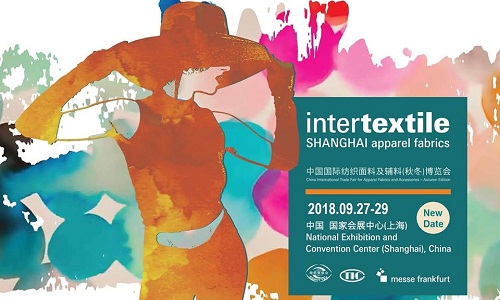 product samples from exhibitors across the fair. Every sample is handpicked.
Intertextile Shanghai Apparel Fabrics is widely regarded as a prime platform to find and meet n
EPCH achieves record number of memberships in 2017-18
"Export Promotion Council (EPCH) at its 32nd Annual General Meeting [AGM] held recently in New Delhi recently informed that for the first time the number of registrations at the council has exceeded 10,000 handicrafts exporters. It has now increased to 10,641. Handicraft exports during the year 2017-18 too increased to Rs. 23,029.36 crores. The council undertook several multifarious activities for the development and promotion of handicrafts exports from the country during the year 2017-18. ."
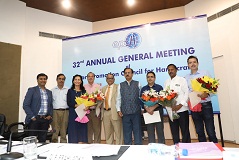 The 32nd Annual General Meeting of Export Promotion Council (EPCH) was held in New Delhi on September 25. The meeting highlighted that for the first time, the number of registrations at EPCH has exceeded 10,000 handicrafts exporters. The actual number stands at 10,641. Handicraft exports during the year 2017-18 increased to Rs 23,029.36 crores
The council undertook multifarious activities for the development and promotion of handicrafts exports from the country in 2017-18. These include: organisation of four international fairs in India; two editions of IHGF-Delhi Fair, Home Expo India, Indian Fashion Jewellery & Accessories Show, over 200 informative and interactive seminars in 40 different craft clusters, 36 specialised trade exhibitions, brand image promotion programs/buyer-seller meets in 18 leading markets.
The council also made representations at various levels related to GST and was able to garner maximum support for the handicrafts sector. It signed several MoUs with national and international organisations for the promotion and development of exports. 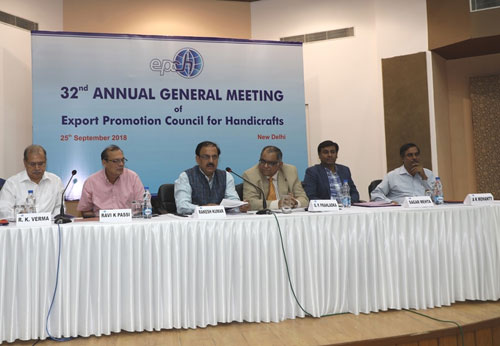
With an objective to offer avenues for technological upgradation, skills development and marketing opportunities, EPCH set up and upgraded infrastructure and facilities at various craft hubs. These include: Handicraft Productivity Centre-Jaipur, Technology Upgradation Centre and Wood Seasoning plant-Saharanpur and initiated Trade Facilitation Centre-Jodhpur.
Global textile chemicals market to be worth $27.56 bn by 2022: Study
"As per Business Wire, the global textile chemicals market is expected to reach $27.56 billion by 2022 from $21.80 billion in 2016. The market is expected to grow at a CAGR of 3.4 per cent during the period. With designers focused on grabbing a bigger share of the market, designs are becoming fancier requiring more processing; increasing chemical use and other operational footprints. Allied Market Research data shows, significant factors are contributing to the growth of textile chemicals market. These include development of apparel industry, rising consumer demand for innovative and styled clothing products, evolution of environmentally friendly chemicals required by textiles industries, and development of packaging industries, that require a large amount of textile chemicals".
 As per Business Wire, the global textile chemicals market is expected to reach $27.56 billion by 2022 from $21.80 billion in 2016. The market is expected to grow at a CAGR of 3.4 per cent during the period. With designers focused on grabbing a bigger share of the market, designs are becoming fancier requiring more processing; increasing chemical use and other operational footprints.
Growth drivers
Allied Market Research data shows, significant factors are contributing to the growth of textile chemicals market. These include development of apparel industry, rising consumer demand for innovative and styled clothing products, evolution of environmentally friendly chemicals required by textiles industries, and development of packaging industries, that require a large amount of textile chemicals.
A US-based market research and consulting company, Grand View Research views that the US product market for textile chemicals is anticipated to grow at a CAGR of 3.8 per cent from 2016 to 2025 to reach a net worth of $930.1 million by 2025. Low price of fast fashion garments is also increasing consumption of technical textiles. As garment makers are always under pressure to reduce costs, they opt for low price chemicals in their fabrics. This is increasing health and environment concern. To prevent this, retailers need to promote high-value less hazardous chemicals in the value chain.
Home furnishing applications drive up market
The Grand View Research study also points out home furnishing applications dominated the textile chemicals market in 2015, 2016 and 2017. Coating and sizing chemicals were the largest consumed products category with a total worth of $6,353.5 million, accounting for over 30 per cent of global demand in 2015. Printing being the last step and, the popularity of printed fabric is increasing. The key players in textile chemicals market include: Covestro AG, Lonsen Inc., Archroma, BASF, Dow Chemical Company, Bayer AG, Huntsman International LLC and Sumitomo Chemicals. And there are many other major players.
Asia-Pacific: Strong growth centre
The report further highlights, Asia-Pacific region is the fastest growing market in textile chemicals space. In 2017, the Asia Pacific market had a share of 63.35 per cent in the global textile chemicals market in terms of consumption. The report by the Transparency Market Research reveals China and India accounted for more than 70 per cent share in Asia Pacific. Bangladesh consumes about $800 million worth of dyes and chemicals every year.
Limitations of the industry
The major limitations of the textile chemicals include adverse effects of chemicals on the environment and stringent environmental regulations. However, recent innovations, which embed innovative ideas of anti-microbial, luxurious, and stain-resistant fabrics, allow these chemicals to reach a wider segment of audiences. Emerging technology such as the establishment of sterilised textiles is expected to increase competition in the years to come.
The European Union implemented the Integrated Pollution Prevention and Control (IPPC) directive from January 2008, along with Emissions Trading System (ETS) and regulation on registration, evaluation, authorization, and restriction of chemicals. Initiatives like REACH have significantly reduced the demand for textile chemicals in Europe. Countries such as the Netherlands and Germany have banned some textile chemicals that pose a threat to the environment and human health.
Michael Kors buys Versace
Michael Kors will soon takeover Versace. Michael Kors is best known for its leather handbags. This US brand wants to aggregate various luxury brands - including fashion, shoes and accessories - under one larger group. Last year it bought British stiletto-heel maker Jimmy Choo.
Versace, based in Italy, is a family-owned brand known for its bold and glamorous designs and its Medusa head logo. It is a mega-brand and a red carpet favorite that is among the most recognisable and followed fashion labels in the world. Versace last year posted sales of €668 million and earnings before interest, tax, depreciation and appreciation of €44.6 million. Since 2016, Versace has been working on streamlining its management structure, cutting costs and pushing to increase sales online.
Synonymous with luxury style and effortless polish, Michael Kors has a sophisticated, jet-set aesthetic. Known for his laidback, luxurious, wearable and quintessentially American silhouette, designer Michael Kors started his label in 1981 and has dressed Hollywood actresses, music superstars and first ladies.
The label offers clothing, shoes, bags, jewelry, accessories, sunglasses and watches. Men can choose from tailored shirts, sweaters, vests, jackets, pants, wallets, card cases, messengers and totes. For women there are fit and flare, sheath, or shift dresses, platforms, heels, wedges, clutches, earrings, bracelets, rings, necklaces.
Nilit to showcase Sensil’s performance collections at Intertextile Shanghai
Nilit, producer of the Sensil fabric, a smart choice for premium Nylon 6.6 designed especially for apparel, will showcase its performance collection at Intertextile Shanghai. In addition, the brand will present Sensation: Spring/Summer 2020, the next edition in Nilit’s Trend Book series.
Sensil Nylon 6.6 is soft, strong, and durable fabric that retains newness after many wearings and washing. Its performance features include inherent odour control, temperature management, moisture management, and UV resistance. Its comfort is enhanced by the cooling effects of the Sensil Breeze or the warmth of Sensil Heat. Sensil Aquarius keeps things dry while Sensil Body Fresh makes sure they remain pleasant smelling. Sensil Innergy contributes its energising properties while Sensil EcoCare combines performance and environmental responsibility, according to the manufacturer.
Inexmoda in Colombia to link consumers with local designs
Inexmoda will host BCapital in Bogotá, Colombia from October 17-19, 2018.The trade show links the consumer to the best local designs that seek to express fashion in non-conventional formats, link the end consumer with de Fashion System´s creative industries and create experiences through innovative languages and formats.
BCapital, a meeting place for the public who becomes validator of trend, has three fundamental axes: BSmart, academic axis of the event that seeks to democratise knowledge; BCool, the place where brands and designers lead attendees through memorable experiences, with presence of national and international buyers and exclusive collections; and BFashion, the place where you live fashion as a creative and cultural manifestation with production of more than 40 designers on stage.
The 9th Bangladesh Denim Expo to focus on simplicity
The 9th Bangladesh Denim Expo with the motto “Simplicity” will be held on November 7 and 8, 2018 in Dhaka. The expo will hold three panel discussions that will focus on different aspects of the topic.
The first of these discussions will dwell on the simplicity of collaboration between the designers and consumers. The second will deal with the need for simplifying the standards and certificates for the global textile industry besides clarifying the procedures between producer and buyer. The third discussion will deal with simplicity in production. It will discuss the innovation, technology and optimised handling of resources in the industry.
Since its premiere four years ago, the Bangladesh Denim Expo has proven to be one of the major fairs for the denim community. The expo is known to be an important hub for innovation and sustainability. It’s 9th edition in November will present 60 exhibitors from all over the world who will showcase their offerings in material production, jeans production, chemicals, equipment and technology.
Chinese textile sector gets upgraded
In 2017, China’s exports of textile products were 12.13 per cent of the country’s total exports. The Chinese textile industry has been competitive in the global value chain for years. The industry shows vigor and vitality, and the performance of brands with creative designs remains strong. But the industry is facing growing pressure from transforming and upgrading. China's textile industry urgently needs to figure out how to face the challenges brought out by the new era of reform and opening-up.
Technology, fashion, green have become the new labels for China's textile and garment industry. The future of design is soft design, which is user-oriented and aims to dig out potential demand from consumers. The high-quality development of China's textile products requires not only soft design but also something that leads the market.
Shenzhen, one of the country's major garment and textile industrial bases, is aiming to transform itself from a manufacturing powerhouse into a design and innovation-driven fashion hub after reporting robust income since 2017. This fashion hub is cultivating its own Chinese cultural characteristics to make it distinct and unique. It is aiming for faster growth by enhancing the design side rather than manufacturing since design creates culture, culture shapes value, and value determines the future.