FW
Levi’s launches denim customisation platform
Levi recently launched Future Finish, the first online customisation platform that offers next level personalisation through the use of laser finishing. With over 3,000 possible permutations, consumers can make a true original.
To start, consumers can choose their favorite iconic Levi’s fit—the 501 Original and 502 Taper for men, or the 501 Short and 721 Skinny for women—in a light or dark denim wash. Throughout the process, they can select from three different tints (midnight, black or rose), six patterns like natural worn, bandana, logo, camo or leopard, and then add wear through rips or distressing. Consumers can also swap the leather back patch of their jeans with six different color options.
Future Finish garments retail for $98-$148. The customised jeans are made at and shipped from Levi’s Sky Harbor Agility Center in Henderson, Nev. to consumers within 3-5 days of being designed.
Created in Levi’s Eureka Innovation Lab, Future Finish garments utilize the capabilities born out of Project F.L.X., Levi’s digital finishing operating model. Launched in early 2018, Project F.L.X. automates the jeans finishing process through laser-powered technology, allowing the company to reduce time to market and eliminate thousands of chemical formulations from the finishing process. Roughly 25 percent of the Levi’s denim bottoms business on a global basis is finished with its F.L.X. technology.
Additionally, all Future Finish garments will be produced with 100 percent recycled water. The resulting product is one with a reduced environmental impact and a one-of-a-kind look.
European Union to impose $39.1 billion in retaliatory tariffs
European Union plans to imports retaliatory tariffs worth $39.1 billion on US goods entering the bloc’s member states. These tariffs would be imposed by November 2019. The timing is a direct response to President Trump’s claim in May that some imported vehicles and parts posed a national security threat, giving him reason to put a 25 percent tax on cars from the E.U. However, a final decision was put off for six months, which is expected to end around mid-November.
Car taxes aren’t the only battle between them. The two have an ongoing dispute over subsidies connected to EU firm Airbus and American firm Boeing. The U.S. plans to impose about $7 billion in levies on imports from the region as soon as a World Trade Organisation arbitrator issues his decision on damages. That decision is expected before the end of this summer, although it could be delayed by a few weeks.
The U.S. in April disclosed an initial list of proposed categories that could face tariffs, such as handbags over $20; sweaters and vests from wool and cashmere from Kashmir goats, as well as apparel items such as men’s and boys’ suits. When the U.S. tariffs are imposed, the E.U. in turn is expected to face retaliatory duties on $22 billion worth of U.S. goods imported to the member states.
Chinese move toward automation
Chinese companies are proactively moving toward automation and smart production through technological innovation. They are nurturing indigenous brands to move up the value chain. They are expanding their global footprint, working on their design abilities and strengthening their quick response capabilities. Apart from China, they have production bases in places like Vietnam, Bangladesh, Myanmar and Cambodia.
The US tariff action against China has increased American companies’ sourcing cost. But despite lingering tariff issues, China will remain a dominant textile and apparel supplier for the US market in the foreseeable future, because China does not have a strong competitor in the variety of products it can make. Although facing uncertainties over US-China trade tensions, most US companies are still looking for cooperation opportunities with Chinese businesses. As companies are moving sourcing orders to Bangladesh, Vietnam and India, the average price of US apparel imports from these main alternatives to China have all gone up by more than 20 per cent in the first five months of 2019 year on year.
In 2018 China processed 54.6 million tons of fibers, accounting for half of the world’s total, and its exports of textile and apparel were 36 per cent of the world’s total.
Surat yarn mills struggle
Some 20 textile dyeing and processing mills in Surat have shut shop. One reason is falling demand for polyester. Those that are still functioning are working at reduced capacity. Daily production has gone down to three crore meters a day from 4.5 crore meters a day. Production costs have also increased by 15 per cent to 25 per cent due to a rise in labor and raw material charges. Surat has some 325 mills.
On the other hand, lower production results in lower efficiency, higher fuel consumption and a higher cost per unit. Customers who once purchased 30,000 meters of a quality have now reduced the offtake to 10,000 meters to 15,000 meters.
Export of synthetic fabrics from the Surat textile industry is around Rs 20,000 crores. The textile industry in Surat is mainly engaged in yarn production, weaving, processing as well as embroidery. Nearly 30 million meters of raw fabric and 25 million meters of processed fabric are produced in Surat daily. Surat wants to expand through forward integration. As of now, yarns and fabrics comprise the major production. Now units want to move ahead into garment manufacturing and move ahead from manufacturing just synthetic fabrics to producing cotton fabrics too.
FTA with EU benefits Vietnam
By signing a free trade deal with the European Union, Vietnam has become the first developing country in Asia which has received tariff reductions on 99 per cent of goods between the 28-member bloc and the Southeast Asian country.
Almost 11 per cent of Vietnamese apparel exports to the EU will get complete duty waiver at the time of enforcement of this agreement. The European Union is Vietnam’s second largest export market after the United States, with the main exports being garment and footwear products. Vietnam is the sixth largest readymade garment exporting nation to EU, having four per cent of the total market. After the ratification of the agreement, Vietnam won’t have to pay the 12 per cent duty anymore on garment exports to the EU.
Vietnam also has free trade agreements with Asean, China, Japan, South Korea, India, Australia, New Zealand, Chile, Japan, South Korea and the Eurasia Economic Union. All these facilities make Vietnam one of the largest attractions for readymade garment buyers.
Vietnam has been making huge progress in the textile sector due to a sustainably developed industry and strong labor codes. The country is an emerging giant in the global textile and apparel industry.
Casual fashion drives denim demand
Casual fashion is driving demand for denim products across the globe. The market can be segregated into apparel, handbags, footwear, and others such as caps and wallets. The apparel segment can be sub-divided into top wear (shirts and T-shirts, jackets and coats, and kurtas), bottom wear (jeans, jeggings, skirts, trousers, and others such as shots and track pants), and one piece (dresses, jumpsuits, and dungarees). Based on category, the global denim market can be segregated into mass market and premium market. In terms of end-user, the denim market can be divided into men, women, and children. In terms of distribution channel, the denim market can be segmented into offline distribution channel and online distribution channel. Online distribution channels include e-retailer websites and company websites. Offline distribution channels include retail stores, specialty stores, supermarkets, and direct selling.
The market in Asia Pacific is projected to expand at a rapid CAGR from 2019 to 2027. This is attributable to an expanding base of working-class population, rising disposable income of people, availability of cost-friendly labor resources, and abundance of raw materials in the region.
Online boosts knitwear sales
Countries like Russia, China, India, Brazil, and South Africa are witnessing a surge in demand for knitwear through the online retail channel. Clothes manufactured through knitting wool or other fabrics are commonly known as knitwear. The women’s segment dominates the global knitwear market. Knitwear for women is available in a wide variety of designs and patterns. Women have a higher awareness regarding changing fashion trends and they are willing to buy new apparels.
Knitwear is segmented into natural, synthetic, and blended. The natural segment has the highest market share owing to the versatile, cozy, anti-wrinkle, high absorption capacity, and the warm nature of natural fabrics such as cotton, silk, and wool. However, the blended segment has a higher growth rate. The rate of wear and tear of knitted outerwear is high as compared to knitted innerwear, which in turn is helping the sales of the outerwear segment.
North America and Europe have the highest share in the global knitwear market owing to the presence of several prominent market players. Moreover, customers in these regions have a higher purchasing ability to buy premium knitwear products. But there is also a surging demand for textile products in countries such as India, China, Taiwan, and Indonesia. Market players are outsourcing their production operations from Asia Pacific, which in turn is catalyzing the region’s market growth.
VF Corp Q1 revenues up six per cent
VF Corp’s first quarter revenues rose six per cent. Excluding acquisitions and divestitures, adjusted revenue increased nine per cent. Active segment revenue increased eight per cent including a 20 per cent increase in Vans’ brand revenues. Outdoor segment revenue increased seven per cent including a nine per cent increase in The North Face brand revenue and a two-percentage point revenue growth contribution from acquisitions.
International revenue increased two per cent during the first quarter. Excluding acquisitions and divestitures, and on an adjusted basis, international revenue increased four per cent. China revenue increased 21 per cent. The company’s direct-to-consumer revenue increased 14 per cent while digital revenue increased 24 per cent.
VF Corp is one of the world’s largest apparel, footwear and accessories companies. Q1 results demonstrate the power of VF’s evolved portfolio and its progress to becoming a purpose-led, performance-driven, value-creating enterprise, with a commitment to be more consumer-minded and retail-centric. With positive results, VF is raising its fiscal 2020 outlook, including additional investments aimed at accelerating growth and value creation in fiscal year 2020 and beyond. VF Crop now expects its full year fiscal 2020 adjusted revenue from continuing operations to grow approximately six per cent.
LVMH Q2 sales up 15 per cent
For the second quarter LVMH’s sales rose 15 per cent. For the six months to ending June, LVMH’s earnings before interest and tax rose 14 per cent. Operating margins were 21.1 per cent. In the current climate of geopolitical and economic instability, creativity and quality, the group’s founding values have become benchmarks. The increasing digitalization of its activities reinforces the quality of the experience it brings to customers. Its largest division is of fashion and leather goods.
LVMH also attributed growth to strong Chinese demand and investments in marketing and new designs. With Chinese customers, there was a noticeable improvement between the first quarter and the second quarter. LVMH, based in France, is a luxury goods group that houses Louis Vuitton and Christian Dior and champagne maker Moet & Chandon. It boasts the largest market capitalization of any company in France. Louis Vuitton is betting on temporary pop-up stores to spike consumer interest and has turned to DJ-turned-designer Virgil Abloh to grow its menswear lines. Christian Dior brand, while still estimated to be less than a third of Vuitton’s size, was also one of the standouts of the second quarter, with sales growth exceeding 20 per cent of the broader fashion and leather goods unit.
Global garment factories demand fair labor standards
"The expectation was that post Rana Plaza tragedy, that killed at least 1,132 people and injured over 2,500 in Bangladesh, the global garment manufacturing industry had woken up to the social and environmental hazards of fast fashion. However, six years later, little seems to have changed as many workers are still being subjected to dehumanising treatment, poverty wages, and gender-based violence at work."
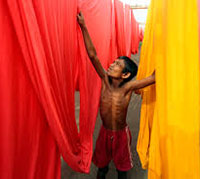 The expectation was that post Rana Plaza tragedy, that killed at least 1,132 people and injured over 2,500 in Bangladesh, the global garment manufacturing industry had woken up to the social and environmental hazards of fast fashion. However, six years later, little seems to have changed as many workers are still being subjected to dehumanising treatment, poverty wages, and gender-based violence at work.
Legal agreement to fix workplace hazards
One of the important outcomes of the Rana Plaza tragedy was the establishment of legal the framework Accord on Fire and Building Safety in Bangladesh. A groundbreaking agreement, Accord codified a legally binding and comprehensive set of standards for fire and building safeguards, and mandated measures for inspection, remediation, and ongoing monitoring of the workplaces that make up the base of multinational supply chains. The agreement held over 200 multinational signatory labels like H&M, Esprit, and American Eagle accountable for the safety conditions of their supplier factories. It has till now renovated hundreds of factories and fixed innumerable workplace hazards ranging from faulty wiring to inadequate emergency exits.
As the International Labor Rights Forum (ILRF) notes, Accord staff has till date conducted 5,274 training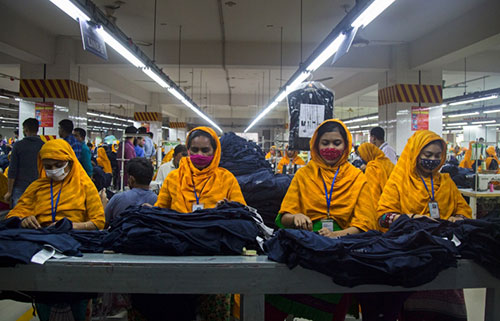 sessions, covering 408 factories, and resolved about 330 complaints through the Accord’s complaint mechanism. It has also created the AFL-CIO Solidarity Center which trains its staff with the aim of encouraging grassroots organising, using safety advocacy as a channel toward worker empowerment.
Transfer of control to highlight limitations
However, now the international body that administered it for the past several years is transferring control of its implementation to a public agency in Bangladesh. In May 2019, international labor groups inked a deal with the Bangladesh Garment Manufacturers and Exporters Association (BGMEA), granting it the entire control of Accord.
As per the agreement signed between the two parties, BGMEA will co-manage the remediation process through the Accord. However, this new development might underscore the limitations inherent in the joint management structure of Accord as the agreement has failed to create a business-friendly political class in Bangladesh. Though the Accord provides workers an opportunity to organise unions, it does not promote unionisation or collective bargaining. The 2018 extension of the Accord has stronger labor-focused provisions, such as protecting the right to refuse dangerous work.
Contrary to the Bangladesh Accord, which focuses on creating safer workplaces, the Indonesian garment industry endeavors to secure its union rights in its factories. Over the past decade, unions and local NGOs in Indonesia have worked with several large footwear brands to implement the Freedom of Association Protocol guaranteeing the right to organise. Covering an industry of about 1.4 million workers, the agreement was launched in 2011, sparked by a fair-labor protest campaign that coincided with the 2008 Beijing Olympics, and like the Bangladesh Accord, it operates as a binding contract for multinational brands like Puma and Nike.
A call to treat laborers with dignity
However, Indonesian employers are reluctant to comply with this agreement as many of them are subcontractors of the main factories that are official suppliers of the signatory brands. Even their influence in the collective-bargaining process is limited as the factory is dominated by a management-friendly union.
These struggles of Indonesian and Bangladeshi workers reveal the limitations of the supply chain in enforcing global labor standards through private agreements. Though for laborers, any legally binding agreement can help, it cannot fully overturn a regime built on global inequality. To ensure fair global labors standards, fashion industry across the world needs to treat its laborers with equality and dignity.