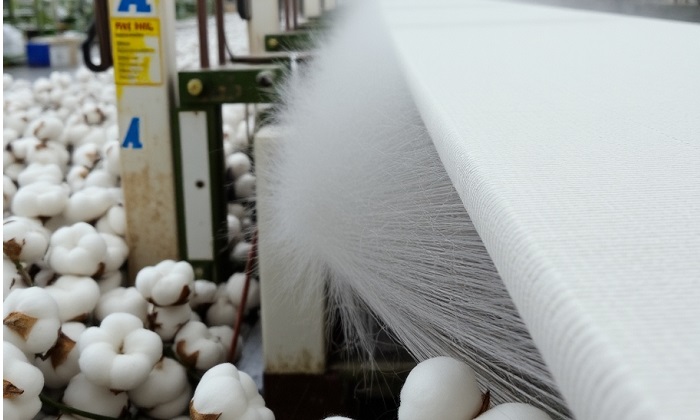
Better Cotton Initiative (BCI) will launch a revised cotton standard this month with updated principles and criteria. There is increased emphasis on environmental principles principally concentrating on pesticide use and restrictions. This includes the phasing out of highly hazardous pesticides. It stresses on the need for personal protective equipment when applying pesticides.
There is a change in approach regarding biodiversity. The standard focuses on the identification, mapping and restoration or protection of natural resources. A water stewardship approach has been integrated to the standard, aimed at addressing and facilitating collective action toward local sustainable water use. This comes after last year’s pilot project to test the new approach to water on small, medium and large farms across India, Pakistan, China, Tajikistan and Mozambique.
The revised standard now has a clearer position on gender equality. Topics such as child labor, sanitation and equal pay – which had previously been absent – are also now included. Cotton farmers who are part of BCI will be trained on the revised standard in order to help the successful adoption of the newly outlined specifications. Better Cotton Initiative enables cotton producers, local cotton organizations and international bodies to work together on minimizing the cotton sector’s carbon footprint.

- 1
- 2
- 3
- 4
- 5
- 6
- 7
- 8
- 9
- 10
Trade pacts, integrated manufacturing power India’s textile export ambitions
Global apparel sourcing is entering a new phase in which resilience, compliance and manufacturing depth matter as much as cost... Read more
Next-gen digital Indigo systems redefine textile manufacturing economics
The global textile sector is experiencing a structural shift as industrial-scale digital dyeing technologies replace traditional indigo vats in major... Read more
Fashion retail’s physical comeback, stores become experience hubs
Online shopping has permanently altered fashion consumption, making convenience, algorithmic recommendations, endless assortment and doorstep delivery standard expectations. Yet the... Read more
India reworks apparel export strategy as US tariffs squeeze margins
As tariff volatility, shorter retail buying cycles and aggressive price negotiations in the US expose weaknesses in the country’s traditional... Read more
MIT’s recyclable yarn could disrupt spandex’s grip on fashion
Stretch has become essential to modern fashion. Activewear, denim, underwear and athleisure all depend heavily on elastic fibres such as... Read more
Speed, synthetics and trade pacts propel Vietnam past Bangladesh
Vietnam has overtaken Bangladesh to become the world's second-largest exporter of ready-made garments (RMG), marking more than a symbolic change... Read more
The €2,150 Question: Can Europe afford circular fashion at scale?
Europe's push to build a circular textile economy is facing an uncomfortable commercial truth. The technology capable of producing virgin-quality... Read more
From cotton peaks to polyester pressures, textile supply chains face a reset
The assumption that textile supply chains can absorb periodic swings in cotton prices has become untenable. During the first seven... Read more
Global sourcing reset exposes India’s apparel competitiveness gap
The assumption that global apparel sourcing would naturally shift from China to India is proving increasingly misplaced. Fresh trade data... Read more
The new fashion equation, quality, agility and value replace speed and discounts
The traditional order that once separated low-cost fast fashion from premium luxury is steadily breaking down as consumers become more... Read more