Chinese scientists have developed a fiber that mimic the structure of polar bear hairs. Textiles that can mimic polar bear hair’s IR-reflecting abilities might be useful in stealth applications, such as concealing soldiers. Polar bears’ hair has a hollow core, which reflects back IR emissions from the body. This structure not only helps prevent heat loss and keeps the bears warm in Arctic environments but can conceal the bears from thermal imaging cameras used in many night-vision devices.
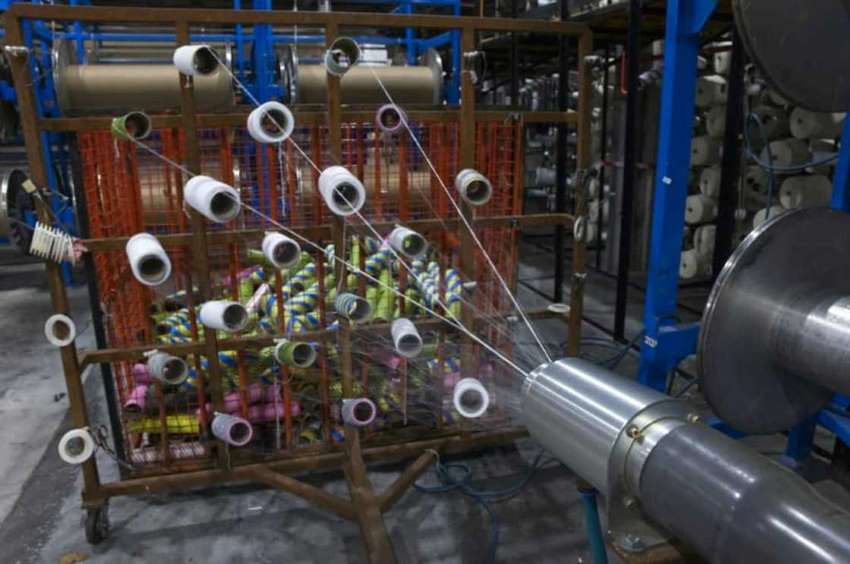
Previous attempts to make synthetic versions of the hair produced fibers that were too weak to be practically useful. But the Chinese used a freeze-spinning method to make fibers that are porous, strong, and highly thermally insulating. They consist of fibroin, a protein found in silk, along with a small amount of the polysaccharide chitosan.
Researchers slowly squeezed a viscous, watery mixture of these materials through a cold copper ring, forming a frozen fiber that contained flat ice crystals. Freeze-drying the fibers removed the ice by sublimation to produce strong fibers about 200 micrometers wide with up to 87 per cent porosity.
After varying conditions such as the viscosity of the mixture and the temperature of the ring, they found that running the process at minus100 degree Celsius produced pores about 30 micrometers across, which offered the best balance between strength and thermal insulation.
- 1
- 2
- 3
- 4
- 5
- 6
- 7
- 8
- 9
- 10
Intertex Milano 2026 - A global nexus for textile innovation
Intertex Milano is set to return this summer, confirming its status as a premier international destination for the textile and... Read more
Primark at crossroads as AB Foods weighs spin-off amid digital and Lefties press…
The long-standing supremacy of Europe’s budget fashion champion, Primark, is facing a test. As of February 2026, Associated British Foods... Read more
Vietnam, Bangladesh, Cambodia drive US apparel imports in 2025
The 2025 year-end data for the US apparel sector reveals an industry in structural flux. Despite aggressive tariff measures and... Read more
The New Dress Code: Sportswear’s takeover of modern wardrobes
For much of the last decade, fashion retail has been defined by volatility. Trends have shortened, discount cycles have intensified... Read more
Hemp finds its moment in India’s $500 billion American trade calculus
In the grand arithmetic of India’s expanding trade engagement with the US, the headlines usually gravitate toward oil cargoes, aircraft... Read more
EU PET spunbond imports under scrutiny, misclassification sparks regulatory and …
The European nonwovens and technical textiles sector is facing an unprecedented compliance crisis as a rise of customs misclassification threatens... Read more
From atelier to algorithm, Gucci is redefining premium marketing
As Milan welcomes the Primavera 2026 fashion calendar, the spotlight is fixed not just on the runway but on Gucci,... Read more
America’s Store Split: Why discount retailers are winning as department stores s…
By early 2026, the American retail industry no longer resembles a single marketplace moving in one direction. It feels more... Read more
Europe’s Textile Crisis: The sovereign fibre trap and the race against China
By early 2026, the European textile and apparel sector finds itself at a crossroads that challenges traditional market logic. Unlike... Read more
A 50-Day Voyage: How Middle East conflict is repricing every shirt Asia ships to…
The global textile industry has always lived with thin margins, long lead times, and unforgiving working-capital cycles. But the latest... Read more