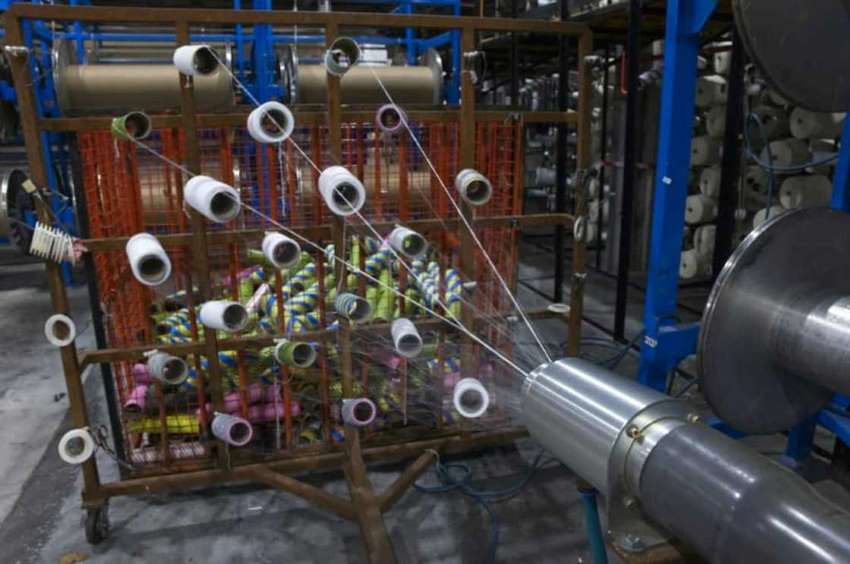
The Union Textiles Ministry has initiated high-level consultations with the finance and agriculture ministries to implement emergency import duty cuts, aiming to shield the domestic industry from escalating logistics costs. Following a sharp 19 per cent Y-o-Y decline in ready-made garment (RMG) exports in March 2026, the government is considering eliminating the 11 per cent import duty on specialized cotton varieties and reducing the 5 per cent levy on European rayon pulp. These measures are designed to provide a critical financial buffer as the ongoing West Asia crisis forces cargo rerouting around the Cape of Good Hope, adding approximately 15 to 20 days to delivery cycles.
Incentivizing resilience and market diversification
Beyond raw material relief, the government has extended the Rebate of State and Central Taxes and Levies (RoSCTL) and RoDTEP schemes until September 30, 2026, ensuring continuous remission of unrefunded taxes for exporters. This policy continuity is vital as Apparel Export Promotion Council (AEPC) data reveals, war-related surcharges have added between Rs 12 and Rs 55 per garment. To mitigate these overheads, the Ministry is actively encouraging manufacturers to shift to East Asian markets. This tactical shift is supported by the recent conclusion of the India-EU Free Trade Agreement, which promises zero-duty access to a $263.5 billion market, effectively neutralizing the tariff advantages long held by competitors like Bangladesh and Turkey.
Strategic regulatory easing for synthetic fibers
A significant component of the proposed package includes deferring anti-dumping duties on elastomeric and viscose rayon filament yarns imported from China and Singapore. By lowering the entry barriers for these man-made fibers (MMF), the Ministry seeks to enhance the price competitiveness of Indian technical textiles and activewear. This regulatory easing, combined with the recent customs duty exemption on 29 textile-related petrochemical products, provides a dual advantage: reducing domestic input costs while enabling factories to maintain production targets despite a $1,200 spike in container freight rates. As the industry eyes the 2027 EU Digital Product Passport deadline, these fiscal interventions are positioned as essential tools for sustaining India’s $35 billion export momentum.
Strengthening textile exports
The Ministry of Textiles oversees the manufacturing and export of fibers, yarns, and apparel. Focusing on global markets like the US and EU, it is currently scaling the PLI and RoSCTL schemes to boost MSME competitiveness. Established in 1975, the Ministry now prioritizes sustainability and digital traceability through the National Fiber Scheme.