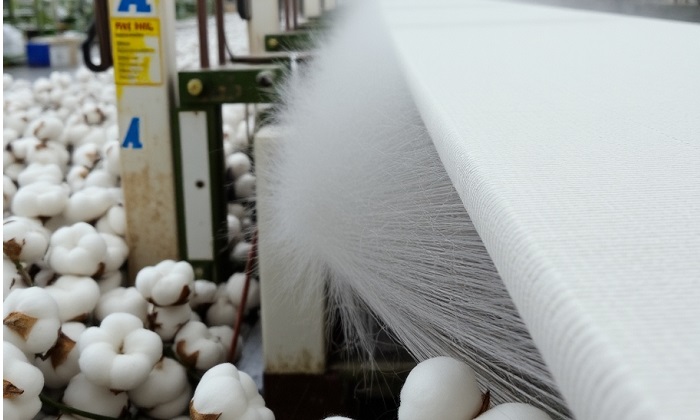
A joint Sino-Dutch project has been launched in the Yangtze River Delta. ‘Sustainable Textiles’ aim is to achieve more sustainability within the supply chain and take the first steps towards a fully circular production cycle. The project supports Dutch fashion brands committed to making their supply chain more sustainable. The project specifically aims at improving the sustainability of dyeing and printing enterprises in the Yangtze River Delta region. The Dutch environmental consulting agency Arcadis is, with support from the Netherlands Consulate General in Shanghai, managing the project for the ten involved companies.
With three modules, the project aims to help participating printing and dyeing enterprises reduce their environmental footprint and control occupational safety and health risks. The environmental pollution control module discusses the green supply chain. Topics include chemical management, waste gas treatment, waste disposal and land pollution control. Also, solutions to re-use waste water are introduced. The energy consumption module discusses solutions for printing and dyeing enterprises to reduce energy consumption, use of chemicals and water resources. The occupational safety and health module aims at creating a safe and healthy working environment. It includes on-site hazard assessment and guidance for enterprises.
Producing a cotton shirt requires about 2700 liters of water, which equals a two year drinking supply for an average person. Besides use of resources, it’s also about the waste being produced. When not handled safely, chemicals in this process can cause serious pollution and affect aquatic plants and algae or crops and soils.
- 1
- 2
- 3
- 4
- 5
- 6
- 7
- 8
- 9
- 10
Luxury in Retreat: Why the aspirational consumer is gone for good
The global luxury industry is confronting an unprecedented situation. The active consumer base, which peaked at 400 million in 2022,... Read more
The Invisible Bleed: How a single chemical is slowing India’s apparel machine
The global fashion industry has spent the better part of the past two years obsessing over visible disruptions viz. volatile... Read more
The Closet Paradox: How ‘nothing to wear’ is driving global overconsumption
In an era of overflowing wardrobes and instant fashion gratification, a striking paradox has emerged: the more clothes we own,... Read more
US trade rulings and labor slowdown reshape 2026 cotton supply chains
The global cotton industry is entering a period of adjustment, shaped by legal rulings, trade policy recalibrations, and a softening... Read more
Zero-tariff paradigm drives strategic re-sourcing at Global Sourcing Expo 2026
Projected to reach a valuation of $30.3 billion this year, the Australian textile and apparel market is entering a period... Read more
Strategic manufacturing takes center stage at Gartex Texprocess Mumbai 2026
A $179 billion industrial cornerstone contributing 2 per cent to the national GDP, the Indian textile and apparel sector is... Read more
The Hidden Tax on Fashion: 2026’s EPR rules squeeze margins and shake supply cha…
As the 2026 enforcement deadlines for California’s SB 707 and the European Union’s harmonized Waste Framework Directive loom, the global... Read more
Guess? Inc. retreats from China as American cool hits a cultural wall
For more than two decades, Guess? Inc., the emblem of ‘accessible American cool’, maintained an ambitious footprint in China. At... Read more
The Hormuz Effect: Why a distant war is shaking Bangladesh’s garment exports
The immediate impact of the Iran- Isarel-US conflict is being felt in the logistics arteries that connect Bangladesh’s factories with... Read more
The rise of localized luxury, MEA, North America, and India lead growth
The global luxury industry is no longer defined by relentless expansion. The ‘2025 Global Luxury Brandwatch Report’ highlights a sector... Read more