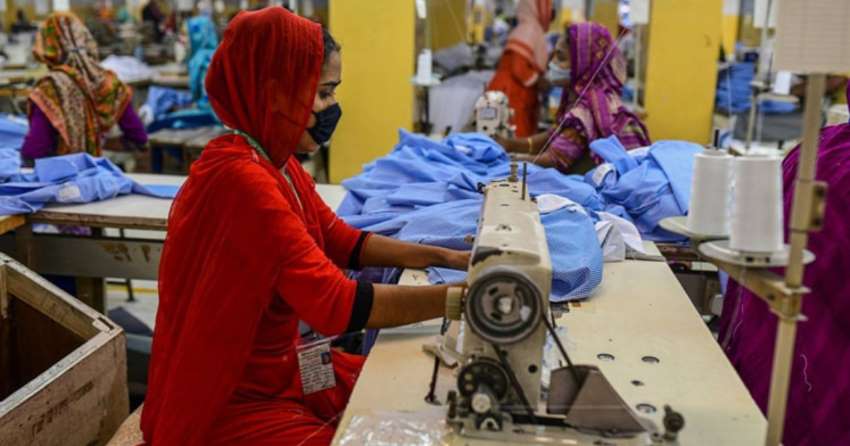
Ethiopia’s one of the largest vertically integrated textile company, Almeda Textile which supplies apparel to Sweden’s fast fashion retailer Hennes & Mauritz has concluded its expansion that took place over the past six months in Adwa city to increase its fabric production capacity by 100 per cent.
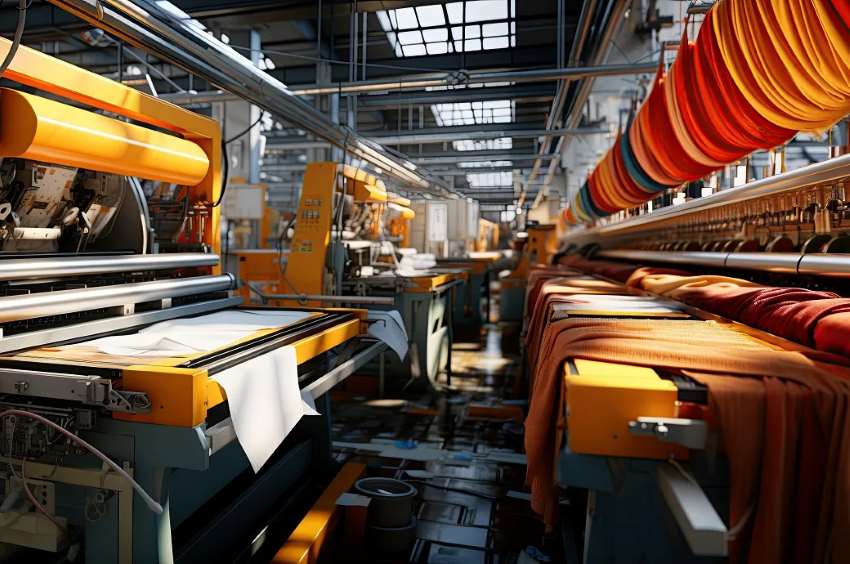
Focused on mainly replacing machinery with the latest products, the expansion is the first of three stages. The company imported Rieter brand C-70 carding machines, a New Draw Frame finisher machine and an Open End R-35 from Germany and Switzerland, as well as a Muratec winding machine from Japan. The new machinery saves energy and takes lesser time to power on and off. They are easy to manage and enhance their productivity, said Tekelemariam Tesfu, general manager of the factory.
Spinning, the production of thread, which used to yield 20,000kg per day, will now increase five-fold. This will enable the company to fulfill its own production requirements, and also look for export opportunities.
For the remaining production processes, resources and capacity will be better utilized. Because of the increase in the production at the spinning stage, the weaving and fabric making will also increase, making use of existing machinery for the latter two. Weaving will reach 32,000m of textile roll from the former output of 24,000m a day - an increase of 33pc; while the fabric making will be doubled to 7,000kg.
- 1
- 2
- 3
- 4
- 5
- 6
- 7
- 8
- 9
- 10
Beyond the DTC Rush: Levi’s hybrid channel strategy sets a new retail benchmark
The global apparel sector is entering a phase where channel strategy is no longer a tactical lever but a core... Read more
The New Rules of Resale: EPR turning secondhand into fashion’s strategic growth …
The global fashion industry is facing a decisive regulatory and commercial reset. What began as a sustainability narrative around reuse... Read more
The 2027 Mandate: Why denim’s future hinges on verifiable data
For decades, the global denim industry has relied on a narrative of durability, heritage, and authenticity. That narrative is now... Read more
Europe’s textile core unravels as costs, imports and policy pressure bite
Europe’s textile and apparel sector, long seen as a benchmark for craftsmanship and industrial depth, is slipping into a prolonged... Read more
Automation, innovation, regulation are the forces shaping textiles in 2026
The global textile sector has entered a new era. Early 2026 saw the industry breach a $1.06 trillion valuation, reflecting... Read more
The new Brussels rulebook, every EU apparel order is now a balance-sheet risk
The humble export order sheet is undergoing a transformation. What was once a straightforward commercial instrument: SKU, volume, FOB price,... Read more
Why 2026-27 could be a defining cotton year for India’s farm-to-fashion economy
The global cotton economy is entering a more constrained phase, and for India, the implications run far beyond the farm... Read more
Luxury resale’s next big battle is no longer digital, it is about who controls s…
For nearly a decade, the luxury resale story was written in the language of platforms. Market leadership was measured by... Read more
Digital Arms Race: Indian apparel giants deploy AI to neutralize tariff crisis
The Indian textile and apparel sector is in a digital survival phase in 2026, shifting from traditional labor-intensive models to... Read more
Europe’s Textile Endgame: Why Project FAE is becoming fashion’s most critical in…
Europe’s apparel majors are no longer treating circularity as a branding layer. With Project FAE or Feedstock Activation Europe, the... Read more