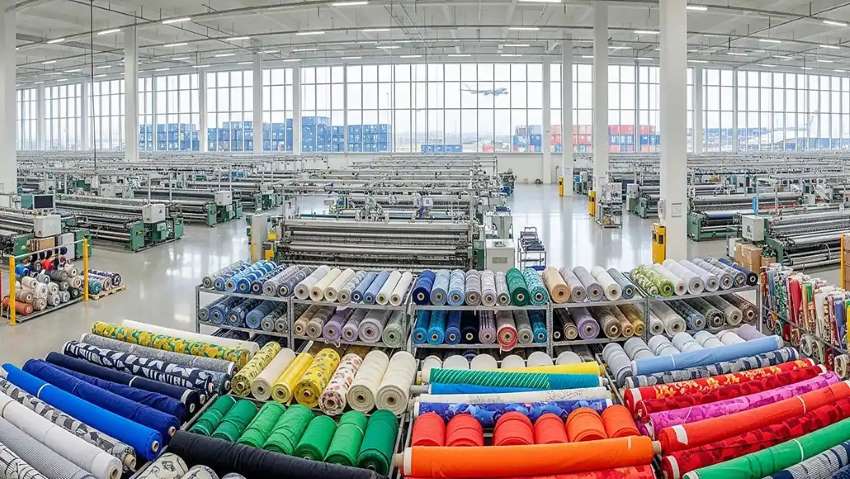
French textile machinery manufacturers are technology partners for hardware, software and services. NSC Schlumberger has introduced the ERA combing machine in a multi-servomotor drive design. With this new drive, most settings will be possible via the main control screen. The GC chain gill also benefits from additional axes driven by servomotors which allow more settings on the main control screen. All these new servomotor drives will allow more precise settings than using standard gearboxes which will enhance textile quality. Furthermore these new drives and technology allow recipes to be saved on each machine. Data exchange between machines will be possible through a Manufacturing Execution System as is remote access to the machines in case of incidents through an ethernet connection. Fil Control has a new motion reflective sensor for ring spinning machinery that allows monitoring, controlling and optimizing a yarn manufacturer’s productivity for better quality at lower cost.
Superba’s new automatic winder has an individual spindle motorization drive combined with a single tension sensor per position. It enables a constant tension winding process, a very accurate bobbin length measuring as well as an unique quality control for each yarn position. It opens up new opportunities in terms of winding quality.
- 1
- 2
- 3
- 4
- 5
- 6
- 7
- 8
- 9
- 10
Britain’s Forgotten Growth Engine: Why policy gaps are undermining fashion and t…
Britain’s fashion and textile industry, often framed through the lens of creativity and design, is emerging as a case study... Read more
Beyond price rallies structural reform can strengthen India’s cotton economy
India’s cotton economy is entering a decisive phase, where firmer prices and tighter arrivals in the 2026-27 season have given... Read more
Polyester volatility redraws India’s textile industry competitive map across Asi…
India’s synthetic textile industry has entered a phase of cost instability as polyester staple fibre (PSF) prices rise across domestic... Read more
The £7 Billion Question: Who pays for fashion’s ‘free rental’ habit?
The global fashion industry is facing an uncomfortable paradox: its most valuable customers may also be its most destructive. A... Read more
India, China Bangladesh face fresh headwinds as global apparel markets rebalance
Global apparel trade is entering a more uneven recovery phase, with demand growth persisting but losing uniform momentum across major... Read more
Global cotton enters a deficit year in 2026 as supply drop meets logistics risk
The global cotton economy has entered a fragile and sensitive phase. Early projections for the 2026-27 season suggest that world... Read more
India’s textile trade gets a Pacific push as New Zealand FTA removes tariff barr…
India and New Zealand have inked a ‘once-in-a-generation’ Free Trade Agreement (FTA), one that will have a profound impact on... Read more
Lululemon’s world-first nylon circularity push signals a new apparel arms race
The global apparel industry’s circularity narrative is entering a more technically demanding phase. Polyester recycling once the flagship of sustainable... Read more
Beyond the DTC Rush: Levi’s hybrid channel strategy sets a new retail benchmark
The global apparel sector is entering a phase where channel strategy is no longer a tactical lever but a core... Read more
The New Rules of Resale: EPR turning secondhand into fashion’s strategic growth …
The global fashion industry is facing a decisive regulatory and commercial reset. What began as a sustainability narrative around reuse... Read more