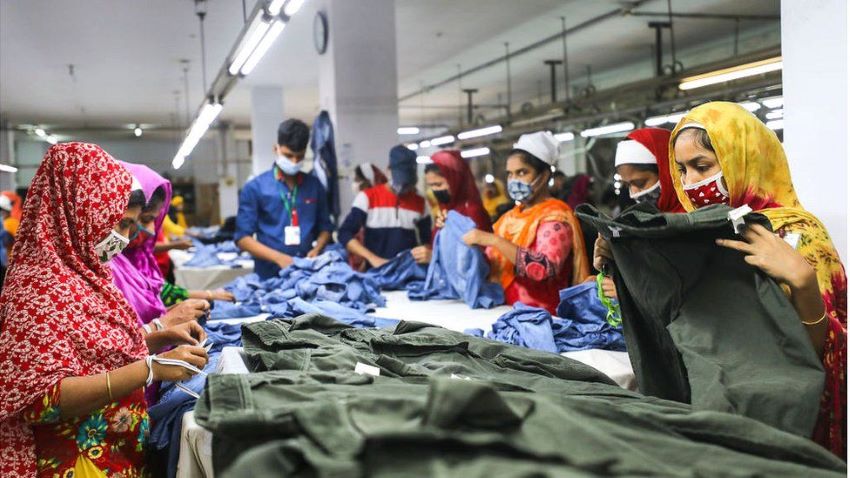
The Asia Pacific lyocell fiber industry is expected to record a CAGR of eight per cent over 2017-2024. Technological innovations have lowered the cost of fiber production and helped in enhancing production and quality of fibers. Many fiber manufacturing firms are focusing on reprocessing and reusing the fibers after the completion of their shelf life, which is expected to offer novel growth opportunities for the lyocell fiber market.
Substantial knowledge regarding pediatric sanitation accompanied by an increase in the spending capacity of consumers has resulted in a high demand for baby diapers across the Asia Pacific region. China, Indonesia, and India are predicted to be the major revenue pockets. While the decline in infant mortality rates is also predicted to influence the regional share, the thriving non-woven materials sector in Indonesia is expected to spur the product demand over the years to come.
Surging production of non-woven fabrics for medical and automobile industries along with the presence of big manufacturing giants across Europe has augmented the product demand. Europe is expected to contribute more than 12 per cent to the lyocell fiber market share by 2024, with UK, France, and Germany being the major revenue contributors. The US lyocell fiber industry is predicted to experience a notable growth over the next few years with the rise in apparel exports.

- 1
- 2
- 3
- 4
- 5
- 6
- 7
- 8
- 9
- 10
Spykar accelerates offline expansion: plans 100 new stores across India
A titan of the Indian denim-first fashion scene, Spykar has officially unveiled an aggressive retail growth strategy. As consumer demand... Read more
The Inventory Illusion: Rethinking the Zara benchmark in a volatile retail era
For over a decade, the global fashion industry has treated the Zara playbook as the gold standard of inventory efficiency.... Read more
Retail Without Retail: How Walmart’s depot network is turning space into logisti…
Walmart is fundamentally rewriting the commercial real estate and retail logistics playbook with the rise of its ‘Walmart Depots’ a... Read more
Global textile regulation tightens, forcing realignment across fashion supply ch…
Global fashion and consumer goods supply chains are entering a decisive regulatory transition as Extended Producer Responsibility (EPR) frameworks for... Read more
Luxury’s new power axis, US dominance, China reset, Gulf surge
As the post-China luxury order takes shape, the US is emerging as the industry’s most dependable growth engine, while Japan,... Read more
India’s $9 Billion Landfill Blind Spot How trashed clothes hold the key to globa…
A massive economic windfall is sitting uncollected in India’s landfills, and the key to unlocking it lies in rethinking how... Read more
Red Sea crisis reshapes textile trade routes, challenges India’s export margins,…
Global apparel trade is now in a new operational phase where geopolitical stability and logistics reliability are as important as... Read more
EU’s textile waste rules enter enforcement phase, raising alarms across fashion …
Europe’s apparel and textile industry is approaching one of its most significant regulatory transitions in decades. As the European Union... Read more
Corporate fashion adopts reverse logistics to unlock the $367 bn resale market
Global fashion retailers are rapidly changing their business models around resale, repair, and textile recovery as the secondhand apparel market... Read more
Tariff Shock 2026: Forced-labor enforcement is repricing global fashion trade
Washington’s latest trade intervention signals a break in the global apparel sourcing patterns. The Office of the United States Trade... Read more