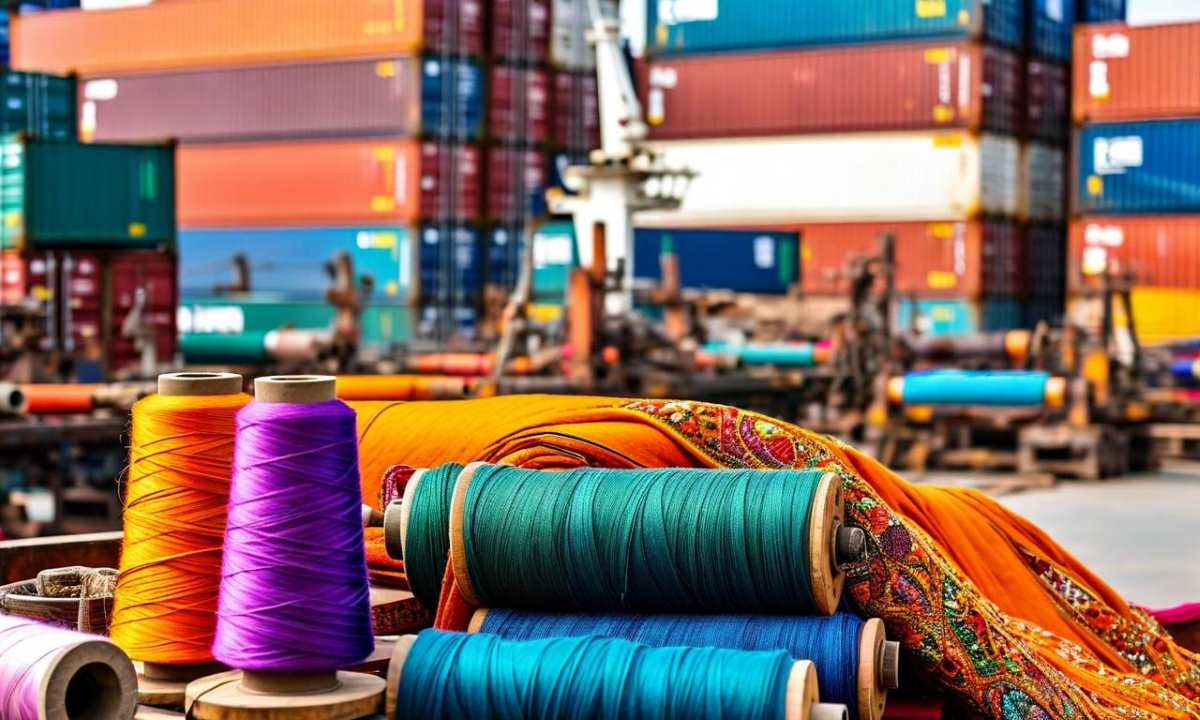
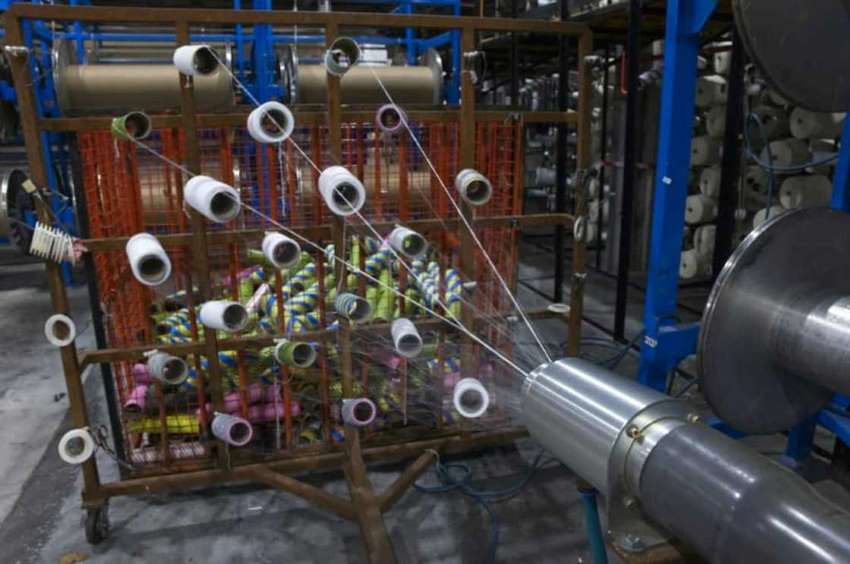
Cotton yarn manufacturers in India may not add much to capacity in the next five years. Reason: a decline in exports to China and slowing purchases from local fabric makers, who prefer to use manmade fiber than yarn; demonetisation-induced cash crunch has forced the closure of smaller spinning mills.
By the end of financial year 2016, India had 50 million spindles. There is overcapacity and so the cotton yarn industry is expected to add only about three million new spindles between 2016 and 2021. Since 2014, China has preferred to use its internal resources rather than rely on imports. So its cotton yarn imports from India have declined consistently.
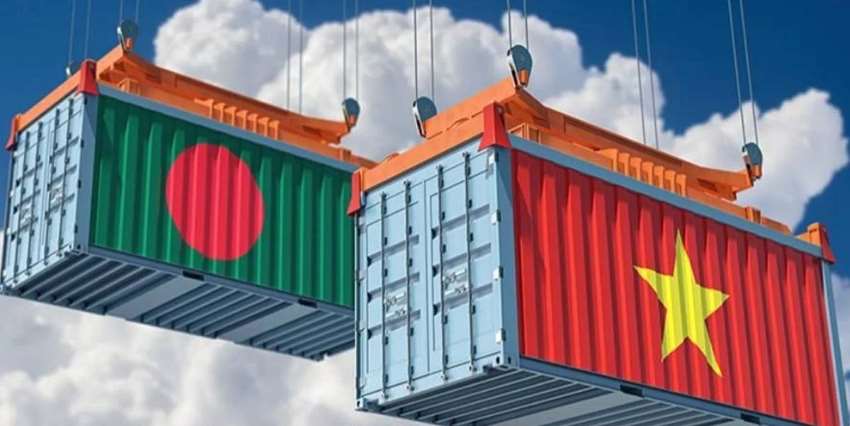
India’s cotton yarn production is estimated to fall by about five to seven per cent in financial year 2017. High cotton prices and easy availability of manmade fibers at competitive rates have led to the slower growth of production of cotton yarn. Though yarn exports to China are likely to remain low, demand for yarn in other export markets including Vietnam, Bangladesh and Pakistan is likely to remain healthy. India’s cotton yarn exports are likely to be at 1,250 million kg for financial year 2017 as against 1,309 million kg in financial year 2016.
- 1
- 2
- 3
- 4
- 5
- 6
- 7
- 8
- 9
- 10
The End of Youth Obsession: Retail’s shift toward the silver economy
Forget the youth obsession, the ‘Silver Economy’ is no longer peripheral, it is the nucleus of global retail growth. In... Read more
Footprint up, like-for-like down, Primark’s demerger comes at a critical moment
Associated British Foods’ decision to demerge Primark into a standalone listed entity, marks one of the most consequential shifts in... Read more
Yarn Expo Shenzhen 2026: GBA connectivity and AI innovation drive mid-year sourc…
The global textile industry is preparing for a strategic return to the South China manufacturing heartland as Yarn Expo Shenzhen... Read more
Fiber Rebalance: Why cotton is gaining ground in a volatile synthetic market
Into the 2026/27 season global cotton economy is entering a decisive phase. Fresh projections from the International Cotton Advisory Committee... Read more
PM MITRA parks face execution test as India’s textile exports recalibrate
India’s textile and apparel sector closed FY 2025-26 with exports worth Rs 3,16,334.9 crore, a 2.1 per cent increase that,... Read more
Dominance of Pure Play: Apparel is rewiring growth around precision, AI and trac…
The global fashion industry is entering a structural reset, and it’s not just because of cyclical demand decline or tariff... Read more
New Australian Wardrobe Economy: Where AI, sustainability, e-commerce converge
Australia’s fashion and apparel industry is no longer defined by post-pandemic recovery; it has entered a transformative phase. According to... Read more
Intertextile Shenzhen 2026- Pioneering the AI-driven future of fashion technolog…
The global textile industry is descending upon the Shenzhen Convention & Exhibition Center from June 9–11, 2026, for the highly... Read more
Yarn Expo Shenzhen 2026: GBA connectivity and AI innovation drive mid-year sourc…
The global textile industry is preparing for a strategic return to the South China manufacturing heartland as Yarn Expo Shenzhen... Read more
Indo-Dutch alliance targets textile circularity as global green jobs hit 142 mn
Netherlands and India formalized a roadmap to scale circular design and textile recycling. At the FICCI RECEIC Global Symposium 2026... Read more