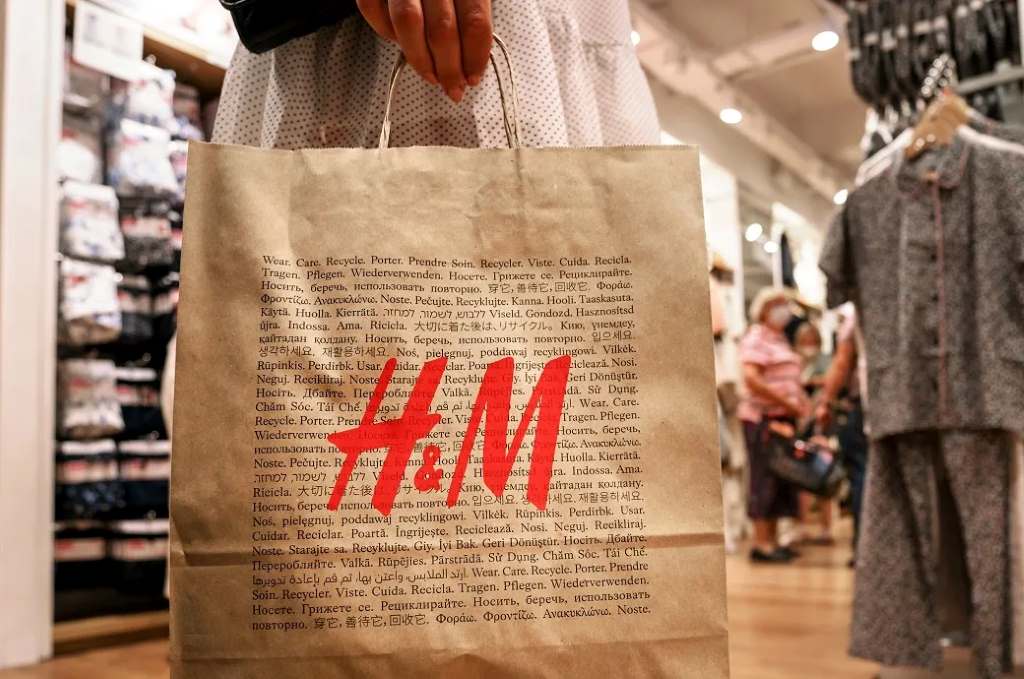
India’s packaging and labeling requirements are much more stringent than the EU’s. So India’s garment makers should revisit the policy of Maximum Retail Price (MRP) to achieve parity at the international apparel market, feels Apparel Export Promotion Council (AEPC)’s additional secretary general Vijay Mathur. He said this at the release of World Bank’s “Stitches to Riches” report in New Delhi recently. He pointed out India's growth in the global apparel sector which has been slow could have been accelerated if the country tried to adopt international practices. It hopes that when the India-EU FTA is signed, it will give India a level playing field vis-à-vis Bangladesh which currently has an advantage in the EU markets.
AEPC feels there is a need to dispel the negative perception of India in the mind of foreign investors who think that the Indian trade scenario is sluggish. AEPC has been advocating an increase in the overtime working hours from 50 hours a quarter to 50 hours a month to increase overall production.
Right now research and development activities prevalent in the Indian apparel industry are not recognized. So AEPC feels there is a need, for instance, to consider the experiments in color and fiber undertaken by the industry for sample generation as it is an important step towards business generation.

- 1
- 2
- 3
- 4
- 5
- 6
- 7
- 8
- 9
- 10
Global apparel supply chains realign as India navigates trade volatility
The global apparel and textile sector is experiencing a significant structural shift, as major manufacturers and retailers move away from... Read more
India’s textile sector targets global supply chain shift with $100 bn export pus…
As global brands push up efforts to diversify sourcing beyond traditional manufacturing hubs, India is repositioning its textile industry through... Read more
India balances farm interests and export ambitions with temporary cotton import …
" " The textile industry has received a policy reprieve after the Ministry of Finance eliminated the 11 per cent import... Read more
Global supply chain strain deepen as fashion brands tighten sourcing costs
The global apparel industry is dealing with growing sourcing tension as big fashion retailers intensify efforts to reduce procurement costs... Read more
From Voluntary to Mandatory: Asia’s manufacturing hubs lock in green compliance …
The multi-billion-dollar Asian apparel export market is entering a enforced sustainability era, where environmental and labour compliance is no longer... Read more
MediaVision report signals the end of mass-market fashion marketing
" " The latest MediaVision Q1 2026 Fashion Report highlights, the age of broad-spectrum marketing and passive brand awareness is rapidly... Read more
Circularity as Strategy: BRICS countries turn waste into competitive advantage
The global fashion industry’s long-standing take-make-dispose model is being reset as BRICS economies increase their transition toward circular production systems.... Read more
Amazon’s €15 bn bet on France and the future of commerce
As Europe’s luxury sector enters a phase of austerity, a parallel transformation is unfolding in the continent’s retail foundations. What... Read more
Global Sourcing Expo Sydney 2026: Bridging the gap in global apparel procurement
The upcoming Global Sourcing Expo Sydney, scheduled for June 16–18, 2026, at the International Convention Centre (ICC) Sydney, is poised... Read more
Zara’s precision retail model leaves global competitors drowning in inventory
The global apparel sector is currently grappling with a punishing inventory overhang, yet Inditex, the parent company of Zara, has... Read more