To forge a unified state-central roadmap for industrial scaling, the Ministry of Textiles is convening the National Textiles Ministers’ Conference in Guwahati on January 8–9, 2026. This summit is being held as the federal government extends the Production Linked Incentive (PLI) Scheme application window to March 31, 2026, signaling an urgent push to fill the manufacturing vacuum in Man-Made Fiber (MMF) and technical textiles. The strategic objective is to synchronize regional policies with the national target of achieving US$ 100 billion in exports and a total market size of US$ 350 billion by 2030.
Enhancing global competitiveness through MMF and technical textiles
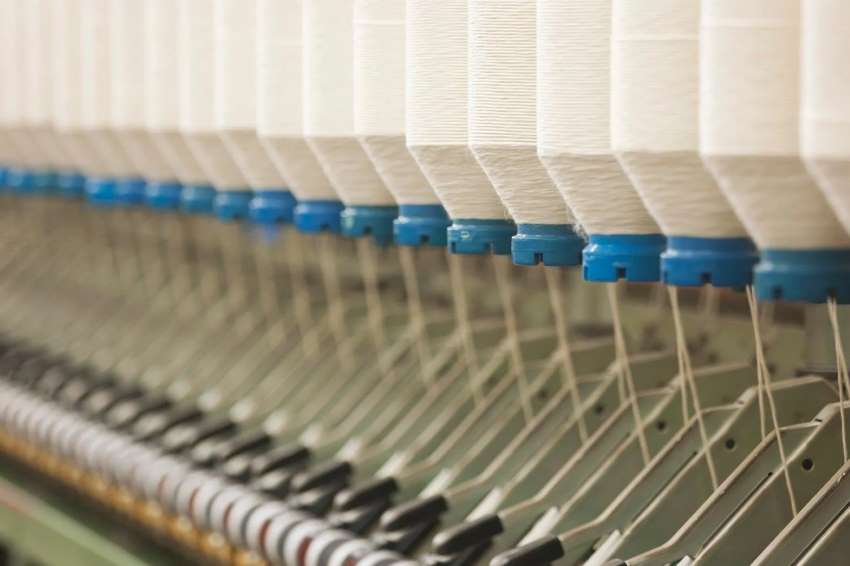
A primary focus of the Guwahati deliberations is the structural transition toward high-growth segments like MMF and functional fabrics. While India currently dominates the global cotton yarn market, it lags in the weaving and processing stages where China and Vietnam maintain a cost advantage. To counter this, the government is incentivizing large-scale integrated infrastructure through the PM-MITRA parks. Recent data indicates, India’s textile exports grew by 5.37 per cent in mid-2025, reaching US$ 3.10 billion monthly, yet officials emphasize that achieving the 2030 targets requires a sustained 15 per cent-20 per cent growth rate.
Unlocking the North-East textile corridor
The conference includes a dedicated conclave aimed at transforming North-East India into a specialized hub for sustainable and high-value textiles. By focusing on bamboo-based fibres, Muga silk, and handloom-driven women’s enterprises, the Ministry intends to brand ‘Textiles from North-East’ as a premium global category. This initiative is about integrating regional craftsmanship with global value chains to ensure our traditional heritage meets modern technical standards, states a senior official. The integration of sustainable practices and green chemistry is expected to be a key differentiator for Indian apparel in ESG-compliant Western markets.
Policy framework and sectoral objectives
The Ministry of Textiles oversees the entire value chain from fibre production to retail. Current growth plans involve operationalizing seven PM-MITRA parks and leveraging the Rs 10,683 crore PLI scheme to boost MMF output. Financially, the sector contributes 2.3 per cent to India's GDP, with a roadmap to triple current export volumes by 2030.