Myanmar’s garment sector is on track to generate $5 billion in foreign revenue this year. The Chinese Textile and Garment Association in Myanmar (CTGA) warns, a ‘raw material vacuum’ is draining the country’s foreign reserves. Currently, a staggering 95 per cent of factories operate on a restricted Cutting-Making-Packaging (CMP) basis, requiring the costly import of every component from zippers to high-grade fabrics. To counteract this dollar outflow, the industry is aggressively courting Chinese investment to transition toward a high-value Free on Board (FOB) model.
The regional export split and workforce targets
The strategic Free on Board (FOB)95 per cent urgency is backed by a shift in global demand. Recent data confirms, 60 per cent of Myanmar’s garment exports are now absorbed by the European market, followed by 20 per cent to Japan. To sustain this momentum, the Myanmar Garment Manufacturers Association (MGMA) has unveiled a ten-year roadmap (2025–2034) aiming to grow the industry into a $15 billion powerhouse. This expansion is projected to create a massive employment surge, targeting a workforce of 1.2 to 1.6 million people - up from roughly 500,000 today.
Infrastructure barriers and the energy challenge
The transition to FOB is not merely a financial shift but a technical one. At the 2025 Myanmar International Textile and Machinery Fair held in Yangon this month, over 100 exhibitors highlighted that ‘stable energy’ remains the primary hurdle for localized raw material processing.
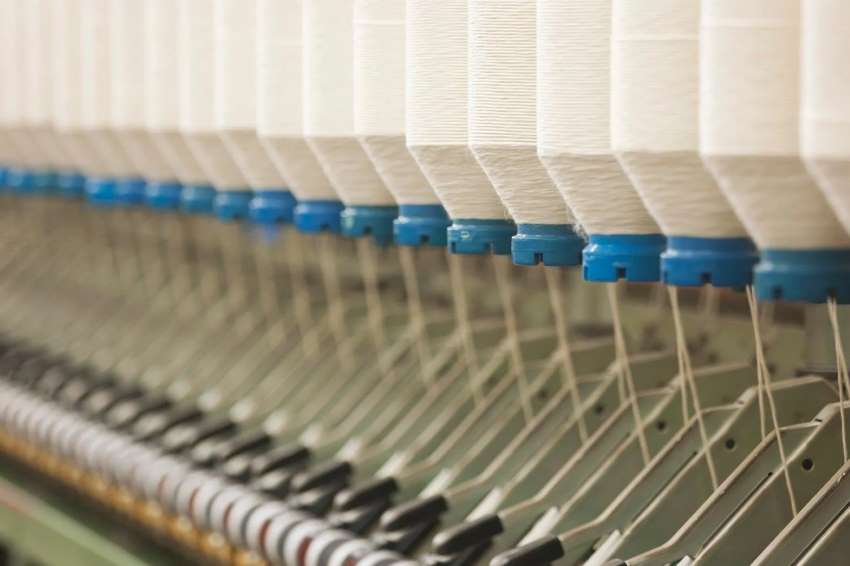
To mitigate this, Chinese investors are introducing solar-powered textile machinery and advanced generators. Successfully localizing just 20 per cent of input production could stabilize the volatile kyat and transform Myanmar from a simple assembly hub into a vertically integrated apparel giant by 2030.
Representing 523 member factories, MGMA is the primary regulatory and advocacy body for Myanmar's textile, footwear, and apparel sectors. The association oversees the production of knitwear, woven garments, footwear, and accessories, primarily serving high-street European and Japanese retailers.