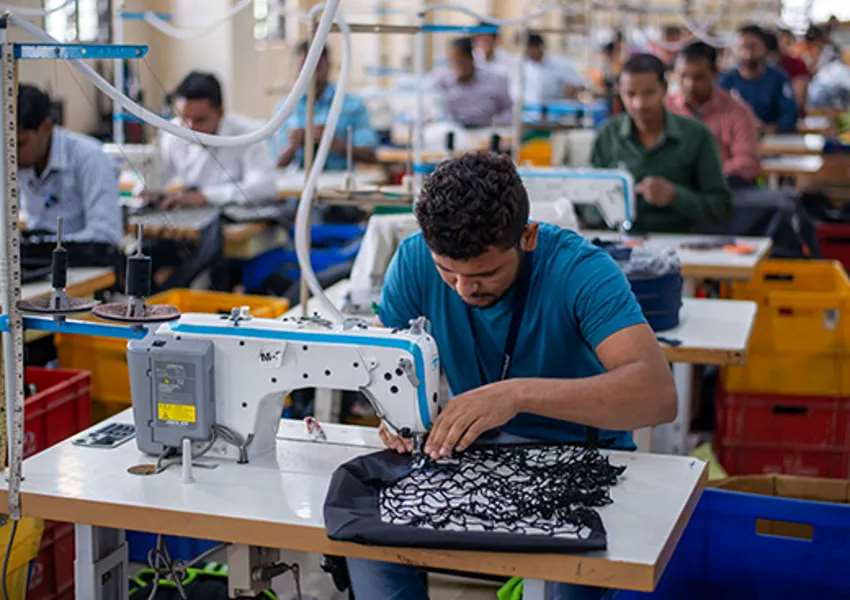
Women who work in the coir sector will soon get machines that will make their life easier. This is a one-touch automatic pneumatic loom. It can be easily operated by a single person and will be beneficial to women, who account for more than 80 per cent of the workforce in the coir sector.
Most existing machines are operated through foot pedals with a capacity of 8 mt. a day. Moreover, they require at least two people to operate them. The new looms can weave up to 128 mt. of 2 mt. wide geo-textiles. It has a single touch operation and can be worked by one person. The machine can also be used for weaving other natural fibers such as cotton and jute.
The coir manufacturing industry produces mats, matting and other floor coverings. Coir is used as ship cables, for fenders and for rigging. Ropes and cordage, made out of coconut fiber, have been in use from ancient times.
Kerala is known for its coir industry. Coconut husks are beaten into fiber for making mats and other coir products. The coir industry is the largest cottage industry in Kerala. Women are mainly involved in the yarn spinning sector and men in the product-weaving sector.
- 1
- 2
- 3
- 4
- 5
- 6
- 7
- 8
- 9
- 10
From London to Tokyo, premiumization redefines retail and office markets
Global real estate landscape has changed. Gone are the cautious narratives of recovery that defined the post-pandemic years. Today, flight... Read more
Compliance drives India’s $176 bn textile shift
India’s textile economy is no longer selling fabric alone; it is selling proof. As compliance rules harden across export markets,... Read more
The second life economy gets a boost as resale outgrows traditional apparel reta…
For decades, resale existed in the margins of the apparel economy, thrift stores, peer-to-peer marketplaces, and charity bins quietly absorbing... Read more
Rising polyester costs shake India’s textile manufacturing hubs
India’s synthetic textile industry is confronting a sudden and destabilizing price shock that is reverberating across its vast manufacturing ecosystem.... Read more
Cotton markets hold firm as tariffs, higher supply reshape global fiber economic…
In a year marked by tariff escalations, geopolitical brinkmanship and a recalibration of global trade flows, the international cotton market... Read more
Beyond Cotton How Kapok could redefine sustainable insulation in textiles
In the lush, humid heart of Southeast Asian rainforests stands a giant, a silent sentinel of the forest canopy. Growing... Read more
Bharat Tex 2026: Redefining the global textile value chain
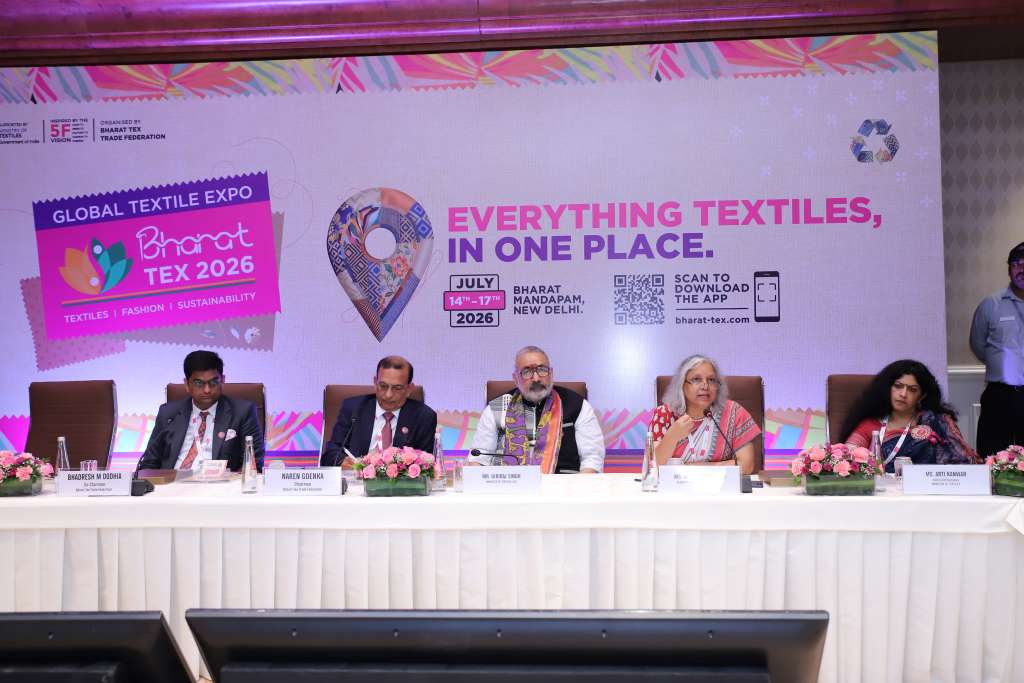
Union Minister of Textiles, Giriraj Singh, has officially unveiled Bharat Tex 2026, signaling a significant leap in India’s influence over... Read more
Intertextile Shanghai Spring 2026: A hub for global textile innovation
The textile industry’s pulse is quickening as Intertextile Shanghai Apparel Fabrics – Spring Edition prepares to open its doors from... Read more
Moscow Fashion Week 2026: Blending sustainable innovation with timeless glamour
Scheduled to run from March 14-19, 2026 in Moscow, Russia, the Moscow Fashion Week (MFW) is cementing its status as... Read more
The Store as Stage: How fashion is crafting immersive consumer worlds
The North American fashion retail sector in 2026 is shedding its product-first identity and shifting towards a model that values... Read more