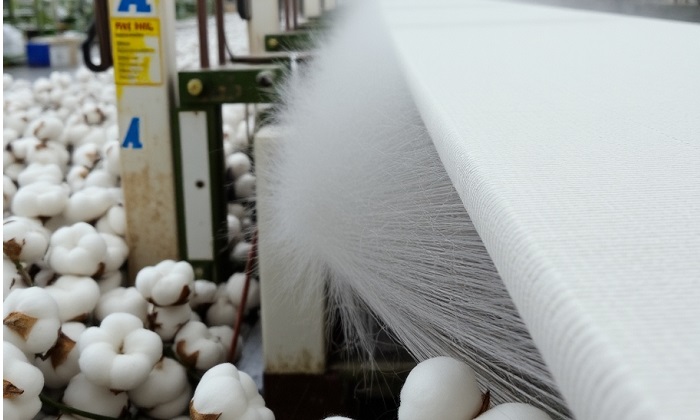
Researchers have developed a textile capable of harnessing energy from both sunlight and wind. A fabrication strategy merged two different lightweight, low-cost polymer fibers to create energy-producing textiles. The first component of the textile is a micro cable solar cell, able to gather power from ambient sunlight. The second is a nano generator capable of converting mechanical energy into electricity.
Under ambient sunlight, and in the presence of wind blowing or human motion, the textile swatch was able to charge a small commercial capacitor up to 2V in one minute. The textile could continuously power an electric watch, charge a cell phone, and even drive water-splitting reactions, releasing hydrogen.
After optimising individual components, researchers worked on optimizing the overall textile. To maximise its energy output, they had to perform a systematic optimisation of the individual electrical connections and overall patterns between the photovoltaic and tribo electric components. After the system was optimised, the team put together a plain-weave fabric that included a four-centimeter-square tribo electric textile and a 1 x 4 centimeter photovoltaic textile, mixed with wool fibers.
Overall, the fabric doesn't generate a lot of electricity. But it has the advantage of being able to generate electricity where it may be needed.
- 1
- 2
- 3
- 4
- 5
- 6
- 7
- 8
- 9
- 10
Luxury under pressure as stagflation and geopolitics redefine the winners’ circl…
The 2025 earnings for Europe’s listed luxury majors have delivered a verdict that has far more implications than the prevailing... Read more
Luxury resale goes global, sneakers, handbags, archival fashion redrawing border…
The luxury resale market in 2026 is no longer a monolithic global block. According to the RB Insights January 2026... Read more
China out but can India deliver? The realities of the global sourcing shift
With the US imposing a flat 15 per cent tariff on Chinese imports under Section 122 as of February 2026,... Read more
Luxury in Retreat: Why the aspirational consumer is gone for good
The global luxury industry is confronting an unprecedented situation. The active consumer base, which peaked at 400 million in 2022,... Read more
The Invisible Bleed: How a single chemical is slowing India’s apparel machine
The global fashion industry has spent the better part of the past two years obsessing over visible disruptions viz. volatile... Read more
The Closet Paradox: How ‘nothing to wear’ is driving global overconsumption
In an era of overflowing wardrobes and instant fashion gratification, a striking paradox has emerged: the more clothes we own,... Read more
US trade rulings and labor slowdown reshape 2026 cotton supply chains
The global cotton industry is entering a period of adjustment, shaped by legal rulings, trade policy recalibrations, and a softening... Read more
Zero-tariff paradigm drives strategic re-sourcing at Global Sourcing Expo 2026
Projected to reach a valuation of $30.3 billion this year, the Australian textile and apparel market is entering a period... Read more
Strategic manufacturing takes center stage at Gartex Texprocess Mumbai 2026
A $179 billion industrial cornerstone contributing 2 per cent to the national GDP, the Indian textile and apparel sector is... Read more
The Hidden Tax on Fashion: 2026’s EPR rules squeeze margins and shake supply cha…
As the 2026 enforcement deadlines for California’s SB 707 and the European Union’s harmonized Waste Framework Directive loom, the global... Read more