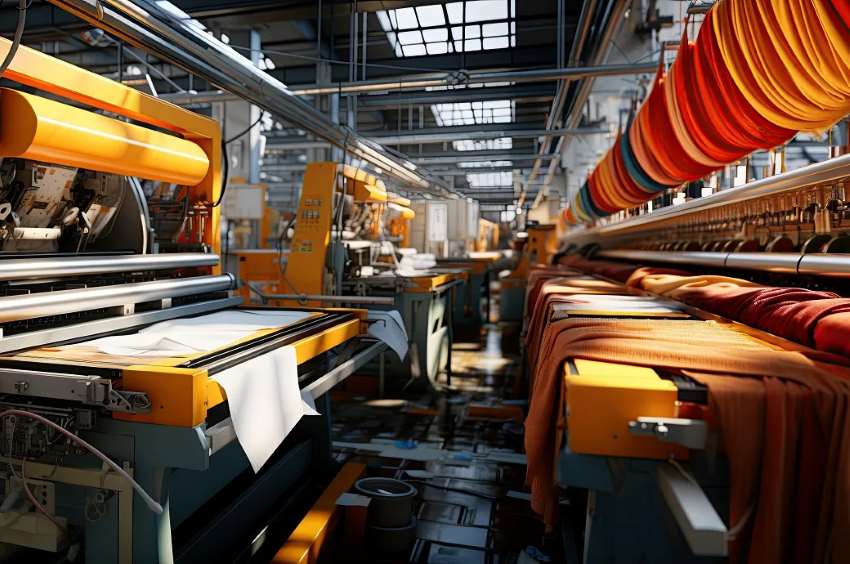
Pakistan’s textile exports to the European Union rose by 21.3 per cent during fiscal year 2015. Cotton exports increased by 4.43 per cent. Footwear exports increased 12 per cent, carpet and rug exports increased by 17.35 per cent.
During the first three quarters of the current fiscal year (2015-16), overall imports into the country declined by 4.22 per cent compared to the corresponding period of last year. Imports into the country during July to March 2015-16 were recorded at 32.515 billion dollars compared to the imports of 33.948 billion dollars during July to March 2014-15. Exports from the country also witnessed a negative growth of 12.92 per cent by falling from 17.921 billion dollars last year to 15.606 billion dollars during the current year.
Overall trade deficit during the period under review was recorded at 16.909 billion dollars compared to the deficit of 16.027 billion dollars last year, showing an increase of 5.50 per cent. Total textile exports increased from 5,45,698 metric tons in 2013 to 6,62,475 metric tons in 2015. Among textile products, exports of textile garments increased from 1,37,399 metric tons to 1,79,901 metric tons in 2015, showing an increase of 31 per cent while homemade textile exports increased from 1,95,243 metric tons to 2,59,557 metric tons in 2015, showing a growth of 33 per cent.
- 1
- 2
- 3
- 4
- 5
- 6
- 7
- 8
- 9
- 10
The new Brussels rulebook, every EU apparel order is now a balance-sheet risk
The humble export order sheet is undergoing a transformation. What was once a straightforward commercial instrument: SKU, volume, FOB price,... Read more
Why 2026-27 could be a defining cotton year for India’s farm-to-fashion economy
The global cotton economy is entering a more constrained phase, and for India, the implications run far beyond the farm... Read more
Luxury resale’s next big battle is no longer digital, it is about who controls s…
For nearly a decade, the luxury resale story was written in the language of platforms. Market leadership was measured by... Read more
Digital Arms Race: Indian apparel giants deploy AI to neutralize tariff crisis
The Indian textile and apparel sector is in a digital survival phase in 2026, shifting from traditional labor-intensive models to... Read more
Europe’s Textile Endgame: Why Project FAE is becoming fashion’s most critical in…
Europe’s apparel majors are no longer treating circularity as a branding layer. With Project FAE or Feedstock Activation Europe, the... Read more
Engineering color at source, dye-free production is cutting cost, water, and tim…
For over a century, coloring has been anchored in wet processing, an energy-intensive, chemically saturated stage that happen post spinning.... Read more
The €11 bn deadlock, can Europe’s textile recycling catch up?
Europe is at a tipping point. Fast fashion consumption, led by rising incomes and a growing global middle class, has... Read more
From field to fiber, Bharat CottonNet is closing India’s cotton value gap
India’s cotton economy is entering a decisive phase of reform with the rollout of Bharat CottonNet 2026 along with the... Read more
US apparel imports drop 13.5% as Vietnam gains and China’s grip breaks
The US apparel sourcing market has entered 2026 with a sharp demand decline but an equally important shift in supplier... Read more
H&M finds growth below revenue line as margin discipline pays off
H&M Group’s latest quarter signals a decisive shift in global fast fashion: scale is no longer the primary reason for... Read more