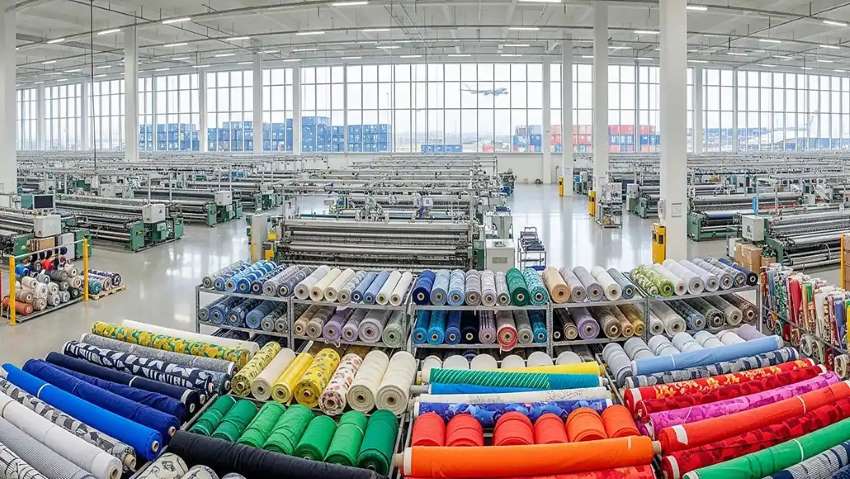
Prices of polyester filament yarn in China kept falling in the second half of 2019. Stocks of grey fabric accumulated in September and the operating rate of fabric mills rose. In October, stocks of grey fabric declined by around six days, and players became more cautious in restocking. Some plants cut the run rate. Stocks of knitted fabrics dropped, mainly winter fabrics like plush fabric and water-jet fabric. Stocks of lining and silk-like fabric were especially high.
Downstream plants have a chance to hoard stocks when feedstock price is low. In addition, if feedstock price remains firm or hits a new low, some plants may prepare feedstock in advance. Some PET bottle chip plants plan to have a turnaround in November, but some polyester units that had a turnaround before will resume operation. Polyester fiber plants are unlikely to intensively cut the run rate in November supported by rigid demand and taking the spring festival into account.
New units in the upstream market are still anticipated to start operation but some are delayed. No change in capacity expansion is expected. Besides, the anticipation of end-user polyester demand will be revised slightly. Downstream players are not very confident on demand in the second half of the year.
- 1
- 2
- 3
- 4
- 5
- 6
- 7
- 8
- 9
- 10
The rise of localized luxury, MEA, North America, and India lead growth
The global luxury industry is no longer defined by relentless expansion. The ‘2025 Global Luxury Brandwatch Report’ highlights a sector... Read more
Hormuz blockade sends shockwaves through India’s textile chain as polyester cost…
What began as a geopolitical escalation in the Gulf has rapidly metastasized into a full-scale industrial disruption for India’s textile... Read more
India’s National Fibre Scheme decouples textiles from global supply risks
For decades the Indian dominated spinning, weaving, and garment exports while remaining paradoxically dependent on imported man-made fibres and specialty... Read more
From London to Tokyo, premiumization redefines retail and office markets
Global real estate landscape has changed. Gone are the cautious narratives of recovery that defined the post-pandemic years. Today, flight... Read more
Compliance drives India’s $176 bn textile shift
India’s textile economy is no longer selling fabric alone; it is selling proof. As compliance rules harden across export markets,... Read more
The second life economy gets a boost as resale outgrows traditional apparel reta…
For decades, resale existed in the margins of the apparel economy, thrift stores, peer-to-peer marketplaces, and charity bins quietly absorbing... Read more
Rising polyester costs shake India’s textile manufacturing hubs
India’s synthetic textile industry is confronting a sudden and destabilizing price shock that is reverberating across its vast manufacturing ecosystem.... Read more
Cotton markets hold firm as tariffs, higher supply reshape global fiber economic…
In a year marked by tariff escalations, geopolitical brinkmanship and a recalibration of global trade flows, the international cotton market... Read more
Beyond Cotton How Kapok could redefine sustainable insulation in textiles
In the lush, humid heart of Southeast Asian rainforests stands a giant, a silent sentinel of the forest canopy. Growing... Read more
Bharat Tex 2026: Redefining the global textile value chain
Union Minister of Textiles, Giriraj Singh, has officially unveiled Bharat Tex 2026, signaling a significant leap in India’s influence over... Read more