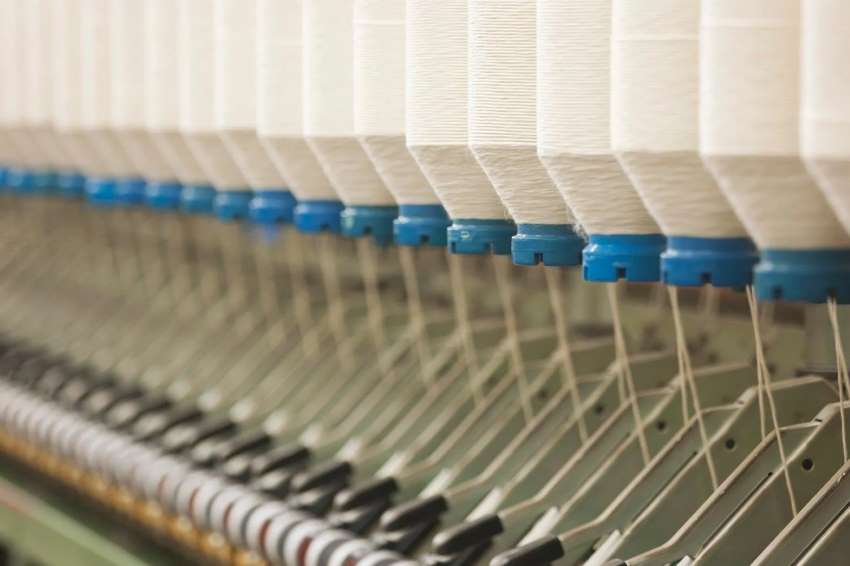
Russia plans to create conditions that would attract foreign investments in its national technical textiles industry in the next few years. The planned measures will mainly include provision of tax and customs benefits to foreign investors and the allocation of funds for the establishment of facilities for the production of technical textiles and nonwovens within Russia. One of the biggest purchasers of the products that will be produced at the future plants, to be operated by foreigners, will be Russia itself.
Chinese investors have expressed interest in acquiring some of Russia’s leading nonwovens and technical textiles mills in order to produce and export finished products for their domestic market, where the demand for technical textiles in recent years has significantly increased.
In addition, German and French enterprises have also expressed interest in the Russian technical textiles industry. The companies are planning to supply the latest technologies in the field of technical textiles production.
However, the potential sale of some of Russia’s leading industry players to foreign companies, especially Chinese, has sparked criticism. There are fears foreign acquisitions may pose a threat to the Russian state security, since many of the Russian companies involved in the negotiations supply their products for the needs of the domestic defense and space industries.

- 1
- 2
- 3
- 4
- 5
- 6
- 7
- 8
- 9
- 10
India’s $9 Billion Landfill Blind Spot How trashed clothes hold the key to globa…
A massive economic windfall is sitting uncollected in India’s landfills, and the key to unlocking it lies in rethinking how... Read more
Red Sea crisis reshapes textile trade routes, challenges India’s export margins,…
Global apparel trade is now in a new operational phase where geopolitical stability and logistics reliability are as important as... Read more
EU’s textile waste rules enter enforcement phase, raising alarms across fashion …
Europe’s apparel and textile industry is approaching one of its most significant regulatory transitions in decades. As the European Union... Read more
Corporate fashion adopts reverse logistics to unlock the $367 bn resale market
Global fashion retailers are rapidly changing their business models around resale, repair, and textile recovery as the secondhand apparel market... Read more
Tariff Shock 2026: Forced-labor enforcement is repricing global fashion trade
Washington’s latest trade intervention signals a break in the global apparel sourcing patterns. The Office of the United States Trade... Read more
Circular Samvaad 2.0 aims to transform Indian textiles from linear waste to glob…
On the occasion of World Environment Day, industry leaders, policymakers, and international experts gathered in the capital yesterday for Circular... Read more
From Sentiment to Sustainability: How Mumbai’s ‘Mega Post Textile Waste Initiat…
Walk into almost any Indian household, and you will find wardrobes harboring clothes that haven’t been worn in years. They... Read more
CMAI launches new initiative to combat waste and formalize textile recovery acro…
In a landmark move to address the mounting crisis of post-consumer textile waste, the Clothing Manufacturers Association of India (CMAI)... Read more
Trends-Fabrics (Denim-Kidswear) trends for Spring/Summer 2026-27 by Drapers
For the Spring/Summer 2026-27 season, the kidswear denim market is defined by a shift toward lightweight comfort, playful aesthetics, and... Read more
Cost spiral across fibers, chemicals and logistics squeezes India’s apparel expo…
India’s textile manufacturing sector has entered one of its most financially strained periods in recent years as increasing fiber, yarn,... Read more