Japan's leading computerized knitting machine manufacturer Shima Seiki will display its SWG091N2 compact whole garment knitting machine suited to seam-free knit production in athletic performance wear for the first time at the ISPO exhibition in Munich, Germany this February. The expo, organized by Messe München GmbH, will be held at Messe München.
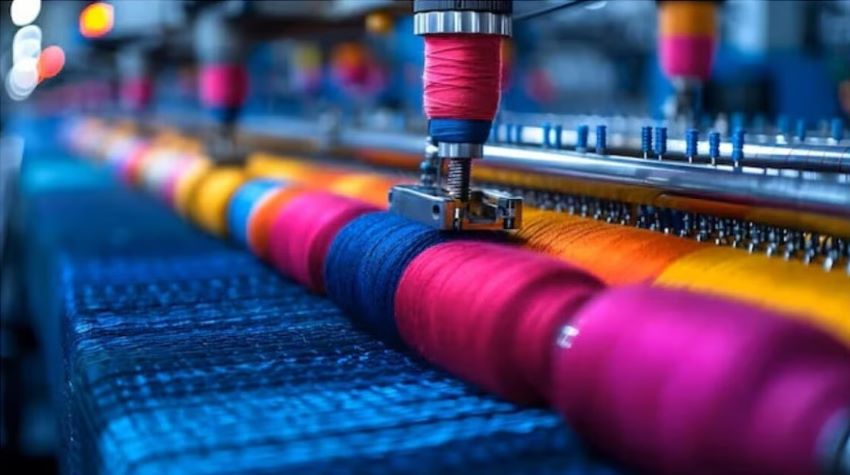
The company together with its Italian subsidiary Shima Seiki Italia S.p.A. will participate in the expo to be held from February 5-8, 2015. Featuring Shima Seiki’s original SlideNeedle, SWG091N2 is capable of flexible production from small knitted items such as gloves and socks to garment-size products. It can also knit various textures and fabric structures for creating partial compression, spacer fabric and other effects that aid in athletic support and protection. SWG091N2 can knit all of these items in 3D without any seams.
The latest version of Shima Seiki’s SDS-ONE APEX3 3D design system will also be available for demonstrations. An ‘all-in-one’3D design system that supports all aspects of fashion design and production, SDS-ONE APEX3 is at the core of Shima Seiki’s ‘Total Knitting System’ and ‘Total Fashion System’ concepts, allowing smooth workflow from planning, design and programming to production and even sales promotion.
APEX 3 also improves on the planning process through photo-realistic simulation capability, effectively reducing time, material and cost from the sampling process with Virtual Sampling. Products can be checked with 3D simulation, such as 3D modeling, 3D fitting and 3D mapping.
- 1
- 2
- 3
- 4
- 5
- 6
- 7
- 8
- 9
- 10
China’s duty-free revival meets a reality check as Hainan shifts from VICs to va…
Hainan’s retail recovery is beginning to look less like a cyclical rebound and more like a rewiring of China’s domestic... Read more
Zombie inventory and shrinking margins inside China’s fashion returns meltdown
China’s digital fashion market, long celebrated as the world’s most sophisticated test bed for e-commerce innovation, is facing a destabilising... Read more
Circularity by Design: How EU rules are turning data into fashion’s new currency
The European fashion sector has entered a compressed transition window. Two regulatory confirmations: the revised EU Textile Labelling Regulation (effective... Read more
The Lyst Reset: Chanel and Dior rewrite luxury’s power index
The global luxury hierarchy has been quietly rewritten, and not by sales alone. In Q1 2026, Chanel rose to the... Read more
Inventory, not expansion, defines winners in global apparel
The 2025 fiscal year has crystallised that revenue growth and operational health are no longer moving in tandem. In an... Read more
From growth-at-all-costs to cash discipline, the new economics of DTC fashion
The global direct-to-consumer apparel market is entering a correction phase, as fashion brands across the US, Europe and the UK... Read more
Britain’s Forgotten Growth Engine: Why policy gaps are undermining fashion and t…
Britain’s fashion and textile industry, often framed through the lens of creativity and design, is emerging as a case study... Read more
Beyond price rallies structural reform can strengthen India’s cotton economy
India’s cotton economy is entering a decisive phase, where firmer prices and tighter arrivals in the 2026-27 season have given... Read more
Polyester volatility redraws India’s textile industry competitive map across Asi…
India’s synthetic textile industry has entered a phase of cost instability as polyester staple fibre (PSF) prices rise across domestic... Read more
The £7 Billion Question: Who pays for fashion’s ‘free rental’ habit?
The global fashion industry is facing an uncomfortable paradox: its most valuable customers may also be its most destructive. A... Read more