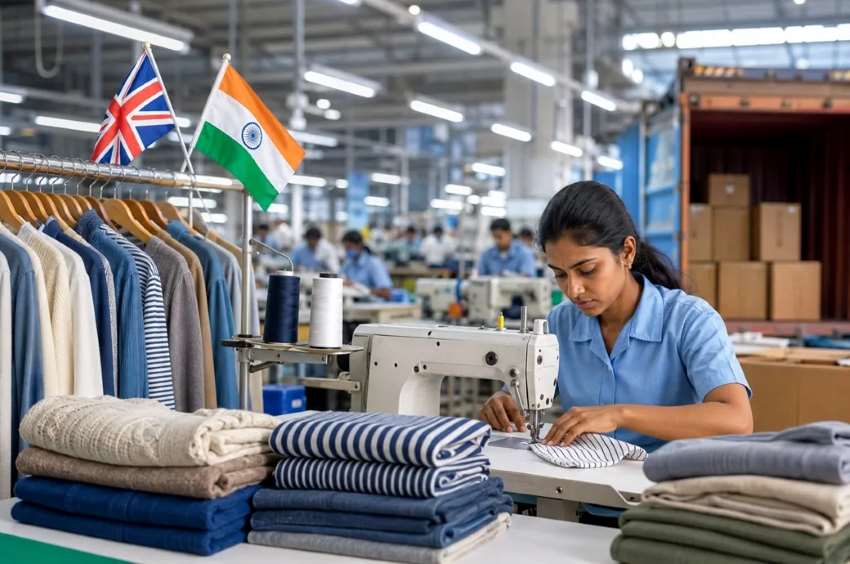
Telangana is unveiling a bouquet of incentives for the textile and apparel sector. The incentives will cover fiber to fabric and cover capital and operational assistance, infrastructure support; capacity building and skill development. The proposed incentives aims to create an environment to encourage investments in downstream processing activities, mainly focusing on spinning, weaving, knitting, processing and garment manufacturing, including made-ups.
Besides encouraging new units across the value chain, the incentives will also support existing units to modernise and expand and undertake marketing and promotion activities. Units having investments over Rs 200 crores and/or providing employment to more than 1,000 people would be treated as mega projects and considered for special tailor-made incentives, if need be.
While the emphasis is on encouraging industry, to attract investments and generating employment opportunities for the local population, the industry is expected to provide fair and decent wages to the workforce. In doing so, the focus would also be on ensuring against exploitation of the workforce by the enterprises.
Though the state produces about 60 lakh bales of cotton, processing and value addition are largely limited to ginning and pressing. Roughly 10 lakh bales are utilised by the 35 spinning mills in the state that have a capacity of 9.3 lakh spindles.

- 1
- 2
- 3
- 4
- 5
- 6
- 7
- 8
- 9
- 10
Global textile regulation tightens, forcing realignment across fashion supply ch…
Global fashion and consumer goods supply chains are entering a decisive regulatory transition as Extended Producer Responsibility (EPR) frameworks for... Read more
Luxury’s new power axis, US dominance, China reset, Gulf surge
As the post-China luxury order takes shape, the US is emerging as the industry’s most dependable growth engine, while Japan,... Read more
India’s $9 Billion Landfill Blind Spot How trashed clothes hold the key to globa…
A massive economic windfall is sitting uncollected in India’s landfills, and the key to unlocking it lies in rethinking how... Read more
Red Sea crisis reshapes textile trade routes, challenges India’s export margins,…
Global apparel trade is now in a new operational phase where geopolitical stability and logistics reliability are as important as... Read more
EU’s textile waste rules enter enforcement phase, raising alarms across fashion …
Europe’s apparel and textile industry is approaching one of its most significant regulatory transitions in decades. As the European Union... Read more
Corporate fashion adopts reverse logistics to unlock the $367 bn resale market
Global fashion retailers are rapidly changing their business models around resale, repair, and textile recovery as the secondhand apparel market... Read more
Tariff Shock 2026: Forced-labor enforcement is repricing global fashion trade
Washington’s latest trade intervention signals a break in the global apparel sourcing patterns. The Office of the United States Trade... Read more
Circular Samvaad 2.0 aims to transform Indian textiles from linear waste to glob…
On the occasion of World Environment Day, industry leaders, policymakers, and international experts gathered in the capital yesterday for Circular... Read more
From Sentiment to Sustainability: How Mumbai’s ‘Mega Post Textile Waste Initiat…
Walk into almost any Indian household, and you will find wardrobes harboring clothes that haven’t been worn in years. They... Read more
Trends-Fabrics (Denim-Kidswear) trends for Spring/Summer 2026-27 by Drapers
For the Spring/Summer 2026-27 season, the kidswear denim market is defined by a shift toward lightweight comfort, playful aesthetics, and... Read more