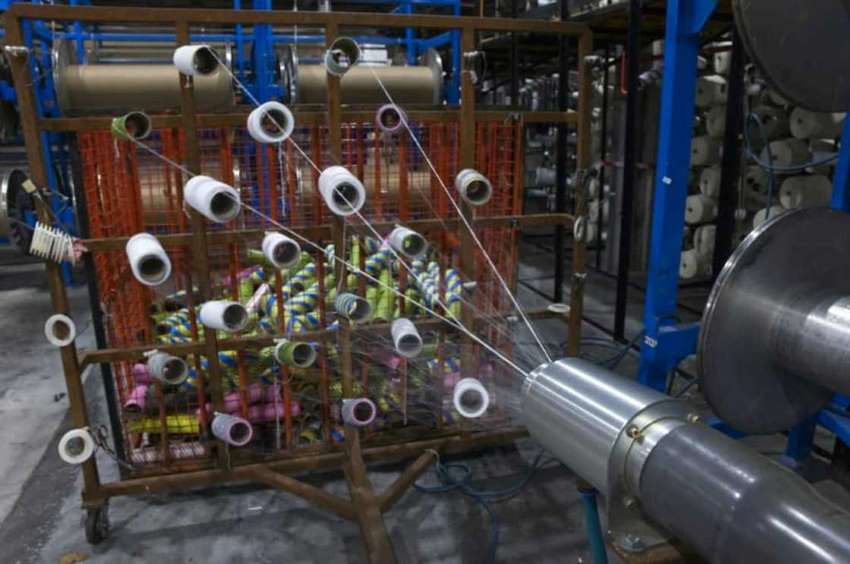
The 'hank yarn obligation', an age old stipulation obligating the textile mills to produce a minimum of 40 per cent of the yarn as hank yarn, is a deterrent to growth and threat to their economic viability. According to the textile entrepreneurs from Tirupur, though there are certain exceptions provided on the clause when it comes to production of blended and hosiery yarn, this old rule holds no significance in the present textile scenario existing in a liberalised economical condition. They wanted the obligation rule either be scrapped or reduce the obligation limit to 10 per cent.
D Prabhu, secretary of Texpreneuers Forum, points out that with the introduction of schemes like Technology Upgradation Fund Scheme, many handloom weavers have moved either to power looms or auto looms. Hence, the demand for hank yarn has come down. The textile units were forced to produce 40 per cent of the yarn as hank yarn without having adequate demand in the market.
Prabhu further says that the forum has pointed out in its representation to the Union Textiles Ministry that due to the hank yarn obligation rule, about 3.21 crore kilograms of hank yarn is produced in the state in a month against the actual requirement of 16.22 lakh kg. Scenario across the country is also almost the same. Textile mill owners are of the opinion that the report of an external agency appointed by the government to study the repercussions of hank yarn obligation on textile sector should be released soon.
- 1
- 2
- 3
- 4
- 5
- 6
- 7
- 8
- 9
- 10
From field to fiber, Bharat CottonNet is closing India’s cotton value gap
India’s cotton economy is entering a decisive phase of reform with the rollout of Bharat CottonNet 2026 along with the... Read more
US apparel imports drop 13.5% as Vietnam gains and China’s grip breaks
The US apparel sourcing market has entered 2026 with a sharp demand decline but an equally important shift in supplier... Read more
H&M finds growth below revenue line as margin discipline pays off
H&M Group’s latest quarter signals a decisive shift in global fast fashion: scale is no longer the primary reason for... Read more
As Europe cuts orders, India sees a rare export window post-FTA
The sharp dip in EU apparel imports is not, at first glance, the kind of headline exporters celebrate. January’s 15.48... Read more
The Death of the "Stockpile" Model: Inside the Digital Textile disrupt…
For decades, the global textile industry has been a game of high-stakes gambling: manufacture thousands of identical garments, ship them... Read more
Fuel crisis, rising costs the geopolitical shockwave hitting Indian textiles
The hum of textile machinery in Panipat has gone dead. Over 400 dyeing units have put their shutters, not because... Read more
Price wars, fast fashion, diamond money leads to Surat’s industrial shake-up
The sound of Surat’s diamond polishing wheels, once the city’s heartbeat, is fading. In its place, the relentless pulse of... Read more
India’s textile market nears Rs 15 lakh cr as domestic demand rewrites growth
India’s textile and apparel economy is no longer being driven merely by population growth or festive consumption cycles. It is... Read more
China Discounts, Bangladesh Bleeds: Inside Europe’s new apparel sourcing crisis
Europe’s fashion imports opened 2026 with a hard jolt. Fresh Eurostat-linked trade data for January shows the European Union’s apparel... Read more
Geopolitical volatility triggers sharp decline in global textile confidence: Sur…
The global textile industry is grappling with a sudden and severe downturn in sentiment as regional conflicts disrupt essential trade... Read more