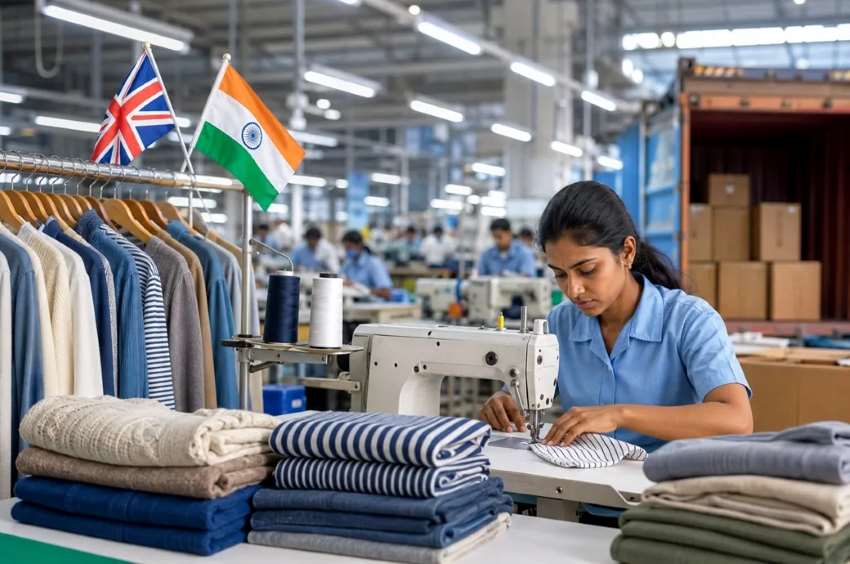
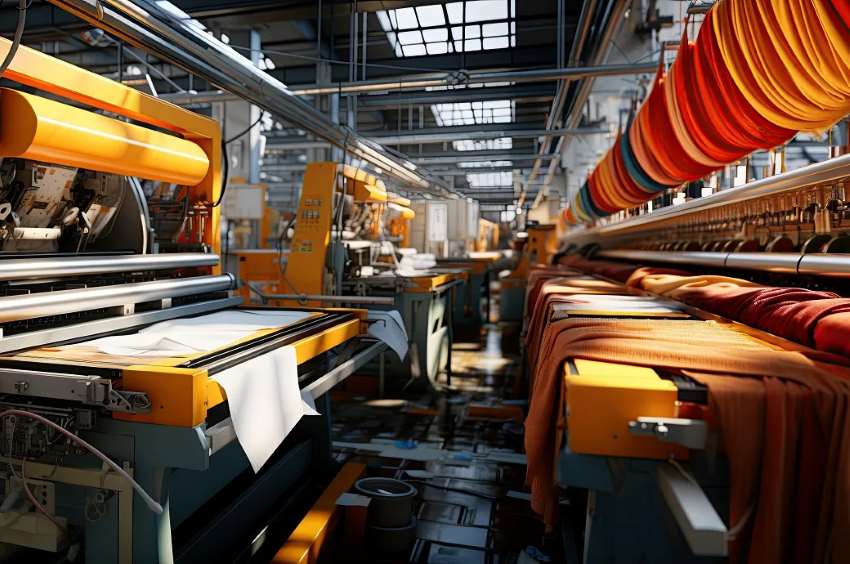
The year when the TPP and the Vietnam-EU FTA are expected to take effect, the Vietnam National Textile and Garment Group (Vinatex) will strive to raise the local content of its products to 60 per cent as of 2018. Said Tran Quang Nghi, Chairman of Vinatex, only by doing so can the group meet the requirements of these two new-generation FTAs in order to fully benefit from preferential tariffs. In this direction, Vinatex recently started operation of two yarn making factories and a dyeing-weaving plant. A yarn factory in northern Nam Dinh province is scheduled to be launched in the first quarter of this year, while preparations are underway for a yarn-dyeing-weaving complex in the central province of Quang Nam. The complex is expected to supply around 12,000 tonnes of knitted material a year.
By the first half of this year, six other garment making plants are also slated to be completed. However, textile and garment sector experts say it will take some time before the new generation FTAs can actually bring any benefit, as both the TPP and the EU FTA have to wait for Parliament approval in member countries and other time-consuming preparation procedures.
Thus making 2016 a year of many challenges for the sector, more so when 2016 is forecasted as a year of fluctuations in the financial market and the world’s pace of growth.
- 1
- 2
- 3
- 4
- 5
- 6
- 7
- 8
- 9
- 10
Zombie inventory and shrinking margins inside China’s fashion returns meltdown
China’s digital fashion market, long celebrated as the world’s most sophisticated test bed for e-commerce innovation, is facing a destabilising... Read more
Circularity by Design: How EU rules are turning data into fashion’s new currency
The European fashion sector has entered a compressed transition window. Two regulatory confirmations: the revised EU Textile Labelling Regulation (effective... Read more
The Lyst Reset: Chanel and Dior rewrite luxury’s power index
The global luxury hierarchy has been quietly rewritten, and not by sales alone. In Q1 2026, Chanel rose to the... Read more
Inventory, not expansion, defines winners in global apparel
The 2025 fiscal year has crystallised that revenue growth and operational health are no longer moving in tandem. In an... Read more
From growth-at-all-costs to cash discipline, the new economics of DTC fashion
The global direct-to-consumer apparel market is entering a correction phase, as fashion brands across the US, Europe and the UK... Read more
Britain’s Forgotten Growth Engine: Why policy gaps are undermining fashion and t…
Britain’s fashion and textile industry, often framed through the lens of creativity and design, is emerging as a case study... Read more
Beyond price rallies structural reform can strengthen India’s cotton economy
India’s cotton economy is entering a decisive phase, where firmer prices and tighter arrivals in the 2026-27 season have given... Read more
Polyester volatility redraws India’s textile industry competitive map across Asi…
India’s synthetic textile industry has entered a phase of cost instability as polyester staple fibre (PSF) prices rise across domestic... Read more
The £7 Billion Question: Who pays for fashion’s ‘free rental’ habit?
The global fashion industry is facing an uncomfortable paradox: its most valuable customers may also be its most destructive. A... Read more
India, China Bangladesh face fresh headwinds as global apparel markets rebalance
Global apparel trade is entering a more uneven recovery phase, with demand growth persisting but losing uniform momentum across major... Read more