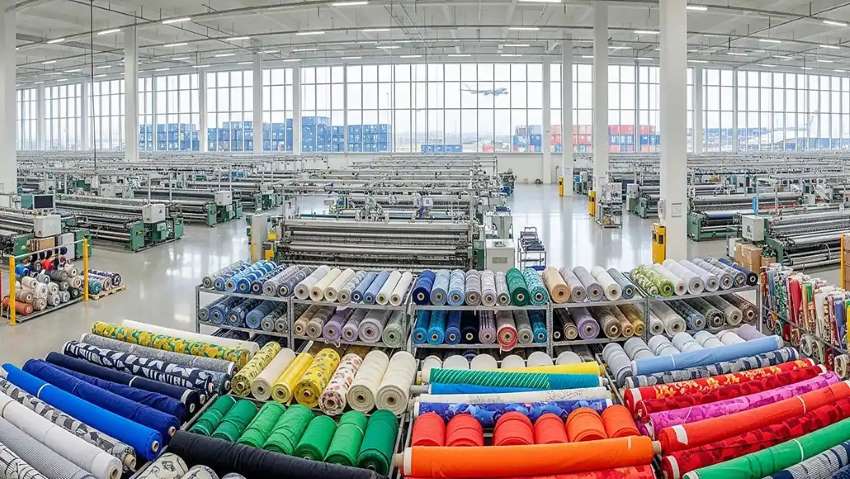
A World Bank book titled ‘Stitches to Riches’, offers specific policy recommendations for stakeholders to better leverage the apparel manufacturing sector's potential in South Asia. The book is focused on identifying key bottlenecks and areas for improvement in the South Asian countries compared with those of their closest competitors in the South East Asian region (Vietnam, Cambodia, and Indonesia).
The recommendations include:) removing trade restrictions to allow easy access to manmade fibers as inputs; increasing efficiency along the value chain such as integration between textile and apparel; and third improving social and environmental compliance by introducing better human resource practices.
At the country level, policy highlights include suggestions that Bangladesh should improve performance on non-cost factors important to buyers. Stitches to Riches says India must address constraints to firm growth (like integration of textile and apparel, and access to manmade fibers), and Sri Lanka should position itself as regional hub and take advantage of emerging markets.
The book also suggests that Pakistan should increase product diversity and reliability, and take advantage of new markets. Stitches to Riches has been motivated by South Asia's urgent need to create more and better jobs for a growing population.
- 1
- 2
- 3
- 4
- 5
- 6
- 7
- 8
- 9
- 10
$120 Crude, Zero Margin: How India’s textile hubs are paying the price
For India’s textile clusters, the current West Asia crisis is no longer a distant geopolitical headline. In Surat’s polyester corridors... Read more
Luxury under pressure as stagflation and geopolitics redefine the winners’ circl…
The 2025 earnings for Europe’s listed luxury majors have delivered a verdict that has far more implications than the prevailing... Read more
Luxury resale goes global, sneakers, handbags, archival fashion redrawing border…
The luxury resale market in 2026 is no longer a monolithic global block. According to the RB Insights January 2026... Read more
China out but can India deliver? The realities of the global sourcing shift
With the US imposing a flat 15 per cent tariff on Chinese imports under Section 122 as of February 2026,... Read more
Luxury in Retreat: Why the aspirational consumer is gone for good
The global luxury industry is confronting an unprecedented situation. The active consumer base, which peaked at 400 million in 2022,... Read more
The Invisible Bleed: How a single chemical is slowing India’s apparel machine
The global fashion industry has spent the better part of the past two years obsessing over visible disruptions viz. volatile... Read more
The Closet Paradox: How ‘nothing to wear’ is driving global overconsumption
In an era of overflowing wardrobes and instant fashion gratification, a striking paradox has emerged: the more clothes we own,... Read more
US trade rulings and labor slowdown reshape 2026 cotton supply chains
The global cotton industry is entering a period of adjustment, shaped by legal rulings, trade policy recalibrations, and a softening... Read more
Zero-tariff paradigm drives strategic re-sourcing at Global Sourcing Expo 2026
Projected to reach a valuation of $30.3 billion this year, the Australian textile and apparel market is entering a period... Read more
Strategic manufacturing takes center stage at Gartex Texprocess Mumbai 2026
A $179 billion industrial cornerstone contributing 2 per cent to the national GDP, the Indian textile and apparel sector is... Read more