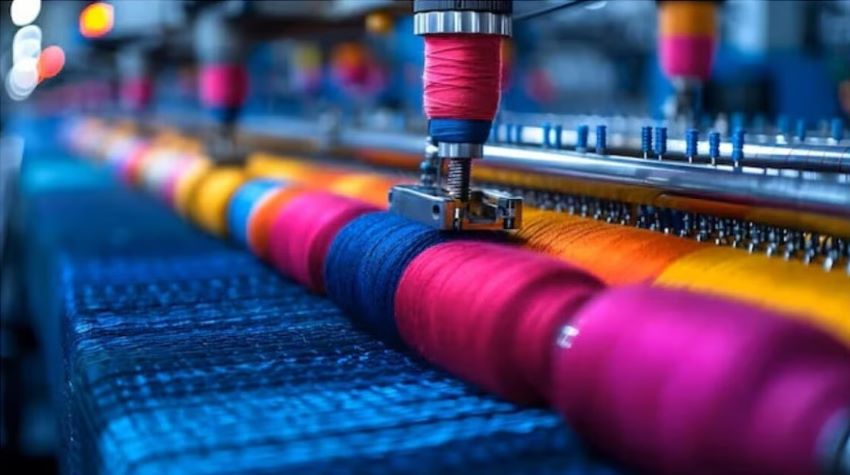
The next edition of Yarn expo will be held in China from March 18 to 20, 2015. This is a fair for fiber and yarn products. There will be a bio fiber zone. This will promote the use of biochemical fibers. Biochemical fiber will be the next big product in China. Developing renewable materials is a major focus in the country’s 13th five-year plan that runs from 2016 to 2020.
Besides bio fiber zone, more renewable fibers from nine exhibitors can be found in the renewable and recycled zone. The products shown in the bio fiber zone are made have low energy consumption and carbon emission during production process. Several other special zones in the pavilion will showcase different innovative fibers and yarns. The cotton polyester fiber zone will feature newly developed super imitation cotton fibers that can be used in sportswear and denim fabrics. These products score in terms of moisture absorption, softness and pilling resistance.
Visitors can find carbon fibers, heat-resistant para-aramid fibers and polyamide fibers as well as other functional fibers which are flame retardant and odor eliminating. Other than synthetic fibers, overseas exhibitors will bring new collections of natural yarns to the fair. Exhibitors in the Indian Pavilion and the Pakistani zone will also display high count cotton yarn featuring advanced technologies.
- 1
- 2
- 3
- 4
- 5
- 6
- 7
- 8
- 9
- 10
China’s duty-free revival meets a reality check as Hainan shifts from VICs to va…
Hainan’s retail recovery is beginning to look less like a cyclical rebound and more like a rewiring of China’s domestic... Read more
Zombie inventory and shrinking margins inside China’s fashion returns meltdown
China’s digital fashion market, long celebrated as the world’s most sophisticated test bed for e-commerce innovation, is facing a destabilising... Read more
Circularity by Design: How EU rules are turning data into fashion’s new currency
The European fashion sector has entered a compressed transition window. Two regulatory confirmations: the revised EU Textile Labelling Regulation (effective... Read more
The Lyst Reset: Chanel and Dior rewrite luxury’s power index
The global luxury hierarchy has been quietly rewritten, and not by sales alone. In Q1 2026, Chanel rose to the... Read more
Inventory, not expansion, defines winners in global apparel
The 2025 fiscal year has crystallised that revenue growth and operational health are no longer moving in tandem. In an... Read more
From growth-at-all-costs to cash discipline, the new economics of DTC fashion
The global direct-to-consumer apparel market is entering a correction phase, as fashion brands across the US, Europe and the UK... Read more
Britain’s Forgotten Growth Engine: Why policy gaps are undermining fashion and t…
Britain’s fashion and textile industry, often framed through the lens of creativity and design, is emerging as a case study... Read more
Beyond price rallies structural reform can strengthen India’s cotton economy
India’s cotton economy is entering a decisive phase, where firmer prices and tighter arrivals in the 2026-27 season have given... Read more
Polyester volatility redraws India’s textile industry competitive map across Asi…
India’s synthetic textile industry has entered a phase of cost instability as polyester staple fibre (PSF) prices rise across domestic... Read more
The £7 Billion Question: Who pays for fashion’s ‘free rental’ habit?
The global fashion industry is facing an uncomfortable paradox: its most valuable customers may also be its most destructive. A... Read more