FW
Inside activewear's shift from stitched mesh to precision engineered textiles

The global functional apparel market, on track to touch $640 billion, is looking at a production shift as activewear manufacturers replace conventional cut-and-sew mesh panels with engineered, body-mapped textiles. For decades, sportswear brands have relied on secondary mesh fabrics in sweat-prone areas such as the back, chest and underarms. While effective for ventilation, this approach adds cutting, positioning and stitching operations, increases seam points and generates fabric waste.
Advanced circular knitting, thermal imaging and variable yarn tensioning are changing that model. Manufacturers can now engineer ventilation, stretch and moisture-management zones directly into a single knitted structure. The result is a garment that can deliver differentiated performance while reducing manufacturing complexity.
From sweat data to knitting instructions
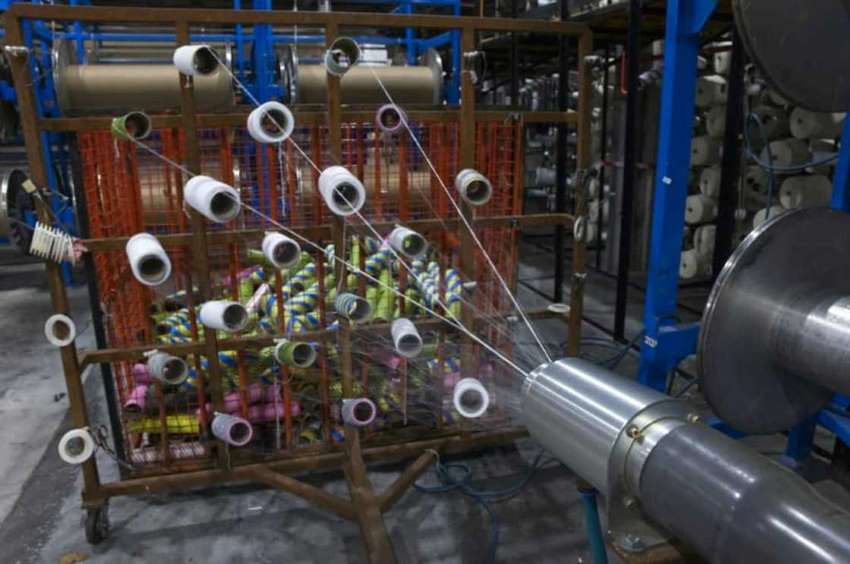
The technology begins with performance data. Infrared thermography and sweat-rate sensors monitor body temperature, moisture accumulation and heat zones during athletic activity. This information can be converted into digital body maps that identify where garments require greater ventilation, support or moisture transfer. Knitting software then translates these requirements into machine instructions. High-gauge circular knitting systems, including machines operating with approximately 280-320 needles, can vary yarn density, stitch structure, aperture size and denier within the same production cycle.
This allows a single garment to contain multiple functional zones without adding separate fabric panels. Yarn selection further enhances the effect. Hydrophilic fibres positioned toward the skin can draw moisture into the fabric, while hydrophobic exterior filaments encourage outward movement and evaporation. According to the supplied technical benchmarks, directional constructions can move moisture up to 40 per cent faster than uniform synthetic weaves. The biggest change is that performance is being programmed into the textile rather than added to it.
Manufacturing gains strengthen margins
The commercial case for body mapping is particularly strong because it combines product differentiation with manufacturing efficiency.
Table: Technical & commercial comparison
|
Metric/Feature |
Legacy cut-and-sew mesh panels |
Mapped engineered knits |
|
Manufacturing Steps |
12-18 manual cut/sew steps |
1-3 single-pass automated knit steps |
|
Fabric Scrap Rate |
12-18% yield loss |
Less than 3% scrap rate |
|
Garment Seam Points |
High (6-12 structural seams) |
Minimal (Seamless or single flatlock frame) |
|
Capillary Moisture Transfer |
Passive through open mesh gaps |
Directional gradient yarn transport |
|
Average Retail Gross Margin |
48-52% |
58-64% |
|
Average Retail Price Point |
$45-$65 |
$85-140+ |
Traditional mesh construction can require numerous cutting, positioning and sewing operations. Engineered knitting compresses much of this work into automated production. The supplied benchmarks indicate that as many as 18 manual cutting and stitching operations can be eliminated in some garments, while fabric yield loss can fall from about 15 per cent to below 3 per cent.
For premium activewear manufacturers, lower material waste is significant because technical yarns are often more expensive than commodity fabrics. Reduced labour requirements and fewer production defects can further lower total manufacturing costs once machines reach sufficient utilisation. Fewer seams may also improve garment durability and reduce potential failure points, an increasingly important consideration as sportswear sales shift toward direct-to-consumer and online channels.
Technical construction becomes a pricing tool
Body mapping is also strengthening activewear's premiumisation strategy. Traditional mesh provides visible ventilation, but its differentiation can be difficult to communicate beyond basic breathability. Engineered garments allow brands to promote targeted cooling, anatomical support, moisture management, lightweight construction and enhanced stretch as integrated product features. The supplied comparison places conventional technical garments at around $45-65, while engineered mapped products can reach $85-140 or more. Estimated gross margins also rise from 48-2 per cent to 58-64 per cent. These figures will vary by brand, product complexity and distribution model, but the broader commercial principle is important: construction technology can support a stronger value proposition than simply changing the fibre blend. Body mapping therefore, turns manufacturing precision into a retail story.
Sportswear giants expand the model
The technology is moving across both global sportswear companies and specialist performance labels. Nike has expanded its Dri-FIT ADV platform using engineered material structures designed to provide different levels of breathability and support across garments. On Running has developed zoned airflow and variable thread tension for lightweight running products, while Lululemon has incorporated targeted knit structures into products requiring stretch, support and thermal management.
Under Armour has also been moving high-performance base layers toward strategic ventilation structures rather than relying solely on stitched panels. At the specialist end, Paris-based Satisfy Running demonstrates how technical construction can support premium positioning. Its products, some priced above $140, combine lightweight materials, ventilation technologies and performance-focused design. The significance extends beyond elite sports. As consumers become more familiar with technical apparel, body mapping provides brands with a mechanism to create differentiated products across running, training, outdoor and athleisure categories.
Capex separates advanced suppliers
The transition does carry a substantial entry barrier. Advanced circular and flatbed knitting machinery requires significant capital investment, while manufacturers need technical designers, software specialists and machine operators with expertise in digital textile production. This could widen the gap between technically advanced suppliers and factories dependent on conventional cut-and-sew production.
However, the economics become more attractive at scale. Higher machine utilisation allows manufacturers to spread capital costs while benefiting from reduced labour hours, lower material wastage and improved production consistency. This may encourage greater vertical integration. Textile manufacturers that can combine yarn expertise, digital knitting, programming and garment development will be better positioned to become strategic partners to global sportswear brands rather than simply fabric suppliers. Competitive advantage could consequently shift from low-cost sewing capacity toward engineering capability.
Sustainability adds to the case
Body-mapped knitting also aligns with several emerging sustainability priorities. Lower scrap rates reduce production waste, while fewer components can simplify material management. A garment engineered around a narrower material architecture may also make traceability and future recycling easier. This becomes relevant as European regulation places greater emphasis on product traceability, material disclosure and circularity.
However, engineered construction is not automatically sustainable. Many performance garments continue to rely on virgin synthetic fibres and energy-intensive production. The strongest sustainability case emerges when manufacturing efficiency is combined with recycled inputs, longer product lifetimes and designs that facilitate end-of-life recovery.
The next activewear production model
Body mapping was initially associated with elite athletes because its development costs could be justified only at the highest levels of performance. Advances in digital knitting are now allowing the technology to move into mainstream activewear. The shift is significant. Traditional mesh treats ventilation as an additional component that must be attached to a garment. Engineered knitting treats ventilation, moisture management and support as functions designed into the garment from the beginning.
For manufacturers, that can mean lower waste, fewer production operations and improved scalability. For brands, it creates opportunities for higher price points and stronger margins. For consumers, the most advanced performance feature may increasingly be invisible. The future of activewear may therefore be less about adding more components and more about making every stitch perform a specific function.
Brazil’s cotton dominance puts Asian spinners on a new sourcing map

Brazil’s emergence as the world’s largest cotton exporter is no longer simply an agricultural success story. It has given a boost to the global spinning industry. The country closed the 2025/26 marketing year with a record 3.374 million tonnes of lint exports, up 19 per cent from 2.836 million tonnes a year earlier, generating $5.3 billion in export earnings. More importantly, the destination pattern shows that Brazilian cotton is being absorbed by the world’s principal spinning hubs.
China took 770,523 tonnes, Bangladesh 584,756 tonnes, Turkey 441,054 tonnes, Pakistan 414,340 tonnes, Vietnam 393,206 tonnes and India 353,820 tonnes. Together, these six markets accounted for 87 per cent of Brazil’s exports.
Table: Brazil’s cotton exports
|
Market destination |
Annual volume (tonnes) 2025/26 |
Market share (%) |
July 2026 exports (tonnes) |
July 2026 share (%) |
|
China |
770,523 |
23% |
5,133 |
3% |
|
Bangladesh |
584,756 |
17% |
30,053 |
19% |
|
Turkey |
441,054 |
13% |
26,609 |
17% |
|
Pakistan |
414,340 |
12% |
23,051 |
15% |
|
Vietnam |
393,206 |
12% |
26,565 |
17% |
|
India |
353,820 |
10% |
15,376 |
10% |
|
Indonesia |
204,182 |
6% |
12,950 |
8% |
|
Egypt |
76,758 |
2% |
4,834 |
3.10% |
|
Malaysia |
51,476 |
2% |
5,362 |
3% |
|
South Korea |
32,112 |
1% |
2,145 |
1.40% |
|
Others |
51,715 |
2% |
2,887 |
1.90% |
|
Total Export Volume |
3,373,922 |
100% |
154,965 |
100% |
The implication is significant: Brazil is not merely supplying cotton to traders; it is embedding itself deeper into the procurement strategies of competing textile-manufacturing countries.
India is the emerging swing market
The sharpest shift is visible in India. Brazilian shipments to the country have multiplied over 40 times in two years, reaching 353,820 tonnes. This is not simply a price arbitrage story. Indian spinning mills operate under pressure to maintain consistent quality, yarn specifications and delivery schedules even when domestic cotton arrivals fluctuate. Brazilian cotton offers an alternative pool of machine-harvested, HVI-tested fibre that can be incorporated into mill laydowns with greater predictability.
With Indian cotton consumption projected at a record 5.77 million tonnes in 2026/27, imported cotton can easily work as a risk-management instrument rather than an emergency substitute. That distinction matters. Once mills qualify an overseas origin for particular counts and customers, procurement relationships can become structural.
Brazil is correcting, not retreating
Brazil’s next crop indicates that exporters are not pursuing volume at any cost. Abrapa’s August estimate puts 2026 planted area at two million hectares, down 8 per cent from 2025, while lint production is forecast at 3.9 million tonnes, 8.2 per cent below the previous record. Yet productivity remains remarkably resilient.
Table: Brazilian crop indicator
|
Crop indicator |
2021 |
2022 |
2023 |
2024 |
2025 |
2026* (forecast) |
2026 vs. 2025 change |
|
Planted Area (Million Ha) |
1.37 |
1.6 |
1.66 |
1.99 |
2.17 |
2 |
-8.00% |
|
Seed Cotton Output (Million Tonnes) |
5.8 |
6.27 |
7.7 |
8.91 |
10.32 |
9.5 |
-7.90% |
|
Cotton Lint Output (Million Tonnes) |
2.36 |
2.55 |
3.17 |
3.7 |
4.25 |
3.9 |
-8.20% |
|
Seed Cotton Yield (Kg/Ha) |
4,230 |
3,920 |
4,628 |
4,584 |
4,753 |
4,758 |
+0.1% |
|
Cotton Lint Yield (Kg/Ha) |
1,721 |
1,596 |
1,907 |
1,904 |
1,958 |
1,954 |
-0.20% |
This is arguably the more important signal. Brazil is reducing acreage while preserving yields. The adjustment therefore resembles inventory and market management rather than a deterioration in agricultural competitiveness. With global Brazilian exports still projected at around 3.33 million tonnes in 2026/27, the country retains considerable export capacity.
Price is reinforcing the shift
Brazil’s advantage is also being supported by international price spreads. In early August, Brazilian Cepea/Esalq cotton stood at 82.1 cents a pound and nearby ICE New York at 83.2 cents. The Cotlook A Index was higher at 95 cents, while China’s cotton index was at 120.8 cents. India’s domestic spot price was 91.6 cents and Pakistan’s 80.1 cents.
Table: Global crop index
|
Benchmark index |
Latest value (Aug 12) |
Latest month (July) |
12-month average (Aug 25–Jul 26) |
|
Cepea/Esalq (Brazil Domestic) |
82.1 cents/lb |
80.4 cents/lb |
72.1 cents/lb |
|
ICE Futures NY (Nearby) |
83.2 cents/lb |
78.6 cents/lb |
68.7 cents/lb |
|
Cotlook A Index |
95.0 cents/lb |
88.9 cents/lb |
80.2 cents/lb |
|
China Cotton Index (CC) |
120.8 cents/lb |
118.4 cents/lb |
105.6 cents/lb |
|
Indian Spot Index |
91.6 cents/lb |
86.7 cents/lb |
79.9 cents/lb |
|
Pakistani Spot Index |
80.1 cents/lb |
79.0 cents/lb |
73.9 cents/lb |
These spreads create room for Brazilian cotton to remain commercially attractive even after freight and landing costs, particularly for mills purchasing large volumes. But price alone cannot explain the durability of the trend. Consistency, logistics and quality documentation increasingly influence fibre selection as much as the headline cotton price.
Traceability becomes a competitive weapon
The sustainability dimension could strengthen Brazil’s position further. During 2024/25, Brazil accounted for 3.32 million tonnes of Better Cotton-licensed fibre against a 4.25 million-tonne crop forecast, with 2.11 million tonnes recorded in verified commercial transactions.
Mass-balance transactions represented 85.6 per cent of that volume, while segregated supply accounted for 14.4 per cent. For exporters serving global apparel brands, this infrastructure is becoming commercially relevant as traceability requirements move closer to the farm level.
The experience of Bangladesh’s Apex Yarn Spinners is an expample. By replacing 30 per cent of its traditional Central Asian cotton with Brazilian middling cotton, the mill reportedly reduced comber nil waste by 2.5 per cent and improved yarn-strength uniformity in 30s and 40s counts. Such outcomes turn origin diversification into an operational proposition rather than merely a sourcing preference.
The new cotton geography
Brazil’s rise does not mean traditional suppliers will disappear. Nor does it imply that Asian mills will abandon domestic cotton. Instead, the global spinning system is moving towards a more diversified sourcing architecture in which Brazil provides scale, consistency and an increasingly credible sustainability proposition.
That is the significance of the Cotton Brazil initiative, backed by Abrapa, Anea and ApexBrasil. Its focus on Asian spinning markets reflects where the next battle for fibre demand will be fought. For India, the lesson is particularly important. Brazilian cotton can help mills manage domestic crop volatility, but growing dependence on imported fibre also exposes the industry to freight, currency and international price risks.
The larger picture, therefore, is not Brazil replacing another cotton powerhouse. It is the emergence of a new supply-chain anchor. The Cerrado has moved from being a peripheral cotton-growing region to becoming an increasingly consequential component of the global spinning economy. And as mills optimise for consistency, traceability and cost simultaneously, that influence is likely to deepen.
Gucci focuses on regional culture in new campaign with Goran Bogdan and Kate Moss
Luxury titan Gucci is redefining high-fashion storytelling by stepping away from traditional Western European fashion capitals and embedding its latest global campaign within the distinct urban texture of Zagreb. Central to this creative direction is acclaimed regional film star Goran Bogdan, who appears alongside supermodel Kate Moss dressed in sharp, double-breasted tailoring. Industry analysts note that casting cross-border cinematic talent rather than standard runway faces allows legacy houses to capture authentic cultural resonance. Integrating established regional actors signals a mature shift toward localized cultural currency, explains Elena Vance, Retail Strategist. Shot under strict secrecy, the production leverages Eastern European architectural backdrops to project a gritty sophistication that appeals directly to emerging luxury demographics across central markets.
Expanding European retail footprint through art
The strategic deployment of regional cinematic heavyweights coincides with broader commercial efforts by Kering-owned labels to tighten connections with high-net-worth consumers outside traditional flagship corridors. By anchoring high-impact visual campaigns in diverse European cities, luxury retailers are effectively driving localized engagement and foot traffic into upcoming experiential storefronts. Market researchers project that targeted cultural marketing will increase regional luxury apparel conversions by 14 per cent through the upcoming fiscal quarters. This localized blueprint mitigates slowing consumer demand in mature western hubs by capturing high-margin growth in developing European retail segments, ensuring sustainable revenue expansion despite broader macroeconomic headwinds.
A premier global luxury fashion house
Founded in Florence in 1921, Gucci operates as a premier global luxury fashion house specializing in leather goods, high-end apparel, footwear, and accessories. As a core revenue driver for parent conglomerate Kering, the brand focuses on scaling experiential retail networks and localized cultural campaigns to sustain its multi-billion-euro market standing and long-term profitability.
Première Vision Paris showcases sustainable innovations for global apparel sourcing
The global textile and apparel manufacturing sector has converged at the Paris Nord Villepinte exhibition centre for Première Vision Paris, uniting over 900 international exhibitors around bankable manufacturing solutions. Moving beyond exploratory concepts, participating mills and weavers are heavily featuring closed-loop recycling systems and verifiable organic fibers to address impending compliance benchmarks. The market has transitioned from theoretical sustainability to immediate, scalable execution, observes Claire Fontaine, Textile Supply Chain Strategist. This shift is particularly urgent as European Union directives mandate stricter lifecycle assessments, forcing fashion houses to reformulate upstream yarn and fabric procurement strategies.
Deploying digital traceability across supply chains
With regulatory frameworks like the Digital Product Passport nearing mandatory enforcement, apparel brands are heavily investing in digital integration and satellite-mapped raw material verification tools. Industry metrics indicate that technology-driven sourcing platforms are capturing a dominant share of upcoming procurement budgets aimed at minimizing carbon footprints. Sustainability is no longer a marketing option, but an operational requirement deeply embedded in logistics, explains Marcus Thorne, Logistics Director. Retailers utilizing these automated verification frameworks report enhanced resilience against macroeconomic volatility.
Championing digital sourcing networks
Première Vision operates as an international organizer for the creative fashion and textile ecosystem, connecting global yarn, leather, and design manufacturers. Serving key markets across Europe, the Americas, and Asia, the organization champions digital sourcing networks, environmental compliance, and long-term industry profitability.
Globe Enterprises expands with robust revenue growth in Q1 FY27
Globe Enterprises (India) has reported a robust financial performance for Q1, FY27 registering a 32.7 per cent Y-o-Y increase in operational revenue to reach Rs 166.68 crore compared to Rs 125.56 crore in the corresponding period of the previous year. Total revenue increased to Rs 167.35 crore, supported by newly commissioned garment manufacturing infrastructure deployed toward the end of the previous fiscal year. This expanded industrial footprint has enabled the enterprise to service higher order volumes across domestic retail chains and international export destinations, reinforcing its market footprint in the competitive apparel segment.
Margin realities amid input cost pressures
Despite substantial top-line acceleration, corporate profitability experienced notable compression as operating margins faced headwinds from escalating supply chain expenses. The organization reported an earnings before interest, taxes, depreciation, and amortization of Rs 8.54 crore, while profit before tax stood at Rs 3.52 crore. Industry analysts point out that a 15 to 20 percent surge in raw material costs, compounded by elevated global shipping surcharges, constrained bottom-line expansion. Executive leadership remains focused on optimizing operational efficiencies and leveraging newly acquired processing subsidiaries to mitigate ongoing cost inflation in upcoming quarters.
Healthy order backlog secures short-term visibility
Looking ahead, management remains optimistic about maintaining commercial momentum, backed by a robust order book exceeding Rs 100 crore heading into the second quarter. The successful integration of Globe Denwash has significantly bolstered the firm's value-added processing capabilities, allowing it to cater to evolving consumer preferences for specialized denim and sustainable apparel finishes. Market strategists observe, this diversified product architecture positions the company advantageously to navigate volatile international trade dynamics while securing long-term vendor partnerships with major global fashion brands.
Formerly operating under the name Globe Textiles (India), Globe Enterprises (India) Limited, is a diversified Indian manufacturing entity specializing in apparel production, technical textiles, and allied fashion retail segments. Serving key domestic and international markets, the company focuses on scaling integrated manufacturing capabilities, expanding sustainable product portfolios, and driving long-term enterprise value through strategic corporate restructuring and targeted subsidiary acquisitions.
Globe Enterprises expands with robust revenue growth in Q1 FY27
Globe Enterprises (India) has reported a robust financial performance for Q1, FY27 registering a 32.7 per cent Y-o-Y increase in operational revenue to reach Rs 166.68 crore compared to Rs 125.56 crore in the corresponding period of the previous year. Total revenue increased to Rs 167.35 crore, supported by newly commissioned garment manufacturing infrastructure deployed toward the end of the previous fiscal year. This expanded industrial footprint has enabled the enterprise to service higher order volumes across domestic retail chains and international export destinations, reinforcing its market footprint in the competitive apparel segment.
Margin realities amid input cost pressures
Despite substantial top-line acceleration, corporate profitability experienced notable compression as operating margins faced headwinds from escalating supply chain expenses. The organization reported an earnings before interest, taxes, depreciation, and amortization of Rs 8.54 crore, while profit before tax stood at Rs 3.52 crore. Industry analysts point out that a 15 to 20 percent surge in raw material costs, compounded by elevated global shipping surcharges, constrained bottom-line expansion. Executive leadership remains focused on optimizing operational efficiencies and leveraging newly acquired processing subsidiaries to mitigate ongoing cost inflation in upcoming quarters.
Healthy order backlog secures short-term visibility
Looking ahead, management remains optimistic about maintaining commercial momentum, backed by a robust order book exceeding Rs 100 crore heading into the second quarter. The successful integration of Globe Denwash has significantly bolstered the firm's value-added processing capabilities, allowing it to cater to evolving consumer preferences for specialized denim and sustainable apparel finishes. Market strategists observe, this diversified product architecture positions the company advantageously to navigate volatile international trade dynamics while securing long-term vendor partnerships with major global fashion brands.
Formerly operating under the name Globe Textiles (India), Globe Enterprises (India) Limited, is a diversified Indian manufacturing entity specializing in apparel production, technical textiles, and allied fashion retail segments. Serving key domestic and international markets, the company focuses on scaling integrated manufacturing capabilities, expanding sustainable product portfolios, and driving long-term enterprise value through strategic corporate restructuring and targeted subsidiary acquisitions.
New EU textile regulations compel apparel brands to accelerate sustainable operations
European legislative bodies are fundamentally altering the operational framework for the regional apparel and textile market by enforcing stringent Extended Producer Responsibility frameworks. With European consumers generating approximately 5.8 million tons of textile waste annually, upcoming regulatory directives compel fashion houses and technical fabric importers to finance end-of-life recovery programs. These legal mandates prohibit the destruction of unsold inventory and require comprehensive supply chain disclosures, introducing immediate operational cost pressures for brands reliant on linear manufacturing models.
Scaling advanced recycling technologies
To satisfy impending Digital Product Passport requirements and strict recycled-content quotas, upstream fiber producers are heavily investing in chemical and mechanical recycling plants. Despite these capital-intensive expansion plans, processors face persistent sorting bottlenecks and volatile raw material supplies. Compliance requires total visibility from fiber extraction to the final retail shelf, transforming how brands source raw materials, observes Marcus Lindqvist, Senior Director - Sustainable Supply Chains, Nordic Apparel Group. Demonstrating commercial viability, a leading European denim manufacturer recently integrated 35 per cent post-consumer recycled cotton into its core fabric lines, successfully maintaining tensile strength standards while reducing its carbon footprint by 18 percent.
Regulatory roadmap for sustainable apparel
European environmental directives govern textile recycling infrastructure and trade compliance across major EU member states. Focused on scaling automated sorting and chemical depolymerization, the sector balances compliance capital expenditures with long-term resource efficiency, building upon foundational 2020 green deal frameworks.
VIATT 2027 positions Vietnam as the epicenter for sustainable textile sourcing
The upcoming Vietnam International Trade Fair for Apparel, Textiles and Textile Technologies (VIATT) is set to position sustainability and advanced traceability at the core of Southeast Asia's manufacturing evolution.
Scheduled from February 24 to 26, 2027, at the Saigon Exhibition and Convention Center in Ho Chi Minh City, the trade exhibition addresses mounting pressures from international apparel brands requiring verified ecological compliance. Following a successful prior edition that drew over 17,000 professional visits from 54 countries alongside 460 exhibiting enterprises, the 20th-century-born linear production model is actively being replaced across regional fiber, yarn, and fabric mills by certified circular solutions.
Bridging technological innovation with export compliance
Organizers are expanding dedicated zones such as the Econogy Hub and Econogy Finder directory to streamline green sourcing for global procurement directors. Industry leaders note, adherence to rigorous environmental processing standards is now a mandatory prerequisite for maintaining Western export channels. Global apparel retailers no longer view eco-compliance as optional; transparent fibre inputs and certified chemical management dictate vendor selection, remarks Nguyen Van Thu, Senior Director- Trade Relations for regional manufacturing associations. Highlighting this transition, a prominent Vietnamese composite mill recently integrated closed-loop water treatment systems and certified organic cotton yarns, reducing chemical discharge by 25 percent while securing long-term supply contracts with European fashion houses.
Targeting sustainable growth with technological upgrading
VIATT is a premier regional trade platform organized by Messe Frankfurt and VIETRADE, covering the complete textile value chain from fibers and yarns to technical textiles. Operating across major ASEAN markets, the platform targets rapid technological upgrading and sustainable growth, supported by robust trade metrics and expanding international exhibitor participation.
Time Out partners TBH Global to launch new licensed lifestyle brand
Time Out Group plc has partnered with South Korean apparel specialist TBH Global to introduce a licensed global fashion and lifestyle brand. Centered around the strategic concept of targeting modern urban explorers, the initiative translates nearly six decades of metropolitan media curation into tangible retail products. Leadership from both organizations emphasizes that the collaboration bridges distinct commercial strengths, utilizing Time Out's recognized cultural authority alongside TBH Global’s manufacturing and distribution infrastructure. Market analysts note that media brands increasingly leverage intellectual property to capture consumer loyalty through physical merchandise, transforming editorial influence into dependable retail revenue streams.
Phased digital pilot precedes worldwide store expansion
The rollout strategy begins with a targeted online pilot program in November 2026, serving as a stress test for the cross-border e-commerce infrastructure before the formal international collection debut in February 2027. This initial release will feature offerings across apparel, accessories, and dermatologically certified vegan body care lines. Retail merchandise will be split between a foundational everyday urban apparel tier and a specialized heritage line featuring historical magazine covers and archival photography. Initial SKUs are themed around six flagship cultural capitals - London, New York, Lisbon, Osaka, Barcelona, and Seoul - aiming to resonate directly with metropolitan consumers aged 25 to 44. Offline retail strategies will simultaneously deploy physical pop-up installations across major South Korean department stores to gauge localized consumer reception.
Focusing on urban culture and lifestyle content
Time Out Group plc is a global media and hospitality enterprise founded in London in 1968, operating digital and physical city-discovery platforms across 59 countries alongside its curated food halls. The company focuses on urban culture, travel, and lifestyle content, supported by public listing on the London Stock Exchange AIM market and ongoing international franchise expansions.
Intertextile Shanghai Home Textiles proposes strategic blueprint for global expansion
The global home textile and furnishing sector faces mounting structural complexities, characterized by tightening sustainability regulations and rising cross-border operational hurdles. Addressing these headwinds, the Intertextile Shanghai Home Textiles Autumn edition successfully concluded at the National Exhibition and Convention Center, drawing international manufacturers and buyers. Industry analysts indicate, the global home textile market maintains steady resilience, valued at approximately $230.9 billion, running alongside a $786.1 billion furniture sector. However, traditional product export models are rapidly losing efficacy, prompting textile enterprises to transition toward structured international brand management and localized compliance strategies.
Operational frameworks highlighted during resource matching sessions
A focal point of the exhibition's fringe programming was the Furniture and Home Textile Global Expansion Resource Matching Event, which addressed practical methodologies for overseas scaling. During a prominent keynote presentation, Zhou Xuechun, Head-East China Division, 41Caijing, detailed specific operational frameworks required for navigating foreign regulatory environments and supply chain friction. Chinese textile and furnishing exporters can no longer rely solely on volume-driven margins, remarked Xuechun during the strategic briefing. Sustained international expansion demands rigorous localized compliance, data-backed consumer research, and integrated resource sharing across adjacent product categories to safeguard long-term brand equity, he added.
Emphasizing sustainable innovation
Intertextile Shanghai Home Textiles is Asia's premier international trade fair dedicated to the home furnishing, bedding, and textile industry. Spanning over 100,000 sq m, the biannual platform connects global manufacturers with buyers across key markets, emphasizing sustainable innovation, supply chain resilience, and market expansion strategies.