FW
SAC named convergence host of Social & Labor Convergence Project
The Sustainable Apparel Coalition (SAC) has been named an accredited host of the Social & Labor Convergence Project (SLCP). The SLCP Converged Assessment Framework consists of a data collection tool and a verification methodology. The project has more than 180 signatories committed to using converged assessment in their operations. The SLCP began in Amsterdam in 2016 as a multi-stakeholder effort to collectively improve the working conditions for garment workers in the global apparel and footwear supply chain. By uniting under a converged assessment, organizations can move beyond individually-driven programs, unlocking funds previously used on proprietary audits to be applied towards the development of scalable industry-wide solutions.
Sustainable Apparel Coalition is the leading association for the apparel, footwear, and textile industry. As an SLCP Accredited Host, the SAC has incorporated the converged assessment framework into the Higg index suite of tools as the Foundation of the Higg Social and Labor Module (FSLM). The SAC is one of just three organizations to be recognized as an SLCP Accredited Host.
By using Higg FSLM at scale, brands, retailers, and manufacturers can assess their social impacts and strategically direct valuable resources towards efforts that meaningfully improve conditions for garment workers globally.
May edition of Techtextil to showcase latest innovations in Germany
Techtextil will be held in Germany from May 14 to 17, 2019. Every two years, Techtextil mirrors a range of applications for textile materials. Leading international experts from the most diverse industries – be they from architecture, the automotive industry, medicine, the fashion industry or personal protection – come together at Techtextil in search of lightweight, durable and sustainable materials.
The fair will take a look ahead to see how technical textiles will shape urban life in the future. Suppliers at Techtextil represent the complete spectrum of technical textiles and nonwovens. There is a significant increase in the number of suppliers in the fields of technology, as well as fibers and yarns. Suppliers of woven fabrics, coated textiles and functional apparel textiles will also be strongly represented. All areas of application for textile materials are being covered. In particular, representatives from industry, architecture and construction, the fashion and clothing industry, the automotive sector, aerospace, medicine, sport, and hazard protection will find a more comprehensive range of products than before.
Trade visitors can look forward to contributions in the following thematic areas: sustainability, digital transformation, smart textiles, urban textiles, composites, and technical textiles in medical technology. Awards will be given for outstanding new and further developments in the field of technical textiles, nonwovens and functional apparel fabrics.
Myanmar wishes EU continues GSP
Myanmar hopes EU does not withdraw its GSP status as the decision can have a big impact on Myanmar’s reforms and growth momentum. Thousands of workers would lose their jobs if factories close and foreign businesses leave. It is estimated more than a million workers from the garment and fishery industries could be affected if the EU decides to revoke the trade preference.
It can become hard for Myanmar producers to export their goods to European countries. The EU is planning to stop trade preferences for Myanmar for reported human right violations in three of the nation’s states where ethnic people reside.
Currently, Myanmar exports enjoy tariff-free and quota-free access to the European markets, with the exception of arms and ammunition. Myanmar says maintaining GSP privileges would speed up its pace of development. The country’s businesses need trade preferences to export their goods to European countries, IT is the third largest export market of Myanmar, absorbing nearly ten per cent of the nation’s total exports in 2017.
The value of Myanmar’s garment exports to the EU has significantly increased from 2013 to 2017. The EU has become Myanmar’s largest trade partner for garments, purchasing more than 47 per cent of the products.
Sourcing at Magic in Vegas to focus on sustainability and new technologies
Sourcing at Magic will take place in Las Vegas from February 4 to 7, 2019. This episode will focus on sustainability through technology and feature innovative VR experiences as well as the latest in production and design tech and sourcing tools. It will explore both smart design and advanced manufacturing and ways of making the fashion industry more efficient and sustainable, displaying new devices presenting breakthroughs in 3D to 2D digital pattern rendering, virtual inventories, digital direct-to-garment printing and on-demand manufacturing.
Sourcing at Magic will also use technology to think about sustainability in a different way, through the X Ray Fashion VR Experience, which uses a VR headset to take participants from the catwalk back to apparel sweatshops and cotton fields, encouraging them to think critically about the fast fashion industry and adopt a more sustainable attitude.
The installation will be accompanied by the X Ray Fashion Tool Kit, which will provide information about the negative environmental and social impacts of fast fashion as well as descriptions of the industry’s mechanisms and processes, and advice on how to be a more sustainable consumer.
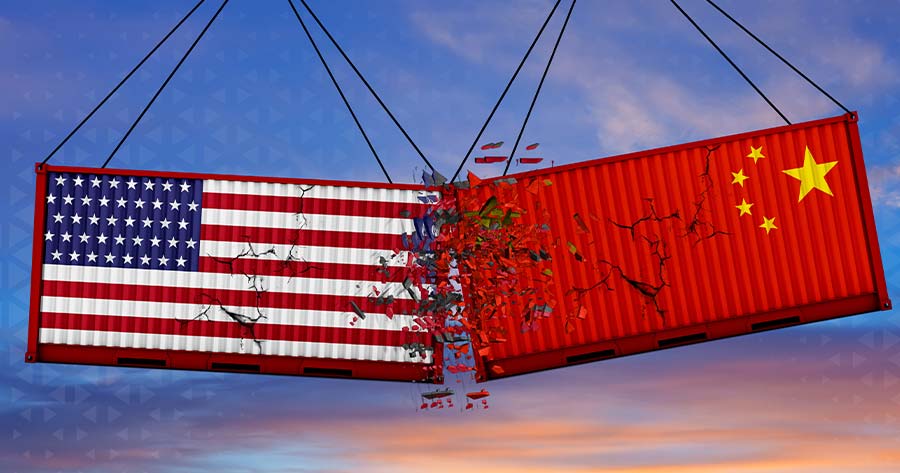
Seminars on recycling, relaunching and the impact of ongoing trade wars between the US and China on sourcing are lined up at the fair.
Lack of regulatory coherence in EU leads to use of hazardous chemicals in textiles
A Norwegian study reveals, the absence of coherent regulation in the EU is leading to potentially hazardous chemicals being continuously used in all stages of the production process in the textiles industry. This leads to more use of chemicals and less sustainable waste management.
Smart, funded by EU research and innovation program Horizon 2020, focuses on the environmental and social footprint of global supply chains for clothes and mobile phones. It comprises researchers from 25 institutions from around the world. It started in March 2016 and will run until February 2020.
Reforms adopted by the EU to promote sustainability often give a broad scope to member states on how to implement these. Unfortunately, member states tend to aim for minimum implementation, out of fears of jeopardising their own competitive position or that of their businesses.
That, however, does not mean a responsible business would use more chemicals within the current EU regulatory framework. On the contrary, ample set of high level industry standards have for decades ensured strict levels of protection.
Fur-free movement gains momentum in 2019
The fur-free movement gained significant momentum in 2018. Major retailers such as Coach, Burberry and Versace announced fur-free policies and the cities of Los Angeles and San Francisco banned the sale of fur clothing. Internationally, Norway, Luxembourg and Belgium prohibited fur farming.
Fur Free Alliance estimates more than 100 million animals are killed on fur farms each year. Fur farming currently comprises 85 per cent of the fur trade. In addition to farming, animals can be trapped in the wild for their pelts. Farmed animals, largely minks, foxes, raccoon dogs, rabbits and chinchillas, may suffer from immense stress and health ailments before being culled through practices such as gassing and electrocution. The industry argues that the animals receive excellent care and that fur farms abide by industry regulations to ensure animal welfare.
Cotton consumption to outpace production in 2018-19
"According to the July edition of Cotton, If trends hold, consumption will outpace production by 1 million tonne in 2018/19, with projected totals of 26.7 million tonne and 25.7 million tonne, respectively."
 According to the July edition of Cotton, If trends hold, consumption will outpace production by 1 million tonne in 2018/19, with projected totals of 26.7 million tonne and 25.7 million tonne, respectively.
Major producers including the USA, Pakistan and Australia suffered production losses 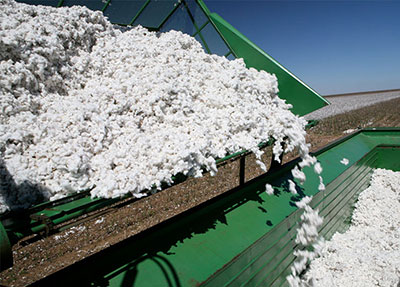 due to poor weather conditions and lack of available water, but Turkey and Brazil both posted positive totals in 2018/19, with Brazil setting a record-high production of 2.7 million tonne.
The 2018/19 projected ending stocks of 17.8 million tonne are expected to expand to 18.7 million tonne by the end of next season, with stocks outside of China reaching an all-time high of 10.5 million tonne.
If consumption increases in 2019/20, it likely will come from the emerging economies in Asia and Southeast Asia.
Berlin Fashion Week 2018 trade shows launch new initiatives
Trade shows in Berlin Fashion Week 2018 are emerging as the drivers of change, repositioning and reviewing their concepts to adapt to the ever changing fashion industry. Premium has been boosting its exhibitors for months to fully exploit their brand power for its upcoming edition, taking place from January 15-17, 2019.
Panorama, which launched its own online magazine last year, wants to have a more visitor-friendly setting and a broader view into the fashion world, using its Fashiontech conference to stand out from the crowd.
Meanwhile, Messe Frankfurt has brought together its eco-fashion formats under one roof and will be launching its Neonyt concept at Kraftwerk on Köpenicker Straße, where Fashiontech will also take place, during the next edition of the German capital's Mercedes Benz Fashion Week.
Berliner Salon and Vogue Salon have also changed their location. Now in their ninth season, the Fall/Winter 2019/20 collections will be presented for the first time in the St. Elisabeth Church in Mitte.More than 3,000 brands and even more collections will be showcased to buyers in the capital over the four-day period.
With 1,000 brands and around 1,800 Fall/Winter 2019/20 collections, Premium will be debuting its new format at Gleisdreieck over 24,000 square metres of show space.
French Fédération’s RTW season gets 12 new brands
The Fédération de la Haute Couture et de la Mode, French fashion’s governing body, has added a dozen new brands to its next ready-to-wear season. The first three houses to be added to its much-coveted official runway schedule include two fledgling brands, Cyclas of Japan and Rokh from Britain. The Fédération also welcomed back Lacoste, the historic French label founded in 1933.
Additionally, the Fédération announced that a further nine houses have been included in its official calendar for next season, scheduled from February 25 to March 5.
These nine new brands include Faith Connexion of France; Karim Adduchi of Holland; Kimhekim of Korea; Kristina Fidelskaya of Ukraine; Walk of Shame of Russia; Maison Mai of China; Cukovy of Hungary; Magda Butrym of Poland; and Savoar Fer from France.
CFDA and PVH team up to explore diversity across US Fashion
The Council of Fashion Designers of America (CFDA) has teamed up with fashion giant PVH Corp – owners of brands such as Calvin Klein and Tommy Hilfiger -- to explore the subject of inclusion and diversity across the US fashion sector. The result is an extensive report dubbed ‘Insider/Outsider' that spans all areas of inclusion and diversity, such as abilities, age, gender, race, ethnicity and sexual orientation.
According to a questionnaire conducted as part of the research, 41 per cent of executive-level employees at fashion companies rated their organisation three out of a possible five in terms of the diversity (difference) within their organisation. However, 56 percent had taken a professional class or workshop related to I&D in the workplace in the past.
The CFDA and PVH have pledged to focus efforts on making the US fashion industry a more inclusive and diverse sector, concluding: In 2019, the CFDA will continue the work we have been doing in the area of Inclusion and Diversity. The focus of the work will be on Peer-to-Peer Mentorship, Business Networking Opportunities, Educational Programming and Leadership Skillset Training. PVH will enhance its education and awareness programs, as well as amplifying its I&D Councils and Business Resource Groups. The organisation will continue to collaborate with external partners to help foster a collectively inclusive and diverse environment in our own workplace and across the industry.