FW
Invista’s Fitsense technology makes for smoother garments
Invista’s Fitsense technology allows the use of finer and technically more advanced fabrics called second skin. The main aim is to reduce the number of seams in sports garments while guaranteeing support and comfort properties of traditional corsetry garments. The technology has been developed to help apparel producers to reduce manufacturing costs, improve the fabric quality along with the fit of the garment in clothing such as tops, leggings and lingerie.
US-based Invista, is the world largest integrated fiber, resin and intermediates company. It has about 10,000 employees in over 20 countries worldwide. It is the leader in production of high performance and quality elastane for high technology and performance fabrics for a variety of sectors such as athleisure, activewear, hosiery and intimate wear.
This technology is used by Nextil, a Spanish company with expertise in the athleisure segment. Nextil has powerful design teams in fabric technology and high-quality printing and makes garments for leading brands including Inditex, Mango, Desigual and El Corte Inglés.
Fitsense is expected to reinforce Nextil’s positioning in the sector, boosting the design and sportswear manufacture business unit and allowing it to continue expanding its portfolio of services and products.
US, China suspend trade hostilities for 90 days
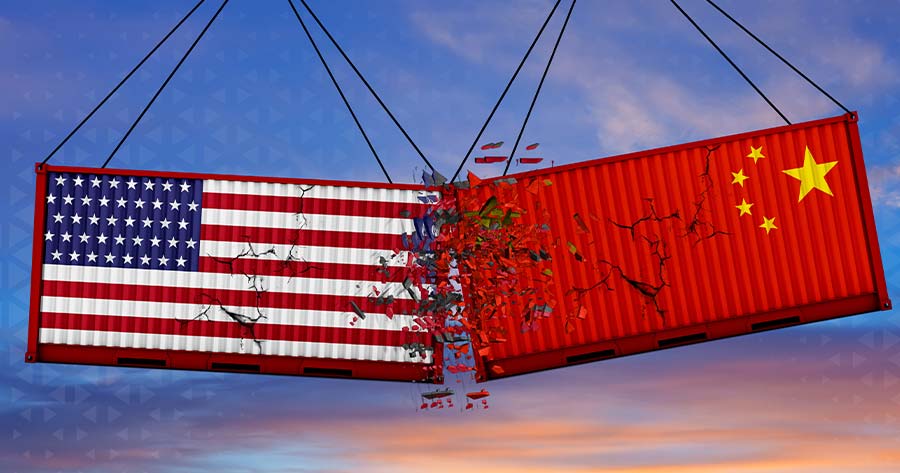
United States and China have suspended trade hostilities for 90 days following the G20 summit over the weekend in Buenos Aires, Argentina. The 25 per cent hike in tariffs that President Donald Trump had threatened on $200 billion worth of Chinese goods will not come into effect on January 1 as was originally planned. Instead, the 10 per cent tariff will remain in place as the two countries begin negotiations that also address China’s alleged forced technology transfers and cybercrimes.
The most recent set of tariffs already affect clothing and accessories, including handbags and wallets, while the fourth set, which would hit $257 billion in goods, can hugely affect the footwear industry. Since the levies encompass a wide variety of consumer products, retailers would have to raise prices to accommodate soaring import costs. A number of companies, including Steve Madden, are planning to relocate their factories from China, which could potentially disrupt their supply chains as well as affect shipping times and sourcing strategies.
Vietnam aims to increase apparel exports to Canada post CPTPP
Vietnamese textile and garment firms hope to boost their exports to Canada once the Comprehensive and Progressive Agreement for Trans-Pacific Partnership (CPTPP) takes effect in early 2019. Both Vietnam and Canada are members of the CPTPP, which also gathers nine other countries. The agreement covers a market of about 500 million people and has a combined GDP of 10.1 trillion dollars or 13.5 per cent of worldwide GDP.
Vietnam is yet to sign a free trade agreement with Canada, therefore, the CPTPP will help accelerate textile-garment shipments to the North American market in coming years. Canadian retailers and importers have shown interest in textile and garments from Vietnam.
One Vietnamese company Phong Phu has succeeded in implementing the original design manufacturer production model. By applying advanced technologies, the company now only needs a few days to create new product models, instead of the previous period of two months. The time needed to bring a new product to the market has also been reduced from eight weeks to two weeks.
Another company, Hanosimex, has introduced 40 knitting products and cotton towels to Canadian partners. In order to optimise the advantages generated by the CPTPP, Hanosimex will step up capitalising on material supply sources to satisfy the yarn forward rule of origin under this deal.
No beneficiaries of the US-China trade dispute
"As the US trade dispute with China gains momentum, experts analyse which countries would benefit most from the dispute. Asian countries like Taiwan, Thailand and Malaysia are luring electronics and computer companies to their shores while Cambodia, Philippines and Bangladesh are seeking more opportunities to increase their market share in apparel and footwear segment. Similarly, Thailand and Vietnam plan to explore the global household consumer goods market like washing machines and refrigerators. A study by American Chamber of Commerce South China (AmCham South China) published on October 29, 2018, surveyed 219 companies for the impact of US and China tariffs."
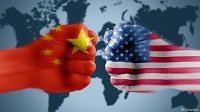 As the US trade dispute with China gains momentum, experts analyse which countries would benefit most from the dispute. Asian countries like Taiwan, Thailand and Malaysia are luring electronics and computer companies to their shores while Cambodia, Philippines and Bangladesh are seeking more opportunities to increase their market share in apparel and footwear segment. Similarly, Thailand and Vietnam plan to explore the global household consumer goods market like washing machines and refrigerators.
Fewer opportunities outside China
A study by American Chamber of Commerce South China (AmCham South China) published on October 29, 2018, surveyed 219 companies for the impact of US and China tariffs. Less than one per cent indicated any plans to relocate their manufacturing to North America. Similarly in a joint study of 430 firms by AmCham China and AmCham Shanghai in September 2019, only 6 per cent respondents indicated any plans to relocate production to the US.
There are limitations on how much production can be moved out of China. The country, over the years, has nurtured a highly trained, skilled and disciplined workforce. Its infrastructure, roads, ports and integrated logistical support is best in terms of its ability to handle the volume of goods produced. Furthermore, its workforce is more than double that of all Southeast Asia combined. So, the limitations of other counties to takeover China’s capacity nullify the cost benefits they offer of moving production out of China.
Trade disputes impact on Asian countries
A recently released Purchasing Managers Index (PMI) by various Asian countries suggests which countries could be benefiting from the US-China trade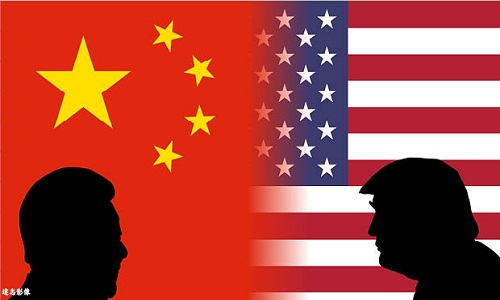 dispute at the moment. The monthly Purchasing Managers Index (PMI) of the Singapore Institute of Purchasing and Materials Management (SIPMM) published on November 2 was below the 52.2 forecast of economists polled by Bloomberg.
Similarly, Indonesia’s PMI last month declined to 50.5 from 50.7 the previous month, Malaysia's was lower at 49.2 compared with 51.5 a month earlier, Taiwan, 48.7 from 50.8, Thailand 48.9 from 50, Hong Kong 47.9 from 48.5, South Korea 51.0 from 51.3. China saw a minute increase from 50.0 the prior month to 50.1 last month and in the Philippines the same 0.1 point increase to 52.0.
Vietnam saw largest gain among major Asian economies reaching 53.9 from 51.3 in the previous month. This is not surprising considering Vietnam has been consistently identified by certain US companies as the preferred location in Southeast Asia.
Advantage India
India gained 0.9 points from a month ago to 53. If it puts its strategies in place, India might play a major part in the re-shaped global supply chain. A study by India's Department of Commerce recently identified about 100 products where India can replace US exports to China due to higher import tariffs imposed by China on US farm products. These include corn, grain sorghum, oranges, cotton, almonds and durum wheat.
Another report by the Confederation of Indian Industry (CII) concluded with concerted effort, India can increase its exports of products like pumps, parts of taps, parts for the defence and aerospace industry, vehicles, automobile parts and engineering goods among others. At the moment, this is still an aspiration. These figures indicate that in general no one gains from the trade gain which will have a negative impact not only in the US and China but also on various industries, companies and countries.
Uzbekistan attends International Textile Fair 2018
A delegation of Uztekstilprom Association and representatives of garment and textile companies recently attended the International Textile Fair 2018, held in Ptak Warsaw Expo, Poland. The delegation also explored possibilities of increasing textile exports from Uzbekistan to Europe, particularly Poland. At the exhibition, Uzbekistan showcased all aspects of textile production under a single stand ‘Made in Uzbekistan.’ Some of the prominent companies from Uzbekistan which displayed their collections were Bulut Tex, Orange Tekstil, Bahmal Group and others.
The presence of Uzbekistan companies in the exhibition holds huge relevance considering the event saw participation of more than 500 textile firms from countries like Russia, India, Pakistan, Poland, Thailand and many others. Many agreements focusing on textile exports from Uzbekistan to Europe were signed during the event
Zara’s new outwear collection focuses on recycling
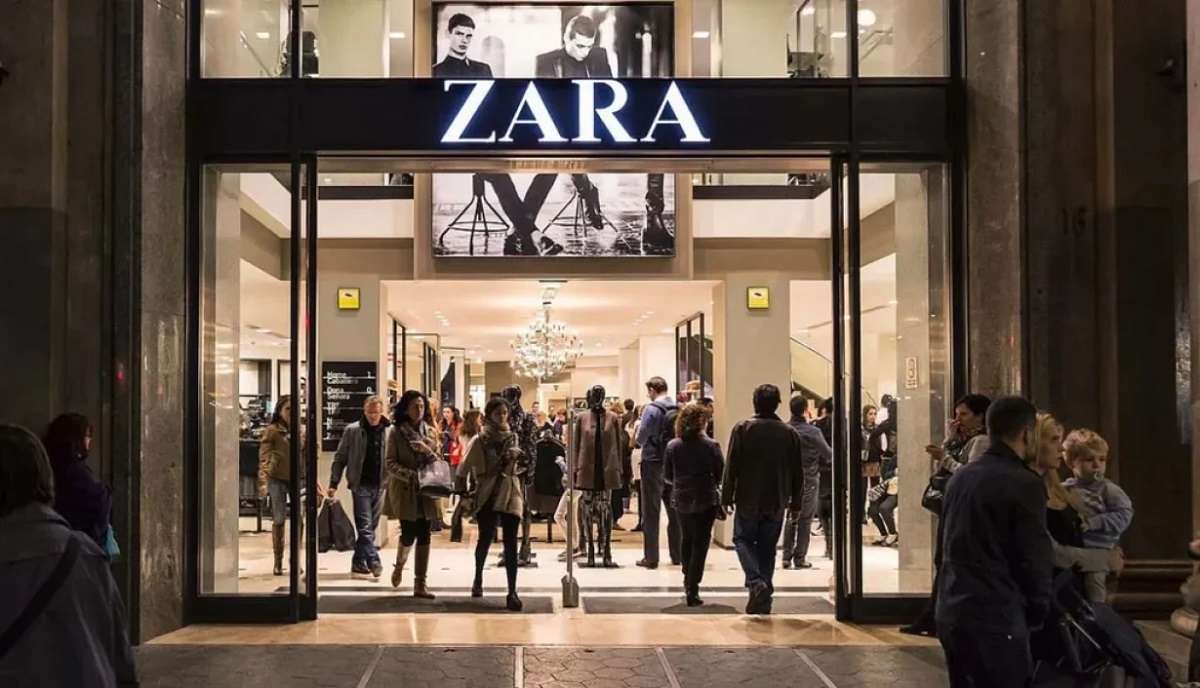
Inditex, the parent company of the Spanish apparel and accessories retailer Zara has expanded it’s outwear range by launching outwear capsule collection. The new collection named; ‘TRF Recycled’ portrays its commitment towards a sustainable future. The collection is curated using recycled polyester taken from plastic bottles.
In line with the group’s pricing scheme, the variants are marketed at an affordable range for up to £ 160. A silver puffer jacket is up for sale at £ 95.99, while a puffer coat is placed at £ 119. The sustainable line also offers joggers, a technical backpack and chunky trainers. A waterproof, two-in-one parka in the collection is priced at £ 159.
Earlier this month, Zara forayed into over 100 new markets, as it expanded its online presence, bringing the total number of countries where it operates an e-commerce channel to 155. At present, the chain operates via brick-and-mortar retail in 96 markets and is progressing towards the group goal of selling all of its brands online globally by 2020.
Welspun increase focus on domestic market
Welspun India is one of the world’s biggest home textiles companies. Around, 94 per cent of Welspun’s capacity is exported and the other six per cent is for the domestic market. But by 2020, this six per cent is expected to go up to 20 per cent. Besides the domestic retail market, hospitality is a major thrust area globally. The US is Welspun’s biggest customer.
The company is now turning its focus to the domestic market to achieve higher growth. Welspun’s brand Spaces caters to the middle class and the upper segment. The plan is to roll out a mass brand in the market. This brand will be launched in Tier II and Tier III cities by March.
After five years, India will possibly be Welspun’s prime market. The company is growing at 25 to 30 per cent year on year. After the introduction offlooring products next year, Welspun expects a boost in its revenue. The flooring units in Telangana will be commissioned next year. The company is investing around Rs 1100 crores to create an annual capacity of 27 lakh sq mt. By 2022 the company hopes to be debt-free while achieving revenues of two billion dollars.
Japan’s investments in Vietnam’s apparel segment on the rise
Japanese firms are scaling up investment in Vietnam’s textile and garment sector. Japan’s Matsuoka Corporation was the first to set foot in Vietnam in 2014. It mainly produces apparel items for Uniqlo to be exported back to Japan. The company has chosen Vietnam for capital injection and production expansion in recent years to take advantage of the opportunities anticipated to be brought by new-generation free trade agreements such as the EVFTA and the CPTPP.
With its first plant becoming operational in 2016, the second plant began production last August, with an annual capacity of about two million products. The company has further invested in an apparel plant complex with an annual production capacity of seven million products. By the end of this year, the complex is expected to create jobs for more than 2,500 local laborers.
With around 30 plants in operation, Sakai Amiori, another Japanese company, has opened an export apparel production plant. The plant finished construction in April 2017 and now sees stable production and exports. The influx of foreign direct investment continuing to flow into export-oriented sectors like textiles and clothing has the dual benefits of helping to boost the sector’s capacity and turning Vietnam into a global manufacturing base.
US and China back down on trade dispute
The United States and China have suspended their trade dispute for now. The dispute rattled financial markets and threatened world economic growth. The US will put on hold plans to raise tariffs on Chinese goods. China has agreed to buy a substantial amount of agricultural, energy, industrial and other products from the United States to reduce America's huge trade deficit with China. In another concession to the US, China has agreed to label fentanyl, the deadly synthetic opioid responsible for tens of thousands of American drug deaths annually, as a controlled substance.
The two sides appear to have had a major change of heart to move away from confrontation toward engagement. This changes the tone and direction of the bilateral conversation. The two countries have been locked in a dispute over their trade imbalance and China’s tech policies. The US accuses China of deploying predatory tactics in its tech drive, including stealing trade secrets and forcing American firms to hand over technology in exchange for access to the Chinese market.
The truce buys time for the two countries to work out their differences. Under the agreement reached, the two countries have 90 days to resolve their differences. If they can't, the US tariff increases will go into effect.
Trade war impacts Vietnam
The US-China trade war could mean trouble for Vietnam. China might seek to dump its goods on Vietnam to avoid US tariffs. And cheaper Chinese goods competing with Vietnamese goods will not benefit Vietnam’s economy.
To protect domestic companies import taxes may be necessary. No licenses should be issued if there is no guarantee that more than two thirds of the production chain would be in Vietnam. And Vietnam would have to promote free trade agreements with Europe and others to reduce its dependence on the US and China.
The trade war has already hit investors’ confidence causing them to pull out of emerging markets including Vietnam. The global supply chain is badly disrupted as a result, and the investment environment has become uncertain. The trade war brings both opportunities and challenges for Vietnam, but it is up to companies to identify the opportunities.
Since it is known which goods face sanctions, businesses should research about customers for those goods and offer them a better deal. The US-China trade war escalated in September with the US levying an additional ten per cent tariff on Chinese products. The US is set to raise the tariffs to 25 per cent in January if there is no agreement between the both sides.