FW
Talk about India’s falling cotton production maybe overhyped

When Terry Townsend, former executive director of the International Cotton Advisory Committee, raised a red flag that India is on the brink of a potential “cotton crisis” and the Indian government seems indifferent to the pending crisis it had a dominos effect with many other experts joining in the chorus.
The hype starter with estimates of current 2022-23 crop by major statistical organization showing production that’s on par with earlier year at more than 5 million metric tons, the amount of seed cotton delivered by farmers to procurement centers as of February was 1.1 million metric tons, which was behind the pace of previous season. Townsend saw it as a huge red flag. Ever since, most Indian trade journals have highlighted the impending cotton crisis and projections till first half of 2024 indeed show a drop.
The ‘crisis’ conclusion had evidence
Townsend’s conclusions were backed by evidence -- adverse weather, driven by climate change, is one of them. Heavy rains soaked the western Indian states of Gujarat and Maharashtra last year and ruined crops. In Haryana and Punjab, an infestation of pink bollworm, exacerbated by unfavorable conditions, wreaked extensive havoc for a second consecutive year. Low-quality seeds with poor germination success are another persistent issue plaguing growers country-wide.
Meanwhile, the USDA expects India’s cotton exports to slip to its lowest levels in 19 years during the ongoing crop season October 2022 to September 2023. Reason, the USDA expects farmers to shift to other profitable crops such as oilseeds and pulses leading to a dip. Indian cotton yarn exports had hit a decadal low of 664,000 tons in FY23, compared to the highest exports of 1.38 million tons in FY22.Latest Ministry of Agriculture figures indicate, cotton sowing across India was 8.5 per cent lower year on year at 7 million hectares due to a shrink in cultivation in some major growing states such as Maharashtra, Andhra Pradesh, and Telangana amid patchy rainfall. Many farmers say they are worried about producing a crop that is so reliant on water, of which there is no guarantee as climatic conditions have changed drastically and long periods of drought are playing havoc with the crop and soil. The only Indian state that saw a 4.6 per cent increase in crop production was Gujarat as it was blessed with a copious amount of rainfall last year.
The real scenario
However, there may have been some amount of miscalculation by experts. The seed shortfall prediction was not really a shortfall as the seeds were in captive status by farmers who had kept back stocks in the hope that eventually cotton seed prices would rise, enabling them to acquire better profits. Meanwhile, Townsend acknowledged he drew wrong conclusions from a situation he’d never before seen in decades in the cotton industry. His conclusions were merely based on lower cotton seed arrivals, which he foresaw as drop in India’s cotton supply chain.
Meanwhile CAI had initially projected a lower cotton output of 298.65 lakh bales, the lowest since 2008-09 in May 2023. However, the Committee on Cotton Production and Consumption estimated a higher output of 343.47 lakh bales for the same year. CAI members, including the crop committee, discussed pressing data provided by state associations and inputs from other stakeholders. However, after the Townsend confession, CAI reconvened on July 10, 2023 with cotton stakeholders and revised India's cotton output projection for the year 2022-23 to 311.18 lakh bales (each weighing 170 kg).
According to a CareEdge report, Indian cotton yarn industry is likely to register a sales volume growth of 5-7 per cent, while operating margin is expected to expand by 100-150 bps in FY24 compared to FY23. Last year, cotton production in India declined from 35.2 million bales in cotton season (CS) 2020-21 to 31.1 million bales in CS 2021-22. The lower cotton production caused a steep surge in the cotton prices. The average domestic cotton price registered a peak of around Rs 1 lakh per candy (Rs 280/kg) in FY23. The mismatch between the domestic and international prices impacted cotton exports significantly and India witnessed its lowest cotton yarn exports in a decade. In FY23, India’s cotton yarn export stood at 664,000 tons against the decade’s highest exports of 1,389,000 tons in FY22.
Despite troubles last year, cotton farmers are enthusiastic about the fibre crop. As per recent data by the Gujarat government, as of July 17, farmers have already completed sowing of cotton for 2.53 million hectare of land in Gujarat. This area is slightly lower than the last year’s area of 2.55 million hectare, but the sowing season will go on for at least two more weeks and it is expected that the total area under the crop will exceed the area last year.
Chinese apparel and textile exports decline in H1 '23
Chinese apparel and textile exports faced challenges in H1 '23, with apparel exports declining by 6% to $74.98 billion compared to the previous year. The slowdown was mainly due to a drop in US imports, China's primary export destination, falling by over 30% in Jan.-May '23. However, there's a glimmer of hope as June '23 showed signs of recovery, with apparel exports reaching $15.42 billion. Meanwhile, textile exports also saw a significant 11% decline to $67.69 billion in H1 '23.
Wrangler announces sponsorship deal with Dallas Cowboys
American denim brand Wrangler solidifies a new multi-year sponsorship deal with the Dallas Cowboys, marking a meaningful connection between the two iconic American symbols. Wrangler plans to celebrate cowboy culture during the 2023-2024 Cowboys season with activations at AT&T Stadium, social content featuring players, cheerleaders, and the Flag Team, and in-store promotions in Texas-based retail locations on Wednesdays. The sponsorship reflects the natural alignment of Wrangler's brand values with the lifestyle of Cowboys players and fans, creating a shared bond and mutual fandom for denim's iconic brand.
Mango expands with first Texas store in Memorial City Mall
Barcelona-based fashion brand Mango opens its first store in Texas at Memorial City Mall as part of its ambitious U.S. expansion. The store exclusively features the Woman line, reflecting contemporary Mediterranean trends. Mango aims to open 15 stores in 2023, with six planned for Texas malls. The company's expansion also targets Georgia and California, aiming for 40 U.S. stores by 2024 to establish the U.S. as one of its top five sales markets. Despite its record revenue of nearly $3 billion in 2022, Mango declined to disclose specific U.S. sales figures. The brand has had a U.S. presence since 2006.
India: RSWM to expand cotton yarn capacity
RSWM Ltd., a leading textile manufacturer and exporter from India, is investing ₹315 crore to expand its compact cotton yarn capacity at Lodha Unit, Banswara. The current spindle capacity of the Banswara unit is 95,376, and the investment will increase it by 51,072 spindles during FY 2023-24. RSWM Limited, part of the USD 1 billion LNJ Bhilwara Group, exports yarns and fabrics to 90 countries worldwide. The decision to expand is driven by the growing demand for cotton yarn, with an expected 10% volume increase in FY2024. The expansion aims to create job opportunities, with a focus on women empowerment.
US synthetic yarn exports down in May 2023
In May of 2023, the United States experienced a 29% increase in synthetic yarn exports, amounting to 15,000 tons. However, this figure marked a 15% decrease compared to the same month the previous year.
The total value of these synthetic yarn exports reached $46 million, indicating a 31% rise from the prior month, yet a 10% dip from the corresponding month the previous year. The primary recipient of synthetic yarn exports from the United States was Honduras, commanding a significant 80% portion of the overall exports.
Mexico secured the second-highest position with a 3% share. Regarding product classification, the most prominent type of exported synthetic yarn from the United States was yarn (excluding sewing thread) made from synthetic staple fibers, not intended for retail sale.
This category represented an overwhelming 98% of the total export volume. The mean export price for synthetic yarn in May 2023 stood at $3,134 per ton, showing a decline of 5.4% compared to the preceding month.
The average price displayed discernible variation based on the destination country. Canada recorded the highest average price at $8,679 per ton, while Honduras had the lowest at $2,918 per ton. In summary, synthetic yarn exports from the United States underwent a decline in May 2023, attributed to a combination of factors, including the persistent COVID-19 pandemic and the ongoing conflict in Ukraine.
Nevertheless, amidst these challenges, positive aspects emerged, such as robust demand from Honduras. It is noteworthy that opportunities and challenges continue to shape the landscape of synthetic yarn exports from the United States.
Bangladesh eyes respectable apparel market share by 2030
In its annual release of global apparel trade data for 2022, the World Trade Organization (WTO) reports that Bangladesh has maintained its status as the world's second-largest exporter of clothing, following China.
Bangladesh's presence in the international apparel market has surged to 7.87% in 2022, a remarkable rise from the 6.37% recorded in 2021. Throughout 2022, Bangladesh's clothing exports exhibited a significant 32.60% year-on-year increase, reaching a value of $45.35 billion, up from $34.20 billion.
Similarly, China experienced a modest 3.60% annual growth in apparel exports, with figures climbing to $182.42 billion from the previous year's $176.08 billion. Nevertheless, China's market share saw a slight dip, sliding to 31.67% in 2022 from 32.79% in 2021.
Bangladesh is now setting its sights on capturing a 12% share of the global apparel market by 2030. Impressively, the nation has already surpassed China in volume within the European Union and is anticipated to outpace China in terms of dollar value by year-end. The driving forces behind Bangladesh's burgeoning apparel export industry encompass a range of factors, including its competitive labor costs, adept workforce, and robust infrastructure.
Notably, Bangladesh has made significant strides in sustainability, rendering it an alluring hub for international brands and retailers. However, projections for 2023 foresee a deceleration in global apparel trade due to economic deceleration and geopolitical tensions, particularly the conflict in Ukraine.
Bangladesh confronts challenges such as escalating inflation and shipping expenses. Despite these obstacles, Bangladesh is favorably positioned to sustain its apparel export expansion in the forthcoming years.
United States leads Plus Size clothing market in 2023
The US plus size clothing sector has gained prominence, capturing a dominant 40% market share in 2023 due to key factors driving demand.
The country's substantial obese population, with over 40% of adults classified as such, propels the desire for fashionable and comfortable plus size garments. Noteworthy spending upticks on such attire stem from a burgeoning middle class and increased visibility of plus size models and celebrities.
Americans' escalating caloric intake has elevated the average weight, further fueling the demand for plus size clothing. Retailers are responding to this demand by diversifying their offerings, with many major players and numerous online vendors specializing in plus size attire.
Forecasts predict continued market expansion driven by factors like the growing obese population, middle-class affluence, and evolving dietary habits.
The US holds a 40% market share, underpinned by factors including the expanding obese population and evolving eating habits. Retailers are expanding their plus size lines to meet mounting demand, and projections indicate sustained growth.
Los Angles: Texworld, Apparel Sourcing debut in style
Texworld Los Angeles and Apparel Sourcing Los Angeles debuted with resounding triumph, uniting global attendees and exhibitors in an impressive inaugural edition.
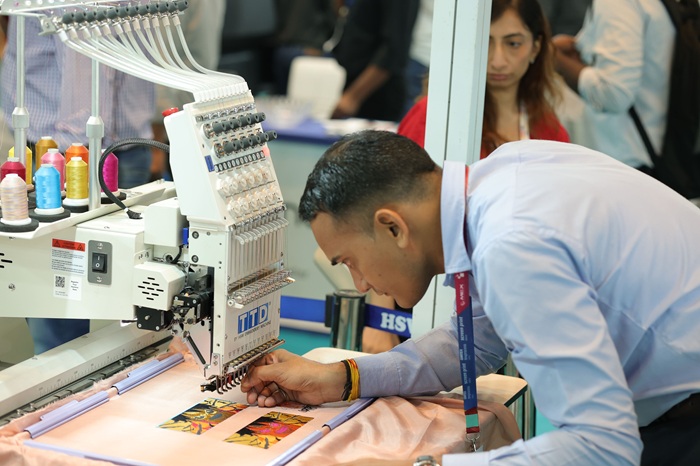
Hosted at California Market Center on July 25-26, the event elegantly showcased a vast array of fashion textiles, clothing, accessories, and local sourcing options. Incorporating a diverse product exhibition, the event also boasted compelling seminars and panel dialogues guided by foremost industry authorities.
Attendees revealed in exploring an expansive spectrum of ingenious designs, pioneering materials, and eco-conscious practices. Printsource, LenzingFibers, and CCPIT-TEX, prominent partners of the event, also reaped significant accomplishments. Printsource orchestrated an exclusive exhibit of vibrant prints and patterns, captivating designers and industry professionals. Lenzing enriched the occasion through the curated Lenzing Seminar Series and networking lounge.
CCPIT-TEX introduced an exceptional international dimension, affirming the show's status as a global textile and sourcing hub. Enthusiasm brims among event organizers, elated by the triumph of Texworld Los Angeles and Apparel Sourcing Los Angeles.
They extend gratitude to exhibitors, attendees, speakers, and staff who fostered the event's success. Anticipation mounts for the forthcoming edition, slated for January 2024 at New York City's Javits Center.
This milestone event attracted over 1,000 attendees, notably from retail giants Macy's, Nordstrom, and Target. The expansive show floor hosted 300 exhibitors representing 20 nations. The Lenzing Seminar Series spotlighted sustainable fashion luminaries. The CCPIT-TEX networking lounge provided a fertile ground for collaboration between Chinese and American textile entities.
Kontoor Brands reports flat Q2 revenue with positive growth outlook for FY'23
Kontoor Brands, Inc., a global lifestyle apparel company, reported its second-quarter financial results for 2023. While the Q2'23 revenue remained flat compared to the same period in 2022 at $616 million, reported gross margin declined by 290 basis points to 40.6 percent, and adjusted gross margin decreased by 250 basis points to 41.0 percent compared to Q2'22. The reported EPS for Q2'23 was $0.64, and adjusted EPS was $0.77, down from $1.09 in Q2'22, including a one-time discrete tax charge of $0.09.
Notably, inventory increased by 17 percent over Q2'22, showing improvement from the previous quarter's 52 percent YoY increase. In the full-year outlook, FY'23 revenue is expected to increase at a low-single digit percentage compared to FY'22, with adjusted gross margin forecasted to be between 43.5 percent and 44.0 percent. Adjusted EPS is projected to range from $4.55 to $4.75. Additionally, the company plans to reduce inventory in Q3'23 and expects further reductions in Q4'23.
Scott Baxter, President, Chief Executive Officer, and Chair of Kontoor Brands, expressed satisfaction with the Q2 results, stating that investments in their brands have led to continued share gains in the U.S. wholesale business and accretive growth in DTC and international markets. Restructuring actions were also taken to drive efficiencies and fund strategic investments in key growth areas like talent, innovation, technology, and demand creation.
While the company anticipates macroeconomic pressures in the second half of 2023, they are confident in their ability to align shipments better with POS in the U.S., indicating outsized growth in Q3 revenue relative to their full-year guidance. The focus remains on diversified growth across channels, categories, and geographies to ensure sustained, profitable growth.
The financial report also provides a breakdown of the revenue performance by region and brand. DTC and international markets have shown strength, with China witnessing a significant increase in both wholesale and DTC for Wrangler and Lee brands.
The company's balance sheet and liquidity are stable, with cash and cash equivalents of $82 million and long-term debt of approximately $0.8 billion as of July 1, 2023. Furthermore, the Board of Directors has declared a regular quarterly cash dividend of $0.48 per share, payable on September 18, 2023.
Kontoor Brands is proactively managing its inventory, which is expected to decline in Q3'23 compared to the previous year, with further reductions planned in Q4'23.
Looking ahead, the company remains confident in its strategy and expects to invest in brands and capabilities to drive long-term, profitable revenue growth while anticipating accelerated cash generation as inventory normalizes in 2023. The outlook includes mid-single digit percentage growth in adjusted SG&A, improvements in gross margin driven by geographic and DTC mix, and continued investments in DTC and demand creation.
The financial report demonstrates Kontoor Brands' commitment to navigating market challenges, driving growth, and maintaining a strong financial position as they head into FY'24.