FW
Gap quarterly revenue up six per cent
Gap’s quarterly revenue is up 6.5 per cent compared to the same quarter last year. Net margin was 5.57 per cent and return on equity 29.45 per cent.
Gap’s payout ratio is currently 45.54 per cent. The business also recently declared a quarterly dividend, with a yield of 3.65 per cent. The firm has a price-to-earnings ratio of 12.49, a P/E/G ratio of 1.15 and a beta of 0.67. The company has a debt-to-equity ratio of 0.36, a quick ratio of 0.85 and a current ratio of 1.97.
The company has one platform for all its brands, ensuring customers can purchase items for any of them in one place. This has also ensured its new brands get the recognition that would not have been possible if they had had a separate web presence. An upshot of this is that the company was able to deliver strong growth from its online and mobile channels in the second quarter.
Gap offers apparel, accessories, and personal care products for men, women, and children under the Old Navy, Gap, Banana Republic, Athleta, and Intermix brands. Its products include denim, tees, button-downs, khakis, and other products; and fitness and lifestyle products for use in yoga, training, sports, travel and everyday activities.
US jeans imports from China, Mexico increase marginally
US jeans imports from China rose just 2.91 per cent for the year through October to $790.89 million worth of goods, compared to the year-ago, while shipments from Mexico increased 1.61 per cent in the same timeframe to $679.41 million. Imports from both countries have only increased slightly as the countries face disruption in US trade policy. In order to mitigate risk in their supply chains, the countries have had to shift sourcing plans.
Tariffs have caused China to lose a majority of its jeans market to other Asian nations. Vietnam saw shipments to the US rise 46.16 per cent in the last 10 months to $248.95 million, while Bangladesh shipments increased 12.78 per cent to $481.41 million.
Other Asian suppliers seeing a hike include Pakistan, with imports rising 12.52 per cent to $206.05 million; Cambodia, with shipments up 27.49 per cent to $99.08 million; and India, posting a 44.59 per cent hike to $31.35 million. Meanwhile, suppliers are also taking market share from Mexico since they have the same attributes of quick shipping times and duty-free trade because of the Central American Free Trade Agreement (CAFTA). US jeans imports from CAFTA countries rose 7.37 per cent in the 10 months to $116.37 million worth of goods.
Bangladesh terry towel exports up 49 per cent
Bangladesh’s exports of terry towels rose by 49.60 per cent from July to November. In fiscal 2018, exports of home textiles, including terry towels, bed sheets, linen, curtains, and pillow covers, grew 9.95 per cent year on year. However, terry towel exports declined 4.40 per cent year on year.
With a trade advantage of nearly 15 per cent, including six per cent cash incentive, the home textile sector in Bangladesh, especially terry towels, is performing well. Bangladesh regularly exports different types of home textiles and specialized textile products including terry towel bed sheets, bedspreads, pillows, pillow covers, cotton table napkins, furnishing fabrics, curtains, window and door curtains, cushions, cushion covers, carpets, table covers, kitchen accessories, mattress covers, bath linen, and other home furnishings.
However, at least 10 small and medium factories have closed in the past two years. Another three or five are struggling to survive. At least 70,000 workers lost their jobs due to closure of those factories. The sector’s (including terry towel) growth started to witness a decline from January 2014, when the European Union allowed zero-duty benefit to Pakistan under its GSP Plus scheme on the export of home textiles and some other products. The EU imported over $6.86 billion worth of home textiles in 2016.
‘Click to Brick’ new mantra of online retailers
"Until recently, many online brands considered brick and mortar stores passé. Companies like Warby Parker, Bonobos and Casper relied more on their well-designed website to capture the market. However, growing competition, surging online advertising costs and cheap mall space are prompting these digital natives to again embrace offline stores. Infact, 90 cents of every retail dollar in the US is spent on a physical location."
 Until recently, many online brands considered brick and mortar stores passé. Companies like Warby Parker, Bonobos and Casper relied more on their well-designed website to capture the market. However, growing competition, surging online advertising costs and cheap mall space are prompting these digital natives to again embrace offline stores. Infact, 90 cents of every retail dollar in the US is spent on a physical location.
This “clicks-to-bricks” phenomenon encompasses big names like Amazon Books and Casper as well as less-known startups such as men’s shorts purveyor Chubbies and hair color brand Madison Reed.
Physical presence boosts growth
Physical presence is necessary for a brand’s long-term growth. Retail startups now include a store opening plan in pitches to venture firms. Bonobos, acquired last year by Walmart, recently opened in Lexington, Kentucky, and will soon have stores in over 60 locations. Buying ads on Google, Facebook and Instagram once made a lot of sense as it allowed nascent brands to narrowly target shoppers and grow fast. Now social feeds are jammed with posts from obscure brands. The competition to grab attention has pushed up the cost of ads even as they become less effective with so many of clamoring for attention.
With millions of square feet of space available across the country, opening a physical store has become cheaper. Landlords are offering leases as short as a year with extension options. That flexibility extends to temporary locations, too, with spaces dedicated to rotating pop-ups so tenants can easily test concepts. To further reduce risk, they’re offering to help pay for store remodeling and taking a small percentage of sales instead of monthly rent.
A physical store offers instant gratification, merchandising, employee service and dressing rooms to get shoppers to buy more and return fewer items. Alexa Buckley, co-founder women’s shoe purveyor Margaux, outlines the merits of having a store when she rented a loft space in Philadelphia. Despite heavy rains and wind from the remnants of a hurricane, 200 women showed up and generated almost a month’s worth of sales. In July, Margaux opened a permanent store in Manhattan’s Greenwich Village. She’s planning more.
Offline boost profit margins
Profit margins in physical stores are better, too, without the brands needing to pay for shipping or as many returns. Plus, offline customers tend to buy more, and after the store’s debut there is a noticeable lift in the surrounding area’s online sales. On the heels of that brick-and-mortar success, Kleiner Perkins Caufield & Byers, an early Amazon backer, invested $30 million in UntuckIt so it could open more stores.
Bonobos’s “guide shops” are set up for customers to try on and order clothes. The brand focuses not on sales-per-square-foot — a traditional industry metric — on how much the stores drive sales online and off in a particular market.
Digital natives are absorbing many of the lessons honed by retailers for the past century: that people like to feel the fabric, try on glasses, get face-to-face shopping tips. The question is whether Bonobos, Warby Parker and the rest have also learned the painful lessons — how over-expanding can cannibalise existing stores — that laid low so many specialty retailers in recent years.
Mirrorsize US to launch ‘draping’ solution based on customer’s selection of fabric, style
"The Indian arm of NJ-based company, Mirrorsize US Inc, plans to launch a ‘Draping’ product in the next three to four months. “Based on customer’s selection of fabric, style, etc, we will sew the apparel to drape it on the person on his/her mobile to give real life visualisation and enrich customer experience,” says Arup Chakraborty, Founder and CEO, of the company. Also on the cards is style recommendation. This will depend on getting funding from a brand. Style recommendation will be based on customer’s style preferences, “We will use deep learning to recommend styles to a customer by geography,” he explains."
 The Indian arm of NJ-based company, Mirrorsize US Inc, plans to launch a ‘Draping’ product in the next three to four months. “Based on customer’s selection of fabric, style, etc, we will sew the apparel to drape it on the person on his/her mobile to give real life visualisation and enrich customer experience,” says Arup Chakraborty, Founder and CEO, of the company. Also on the cards is style recommendation. This will depend on getting funding from a brand. Style recommendation will be based on customer’s style preferences, “We will use deep learning to recommend styles to a customer by geography,” he explains.
The company currently offers MD GetMeasured – for bespoke merchants to get precise body measurement of their customers and MS Size2Fit for merchants selling readymade apparels, “where our product will give precise size recommendation to a customer by brand, by apparel and by apparel category. Shirts are available as regular, slim and casual fit,” adds Chakraborty
Solution to solve sizing issues
Chakraborty points out sometimes online returns are as high as 55 per cent, predominantly due to ill-fit. There is no technology available to get precise human body measurement which prompted them to introduce a solution that cannot only solve ‘sizing’ and ‘personalisation’ issues but also remove supply chain inefficiencies and help scale enterprises by making business more seamless. “This device requires no additional hardware/investment and works on any smartphone and tablet. Users can get their precise body measurement, real-time in seconds. We create a 3D model on the run-time and deform the 3D model to take the shape of the object,” informs Chakraborty.
Independent of background and light
The solution can work with both cluttered and uncluttered background. It is independent of the side pose and can identify another human. It also works in low light. “We generate 3D model of the object on the run-time and deform the 3D model to the shape of the object,” he adds. Drawing a comparison with Michael Black from MPI Germany, known to be the guru of 3D mesh who developed a similar technology to deform a 3D mesh from two images, Chakraborty notes, “Black formed a company called Bodylabs.com and after R&D for over two years, filled his paper claiming accuracy of 8-10 cm. Bodylabs was acquired by Amazon in 2017. Our accuracy is <1 CM and we’re in the process of filing our paper at IEEE in early 2019,”he explains.
Robust plans ahead
Though users can wear both tight and loose fitting garments, the company prefers them to wear tight fitted cloths for accurate results. “We use Physics, Simulation, FEM, Computer Graphics etc. to drape our user. It’s an enterprise SaaS model, which will allow brands, retailers and institutions to use our product,” Chakraborty avers. The company plans to roll-out GTM strategy in Q1’19 and expects to hit $30 million in global revenue (SaaS) in FY 2019-20 as per US GAAP.
Luxury brands opts for mergers and consolidation to boost growth
"They were times when overseas operations of luxury retail brands would automatically boost their domestic image. But now, times have changed. Today, in order to grow and scale up, well-known labels are merging with each other. The most recent example is the purchase of Versace by Michael Kors for $2bn. With the retail market facing growth stagnation for sometime mergers provide an effective route for expansion. Last year, mergers and acquisitions in the retail sector increased 15 per cent."
 They were times when overseas operations of luxury retail brands would automatically boost their domestic image. But now, times have changed. Today, in order to grow and scale up, well-known labels are merging with each other. The most recent example is the purchase of Versace by Michael Kors for $2bn. With the retail market facing growth stagnation for sometime mergers provide an effective route for expansion. Last year, mergers and acquisitions in the retail sector increased 15 per cent.
Balancing exclusivity and growth
The fiduciary responsibility of public companies leads to increase in sales and profits particularly in case of luxury retail companies. This ultimately leads to more commercialisation. However, exclusivity will always remain the pillar of luxury. The prevailing problem for luxury retailers therefore, is to drive growth without compromising on exclusivity. To achieve this, retailers are opting for consolidation. Several factors are driving consolidation, these include: bifurcation, expanding into places like China and digitization.
There numerous examples of brand consolidation across the luxury market, for example, Louis Vuitton and YSL are both now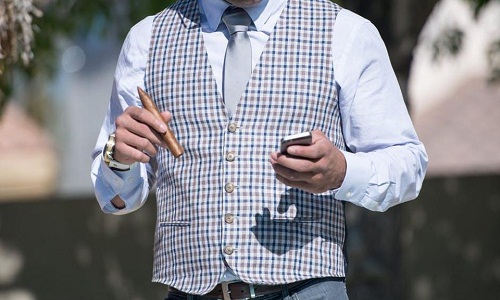 owned by LVMH and Kering. The Chinese groups Fosun International and Shandong Ruyi are currently dominating the market having bolstered significantly their luxury fashion portfolios by acquiring European brands like Lanvin and Bally. But these groups already have an increasing number of competitors including the US-based Tapestry, which now owns Coach, Kate Spade and Stuart Weitzman and, most recently, Michael Kors.
Evolving versus maintaining the brand
Consolidation provides easier access to products, greater experiences through digitisation and better product guidance through brand integration for consumers. For example, Sainsbury’s acquisition of Argos’ parent company has enabled customers to gain easier access to a wider variety of products under one roof. However, these new conglomerates need to carefully communicate the integrated brand vision to avoid compromising the authenticity and integrity that made the original brands successful. It’s essential to strike the right balance between growth and brand integrity – particularly exclusivity and uncompromising quality. Design and customer experience are the essential ingredients of luxury brands - not price points.
Establishing a balance
Consolidation benefits not only the acquiring brand but also the one that is acquired. The acquiring brands needs to rejuvenate and increase relevancy through new brands, whether emerging luxury players or more established and iconic luxury brands. The acquired brand, on the other hand, needs to expand its footprint and penetrate new markets which seem difficult with finite resources, distribution channels and supply chain. These benefits make the choice a lot easier for brands like Michael Kors et al, to buy market share rather than investing time and pounds into trying to capture it.
However, consolidation has its own share of problems. Striking the right balance between growth, exclusivity and brand integrity is likely to be a major challenge for brands embarking on the consolidation. So is integrating different cultures, fashion principles and value system.
Stefano Saccone appointed Vice President, General Manager, Vans(R)
VF Corporation, a global leader in branded lifestyle apparel, footwear and accessories, has appointed Stefano Saccone as the Vice President, General Manager of Vans®, EMEA. Saccone will lead the brand across the EMEA region from April 1, 2019.
Saccone will join the Vans from the company’s Eastpak® brand, where he served as Vice President, General Manager in Belgium. He will replace Jan Van Leeuwen, who previously served as Vice President, General Manager of Vans, before his November 2018 appointment to the position of Vice President, General Manager, The North Face®.
Saccone has more than 20 years of international experience in sales, marketing, merchandising and brand leadership across the apparel, footwear, and accessories categories. Before joining VF in 2012 as VP Sales & Marketing for the Napapijri® brand in EMEA, Saccone held management positions with Nike, Ralph Lauren, P&G and Ermenegildo Zegna.
US alters date for tariff hike on $200 billion Chinese goods
The US Trade Representative’s (USTR) officially changed the scheduled date of tariff hikes on $200 billion worth of Chinese goods to March 2, 2019 as the United States and China pursue talks on trade and intellectual property. The change was made in a Federal Register filing from a previously scheduled effective date of January, 1, 2019 for increase to 25 from 10 per cent. The notice does not affect the 25 per cent tariff already levied on $50 billion worth of Chinese technology items, including semiconductors, printed circuit boards and other electronic components, machinery and vehicles.
The change was attributed to new US-Chinese engagement with the goal of obtaining the elimination of the acts, policies, and practices covered in the investigation following a December 1 meeting between US President Donald Trump and Chinese President Xi Jinping in Buenos Aires.
The USTR statement made reference to goals set forth by the White House to negotiate over a 90-day period structural changes by China on forced technology transfer, intellectual property protection, non-tariff barriers, cyber intrusions and theft, services and agriculture.
Texhong buys Winnitex, forms a JV company
Texhong has bought over Winnitex and formed a new joint venture company named Texhong Winnitex. Texhong is a textile group and one of the world’s largest core spun yarn suppliers. Winnitex is a renowned leading group in dyed woven fabrics. It has a long track record of direct sales to large international fashion and workwear brands and is well-known for its service, quality, reliability and innovation within the textile industry.
The reorganisation will lead to the establishment of a global vertically integrated industrial chain for Winnitex’s dyed woven fabrics business, and the group can also leverage its strategic advantages in Vietnam and the tax-free zone in Nicaragua to generate tremendous synergies. The entire business of the Winnitex group and the group’s existing weaving and dyed woven fabrics businesses in Vietnam and Nicaragua will be integrated under Texhong Winnitex.
This transaction will enable Texhong Winnitex to leverage its experienced management team and extensive customer base, and significantly increase its annual production capacity of dyed woven fabrics by 90 million yards. The joint venture is expected to lead to an increase in the scale of production in Vietnam and Nicaragua. The vertical integration of the spinning, weaving and dyeing activities is expected to establish a new milestone for the group’s dyed woven fabrics business.
TAI presents lifetime achievement and excellence awards
R Jagadish Chandran and Sanjay Jayavarthanavelu have been awarded by the Textile Association of India (TAI) for their contribution to the growth of the industry. Premier Mills chairman Chandran was presented with the lifetime achievement award for service to the industry. Chairman and managing director of Lakshmi Machine Works Jayavarthanavelu got the industrial excellence award for his contribution to the field of machinery.
TAI aims at promoting the use of scientific knowledge in the field ranging from fiber to garment and implementing programs of continued education in textile technology management.
The Textile Association of India, founded in 1939, provides for professional growth of technologists, managers, traders, researchers, teachers, consultants and entrepreneurs. It caters to the needs of all fibers, products and all sectors of the industry. It organizes seminars, conferences, workshops and exhibitions of textiles and allied machines. It has 26 federal units throughout the country and promotes scientific and technological knowledge and conducts programs for textile professionals and technocrats.