FW
Pakistan looks to increase exports to Japan, attract more FDI
Pakistan will increase trade and investment ties with Japan. The country wants to increase its exports of textile products to Japan and is trying to get Japan to grant duty free access. Meanwhile they are also trying to attract more Japanese investment to Pakistan. There are currently some 86 Japanese companies in Pakistan. More are coming in. Japan sees Pakistan as a country which offers business and employment prospects.
Japan-Pakistan relations are embedded in business, aid, politics and security. Pakistan has a long standing trade and investment relationship with Japan and wants to build upon the reserves of historical linkages, goodwill and understanding. Pakistan provides Japanese investors full investment security and an one window operation.
Pakistan-Japan relations have their roots in the ancient civilization of Gandhara. Since the creation of Pakistan in 1947, the two countries have enjoyed cordial and friendly relations. Right now Japan focuses on small-scale socio-economic projects mostly run by NGOs in Pakistan. Japan would be better served by participating in big national mega-projects such as railways, roads, tunnels, ports, and shipping.
Japan assigns high value to its bilateral relations with Pakistan since the nature of their cooperation is multidimensional. Japan has helped Pakistan in the areas of humanitarian assistance, social security and infrastructure development.
Shetland Fleece wins British Wool’s 2018 Champion Golden Fleece
Shetland fleece has won the 2018 British Wool National Golden Fleece competition, in association with JG Animal Health. Entered by Robin and Margaret McEwen-King, the fleece has been recognised as the best in the UK. The 2018 Reserve Champion title was awarded to Sam McConnell from Ballymartin, Co Down with a Rouge fleece. The results were announced on December 13, 2018 at The British Wool National Golden Fleece Awards Presentation.
The Golden Fleece is a nationwide competition open to all British Wool producers, aiming to highlight the quality of British wool. Producers from England, Scotland, Northern Ireland and Wales are invited to enter their fleeces at any of the eleven British depots across the UK. In addition, the champion fleeces from 17 regional agricultural shows attended by British Wool were automatically entered into the four country finals.
The competition attracts entries from all corners of the UK, and the final eight include two fleeces from each home nation - one traditional carpet type, and one speciality/knitwear type. The winning Shetland fleece was entered into the final having won the speciality/knitwear category in Scotland.
Tirupur garment exporters set up units beyond Indian shores to tap growth
"The Tirupur’s garment industry employs nearly 7 lakh people directly. Until last year, the industry grew at a rate of 20 per cent year-on-year. The cluster, last year, witnessed negative growth for the first time in nearly a decade. After GST was implemented, the cluster lost nearly 5.4 per cent of total drawbacks and incentives that it previously enjoyed. This also included 5.5 per cent excise rebate. To protest against this, exporters made strong representations to the government. The Commerce Ministry then increased MEIS from 2 per cent to 4 per cent, but also reduced ROSL from 3.6 per cent to 1.7 per cent. After all these adjustments, exporters enjoyed only 7.7 per cent of drawbacks."
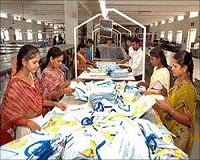 Global festive season has brought a ray of hope to Tirupur, which recently witnessed one of its worst years. Demonetisation coupled with the implementation of Goods and Services Tax (GST) system halted growth at India’s largest knitwear and readymade garments cluster. Demonetisation proved to be a big blow as it sucked out liquidity from the market. Just as the sector struggled to get back on its feet, GST brought the garments industry back to the brink of death.
The Tirupur’s garment industry employs nearly 7 lakh people directly. Until last year, the industry grew at a rate of 20 per cent year-on-year. The cluster, last year, witnessed negative growth for the first time in nearly a decade. After GST was implemented, the cluster lost nearly 5.4 per cent of total drawbacks and incentives that it previously enjoyed. This also included 5.5 per cent excise rebate. To protest against this, exporters made strong representations to the government. The Commerce Ministry then increased MEIS from 2 per cent to 4 per cent, but also reduced ROSL from 3.6 per cent to 1.7 per cent. After all these adjustments, exporters enjoyed only 7.7 per cent of drawbacks.
Ethiopia emerges as a viable option
The bleak outlook at Tirupur’s garment exports market has forced many exporters to look for other avenues of growth. One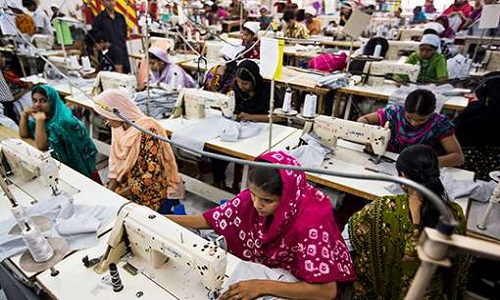 such destination is the African country Ethiopia which offers several incentives. Betting on the prospects, SCM Garments from Tirupur recently set up a 500-machine unit in Ethiopia. The biggest advantage, according to M Ashok, Chief Marketing Officer SCM Garments, is duty-free entry into both the European Union and India. Also, labor in the country is cheap and abundant.
However, according to Kumar, efficiency levels in the country are low, given its raw and untrained labor. This takes away most of the benefit of lower costs. Also, the labor isn’t reliable and can only produce basic styles of garments. They will require atleast a few months of training to learn new garmenting styles.
Growth of domestic market
Another revenue stream that several garment exporters in Tirupur have been turning to is the domestic market. The apparel market in India is growing at nearly 10 per cent every year. Fall in exports led to a huge number of exporters, especially the smaller ones, shifting to the domestic market to cater to companies such as Reliance, Big Bazaar, Pantaloons and Arvind Mills. Warsaw International makes garments for Puma, and is now manufacturing and selling to Puma for its Indian customers.
Falling rupee gives exporters a better value for their goods against the euro and dollar. Exporters expect the rupee to fall further. They are requesting the government to announcement new schemes in the budget in case the value of rupee increases after the general elections next year. They also hope that the policymakers incorporate both domestic and international factors while formulating new policies or exporters are in danger of being washed away.
China’s cotton stocks fall to 13 million bales
China’s cotton stocks have drastically fallen, from 60 million bales in 2014 to just under 13 million bales. This dramatic reduction has been due to three years of aggressive selling with 11.5 million bales sold in the latest annual round of selling which ended in September. China was able to increase reserves dramatically as additional imports were allowed to offset purchases from the domestic crop.
In 2015-16, China’s shift away from a price support program for cotton caused internal prices to fall, which helped to boost consumption but also helped to lower production. The gap between the two grew to nearly 15 million bales. From 2012 to 2015, the gap between cotton consumption and production in China was less than five million bales.
At the same time, China stopped issuing additional TRQ (Tariff Rate Quota) import licenses under its sliding-scale quota category. The belief is that the country wishes to maintain around 11.5 million bales. World cotton production for 2019 is forecast to be down, led by Pakistan, China, and India more than offsetting higher production in Brazil.
Trade is projected up with higher Brazil exports and rising Pakistan demand. Global use is down sharply mainly because of China’s lower-than-expected annual growth amid uncertain economic prospects and textile exports.
India: Welspun to expand capacity with a flooring plant in Telangana
Welspun is planning to expand its capacity by setting up a fully integrated and independent flooring plant in Telangana. The company will manufacture carpets, area rugs and carpet tiles in this facility. It will invest Rs 11 billion in this facility with a capacity to produce 27 million sq. mt per annum. The company is planning to begin commercial production in the new plant by end of 2019.
Welspun also plans to manufacture products for specialised use in healthcare, fire departments, aerospace, defense, automobile, railways and other utilities. These products include specialised features such as fire retardants, stain resistant, anti-bacterial, PET resistant, and soil resistance, among others. The company also plans to tap opportunities in the bedding segment.
Another high potential segment that Welspun plans to foray into is global wellness economy. The company has partnered with Stay Well to infuse wellness into hotel rooms with features and programs to maximise the guest experience and minimise the impact that travel has on the human body.
Power situation improves in Pakistan textile units
Gas supply to zero-rated export industries in Pakistan has been restored.The move has enhanced the confidence of the business community. Erratic gas supply had adversely affected textile production. Continued energy supply is necessary for producing an exportable surplus.
In Pakistan the value-added textile sector is the main engine of growth and so a continued energy supply is the need of the hour. The country’s textile industry has a 57 per cent share in exports and 8.5 per cent share in gross domestic product. The textile sector has the largest share in Pakistan’s exports.
Now the industry wants tax refunds to be released. Blocked refunds cause trouble for textile exporters, making them unable to cater to their export markets. They want pragmatic to be framed in consultation with stakeholders in a bid to reduce the cost of doing business by fixing prices of inputs in line with competing countries in order to create a level playing field.
Countries in the region are rapidly multiplying their exports because of the edge they have in the cost of doing business. While China’s share in global textile exports is 36 per cent, Vietnam contributes 12.4 per cent, and Pakistan seven per cent.
The US rejects EU’s proposal to reform WTO
The US has rejected European Union’s proposal to reform the World Trade Organization, dealing a blow to international efforts to bolster the Geneva-based body, which has come under attack from President Donald Trump’s administration. At a WTO General Council meeting held recently, the US didn’t support the EU’s plan to avert the paralysis of the organisation’s appellate body, which mediates trade disputes that affect some of the world’s largest companies.
The move comes after the EU formally deposited blueprints aimed at addressing US concerns that the appellate body has overstepped its mandate. The WTO now enters a precarious year in which it may lose its ability to mediate disputes. The EU recently circulated two proposals that represent the first concrete texts aimed at fundamentally reforming the WTO’s dispute settlement system in a quarter century. The WTO requires consensus to amend the dispute settlement process.
Over the past year, the US has refused to consider any appellate body appointments because the forum’s members have strayed from their original mandate. Absence of reforms, a US block on new appointments will paralyse the forum by the end of 2019 because it won’t have the three panelists required to sign off on rulings.
BCI to achieve its target of 30 per cent global cotton being grown sustainably
Better Cotton Initiative (BCI) is well on its way to achieve its goal of having 30 per cent of all cotton grown globally being done so responsibly and sustainably. The initiative aims to increase the use of environmentally friendly practices across its supply chain that reduce water and pesticide use. IT defines “Better Cotton” as cotton grown following seven principles. These include environmental factors: crop protection, water stewardship, soil health, land, and biodiversity, but also, importantly, social factors too, including decent work and management. The ultimate goal, according to BCI, is to allow farmers to produce cotton that measurably better for the environment and farming communities.
Unlike other initiatives, which sometimes focus solely on the consumer end, BCI also understands that increasingly the capacity of farmers to produce Better Cotton is as important as getting brands on board. That is why one of their keys programs is to build capacity with farmers through training and partnerships at the field level. BCI plans to train 5 million farmers worldwide on more sustainable agricultural practices, and hope to hit 1 million tonnes in 2019.
Irantex features Italian textile manufacturers
This year’s edition of Irantex, a comprehensive international trade fair for textile machinery and textile products that concluded in Tehran last week, featured a significant number of Italian textile machinery manufacturers. Among them 14 companies exhibited in the Italian Pavilion, the common area set up by the Italian Trade Agency and ACIMIT (the Association of Italian Textile Machinery Manufacturers).
ACIMIT member companies were presenting their latest developments at the Italian Pavilion included: Arioli, Caipo, Cognetex, Fadis, Ferraro, Fk Group, Laip, Lgl, Marzoli, Mesdan, Savio, Sicam, Smit, and Stalam.
Kolkata hosts Garknit-X machinery fair
Garknit-X is being held in Kolkata from December 14 to 16, 2018. Domestic and international machinery brands are showcasing their products. The is hosting live demonstrations of knitting, sewing, embroidery and printing machines, CAD-CAM, fusing, spreading, laundry and washing, finishing, testing equipment, leather garment machinery, dyeing and processing, fabrics, yarns, dyes and chemicals, accessories and trims.
This is the largest technology exhibition in east India. It brings in cutting edge technologies from all over the world. Since Kolkata is a gateway to this region as well as countries like Bangladesh and Nepal, the fair is very popular among buyers keen to adopt modern technology to boost production.
Among the attendees are eminent professionals, senior corporate executives and industry decision makers. It featured live demonstrations to help participants know about the latest developments and updates from this sector.
The fair is being organised by Vardaan Events in association with Apparel Talk. Kolkata is witnessing an improvement in manufacturing and huge investment in factories. Manufacturers who had left the city due to the labor problem are coming back.
Garknit-X has been spearheading the technological revolution in the eastern region of India. In its 16th edition, the show is the largest ever event organised in the region.