FW
Infrastructural development, youth employment to boost Indian productivity
 Growing employment is a serious issue in the Indian apparel industry. “To solve this issue, the industry needs to introduce certain measures. Anil Anand, Director, HCA, elaborates on these.
A leading manufacturer of sewing spares and services in India, Hari Chand Anand and Co. (HCA) has been providing affordable and innovative automation solutions since the last 110 years. One of the major USPs of the company is that it doesn’t work on any automation that is more than one and half to two years old. “That’s never going to pay us back,” says Anil Anand, Director of the company.
According to Anand, the industry can address the issue of unemployment by putting the excess people on the land into garmenting. “Garment makers can set up their factories in catchment areas. However, for this to happen, we need to provide the adequate infrastructure and drawbacks,” he adds.
An apparel manufacturer can control his costs by operating in a textile park. If he moves to a new place, his manufacturing costs are bound to increase. “Though India offers lower manufacturing costs than China, our productivity is also low. We need to boost our productivity in order to increase labor wages,” views Anand.
According to him, a definite way to increase productivity is to make the labor laws more flexible. “Shahi Exports has repositioned itself by amending labor laws. This is an example for others to follow. To be sustainable, brands need to hire young professionals. They need to guide newcomers to this industry,” adds Anand.
Lyst Index: Sustainable luxury rules in Q4 2019
"The fourth quarter of 2019 gave fashion brands with an opportunity to step up their game and they did this in style by focusing on sustainable and other high-end fabrics. The recently released quarterly report of global fashion search platform Lyst revealed luxury brands like Off-White, Gucci, Balenciaga, Moncler and Versace emerged among the hottest for the quarter with Fendi, Prada, Valentino, Saint Laurent and Burberry rounding out the top 10. Small accessories such as Gucci’s men’s wool jacquard scarf and women’s GG logo belt were among the most wanted products during the quarter."
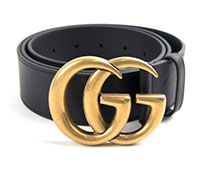 The fourth quarter of 2019 gave fashion brands with an opportunity to step up their game and they did this in style by focusing on sustainable and other high-end fabrics. The recently released quarterly report of global fashion search platform Lyst revealed luxury brands like Off-White, Gucci, Balenciaga, Moncler and Versace emerged among the hottest for the quarter with Fendi, Prada, Valentino, Saint Laurent and Burberry rounding out the top 10. Small accessories such as Gucci’s men’s wool jacquard scarf and women’s GG logo belt were among the most wanted products during the quarter. These products averaged over 165,000 online monthly searches between October and December with the belt being widely recognised as the hottest product of the decade.
Other products that made a mark this quarter were Bottega Veneta’s newly launched mini version of “The Pouch” leather clutch that grabbed the fifth place on the women’s hottest products list. Search for this popular bag brand increased 32 per cent during the quarter.
Making a powerful return, Yeezy’s 500 stone was ranked fifth on the men’s hottest products list. The brand also re-entered the 20 hottest brands list in Q4, climbing nine places to 16th position. Full price sales drove many of the quarter’s hottest brands within The Lyst Index as shoppers gravitated towards recognizable ‘core’ or non-seasonal products.
Brands announce new sustainability initiatives
The dearth of streetwear brands and products on the list indicated instability in the industry as brands shifted from streetwear-focused fashion to sustainability and enduring designs. These brands ended the year on a positive note by announcing new sustainability initiatives and brand-purpose activities.
While Prada signed a loan to lower its interest rates in exchange for meeting sustainability targets, Burberry announced a partnership deal with resale site The RealReal and Gucci launched the CEO Carbon Neutral Challenge. Pointing towards a wider shift in the industry, these initiatives offset the traditional ‘buy, buy, buy’ mentality of the quarter.
While Offwhite had predicted the death of streetwear in the coming decade, T-shirts, hoodies and sneakers remained some of the most coveted products on the Index with search volume for Off-White hoodies growing by 90 percent over the quarter.
Strong demand for luxury outerwear
Demand for the luxury outerwear brands remained strong throughout the quarter. Luxury puffer coats led the men’s wear category while Moncler’s Maya jacket was regarded as one of the hottest men’s product in Q4 with its searches increasing by 199 percent during the year.
Other brands that outshined competition with their sustainable products were: Arket’s down puffer coat. Made with 100 per cent recycled down feathers, the coat saw 695 per cent spike in page views for the brand in October.
The 126-year-old British heritage label Barbour entered the Lyst Index for the first time with its $141 Chelsea Sportsquilt jacket. Searches for the brand increased by 143 per cent during the year with the jacket ranked as the tenth hottest men’s product. Brand Canada Goose also made its biggest move by climbing up by 14 places to No 18 position during the quarter.
Survey Shows Coronavirus Impact on Chinese Textile Industry -Part I
A national online survey in Questionnaires was conducted by China National Textile and Apparel Council(CNTAC) from Feb.7-10, with a report circulated only to limited readership to show a comprehensive outlook and insight of the textile industry by specific sectors in different provinces on the basis of 1201 respondents, just a sample of the whole textile economic fabric if we can see wood and see forest.
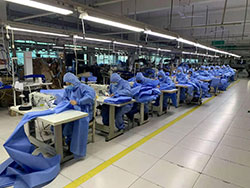 A novel coronavirus got running rampant across China since its outbreak in December at the end of 2019 and made its way to a global health crisis as the World Health Organization (WHO) declared it a Public Health Emergency of International Concern(PHEIC) on Jan.30, 2020, and China was hit the hardest due to the very special time when the whole country was overwhelmed with joys in Spring Festival in jubilant family reunion and friends and relatives gathering for China Lunar New Year that started on Jan.25, to the neglect of the possible contagion if we see, the traditional legacy sets hundreds of millions of people on homebound journey on trains, planes, ships and highway driving, making the epidemics prevention and control equally the hardest, then.
Chinese government has taken proactive efforts in all perspectives to curb the epidemic not only by reinforcing medical rescuers fighting on coronavirus-ridden frontline, but also by strictly carrying out various backing-up measures to impede the epidemic spread, including prolonging holidays for longer homestay, constraining outdoor activities with less transportation, delaying back-to-work time, which results in temporary slowdown of growth speed in national economy, and textile industry does not bear the brunt of the impact, but never walks away easy.
A national online survey in Questionaires was conducted by China National Textile and Apparel Council(CNTAC) from Feb.7-10, with a report circulated only to limited readership to show a comprehensive outlook and insight of the textile industry by specific sectors in different provinces on the basis of 1201 respondents, just a sample of the whole textile economic fabric if we can see wood and see forest.
In geographic view, the companies in Central China(except Hubei province, the most catastrophic area this time) have been reopened to production more than that in the eastern part of the country. Jiangsu is the largest textile province in eastern China, with its operation resumed at less than 6 percent of all its respondent companies received in the Questionaires while the companies in Henan, Jiangxi and Anhui provinces in the Central China have a better rate in reopened operation respectively by 26.1%, 18.2% and 12.9%.

Protuberant Problems
The outstanding problems at the moment are questioned and answered to the point that 69.1% of the respondents goes to short hands or employees having no way to come back to work, 68.2% goes to impediment to logistics or transportation, 54.3% goes to procrastination of production schedule or possibility of default on delivery, etc..
The following table shows these key problems that challenge the specific sector with 83.3% going to textile machinery and 80.3% to dyeing and printing sector in the labor shortage column, while manmade fiber and industrial textile sectors have more protuberant problems in impediments to transportation and logistics respectively by 89.4% and 78.2%. The wool textile businesses have different highlight of problems particularly in production schedule delay and contract default risk.


Impact on Export
When the lethal pneumonia infected with the novel coronavirus was wide-spreading and declared as PHEIC, the impact on export in the whole textile industry was a tangible reach and touch, making it hard or even impossible for Chinese textile business people to visit clients overseas as some countries have imposed unnecessary tour caveats for their own citizens and travel bans on Chinese visitors by over-reacted measures. New orders are yet to be seen in a worrying uncertainty, and even the containers already shipped to the clients are confronted with the delayed disembarkation or intensified quarantine check backed up by too many complicated red-tape procedures. Approximate 60 percent of the companies in the Questionaires responded to say that their export business is restricted by the country of export market as a consequence of the epidemic right now.

(to be continued)
Contributed by Mr. ZHAO Hong
He is working for CHINA TEXTILE magazine as Editor-in-Chief in addition to being involved in a plethora of activities for the textile industry. He has worked for the Engineering Institute of Ministry of Textile Industry, and for China National Textile Council and continues to serve the industry in the capacity of Deputy Director of China Textile International Exchange Centre, V. President of China Knitting Industry Association, V. President of China Textile Magazine and its Editor-in-Chief for the English Version, Deputy Director of News Centre of China National Textile and Apparel Council (CNTAC), Deputy Director of International Trade Office, CNTAC, Deputy Director of China Textile Economic Research Centre. He was also elected once ACT Chair of Private Sector Consulting Committee of International Textile and Clothing Bureau (ITCB)
India: Goodwear Fashions strides ahead with interlinings solutions
Goodwear Fashions is a brand which has pioneered the manufacturing of high-end, world-class woven and knitted interlinings in India. The interlining solutions boast of the finest quality and are manufactured using modern technology that has made the brand a trusted partner in India and overseas markets. Goodwear can offer interlinings with GRS certified yarns. Goodwear’s product lines offer interlining solutions including Fuseline, Kanzen and Lazer. Fuseline provides the perfect interlining for a wide variety of outer-shell suit fabrics. Kanzen renders a fine finish and fall to cuffs, collars and plackets of a modern shirt. Lazer promises impeccable fall and drape to the garment through excellent suit interlinings.
The brand takes pride in being able to create differentiation in a market where many established interlining brands already have a major presence. Goodwear gives Oeko-Tex certified, good high-performance products, with consistent quality at a reasonable price. Plus, it can supply small lots off the shelf anywhere in India. In the coming years, the company’s endeavor is to be able to provide the world garment industry with a complete range of top-quality interlinings – be it woven, nonwoven, or knitted – using the finest finishing and coating technologies.
Interlinings are fused to the outer shell of garments to give fall and drape to structured garments of high value.
Vietnam’s FTA with EU may hurt Bangladesh
The EU-Vietnam free trade agreement is set to come into force this year. The trade agreement would eliminate virtually all tariffs on goods traded between the two sides.
However the agreement might pose a challenge to Bangladesh’s struggling readymade garment export business. It would eliminate the existing disadvantage of Vietnam in the EU market. Bangladesh might lose its competitiveness in the EU market by 12 to 15 per cent as Vietnam would get the same percentage of duty benefit in the market. The EU is the largest export destination for Bangladesh and the country enjoys generalised scheme of preferences in the economic bloc. Bangladesh’s readymade garment exports have been struggling for the last few months due to a global slowdown in demand and fall in prices. Although, Bangladesh is the second largest readymade garment exporter in the world, the country’s global market share has been reducing for the last few months while Vietnam has been grabbing a bigger share. Bangladesh’s share in the global clothing market decreased by 0.1 percentage point to 6.4 per cent in 2018, which was 6.5 per cent in 2017. While Vietnam narrowed the gap by 0.3 percentage points to 6.2 per cent in 2018 from 5.9 per cent in 2017.
Madrid to host Sportswear Pro in March
Sportswear Pro will be held March 24 to 27, 2020 at the IFEMA, Feria de Madrid, Spain. The event is geared specifically toward business decision-makers in garment production looking to streamline manufacturing processes, reduce inventory and waste, and enable on-demand and just-in-time production in response to shortening fashion cycles. Many sportswear manufacturing innovations will be on display. Exhibitors will showcase their latest technologies in garment production, design and decoration. This covers all aspects of production from digital printing and cutting, to embroidery and heat sealing, along with software solutions for process automation and supply chain management. These diverse exhibitors promise valuable insights into new business opportunities and enhanced production processes. One of Sportswear Pro’s key goals is to show visitors where the crossover between print and sportswear is and how some of the trends affecting sportswear are the same ones that are impacting the wider print industry.
Visitors will be able to get an up-close look at the garment production chain from initial design to final product, while also being given the opportunity to print a personalised sportswear garment on site. Design is of the main areas of focus for Sportswear Pro, and a number of companies will present their design software solutions for garment manufacturing.
Mango plans sustainable operations
Mango plans to make garments a lot more sustainable in the next five years. The company is hoping to transform the way it produces clothes by increasing the use of recycled polyester in its garments by 50 per cent and only using 100 per cent organic cotton from controlled sources by 2025. The brand has already signed up for the Better Cotton Initiative to support cultivation of sustainable cotton worldwide, the brand is also hoping that by 2030, 100 per cent of its cellulose fibers will be from controlled sources.
Mango opened in 1984. Consumption of water, energy and chemicals has been reduced through the introduction of Jeanologia’s Ecowash technology and through the incorporation of the Better Cotton Initiative in garments, which encourages the use of sustainable cotton farming techniques, while additionally guaranteeing workers’ health and safety. Almost 38 per cent of Mango’s jeans collection has sustainable characteristics and this figure is expected to increase to over 50 per cent for the coming season. The Spanish fashion brand with digital transformation and data wants to deliver meaningful changes. Mango has a new logistics center in Spain. Approximately 600 people work six days a week at the highly automated facility, where around 400 operations are machine-driven, to process items for store deliveries.
Kitex Garments Q3 net profits up 196 per cent
The net profit of India’s biggest kidswear manufacturing exporter Kitex Garments rose by 196 percent during the third quarter of the current fiscal. Net profit increased to Rs 36.57 crore in the quarter ended December 2019 as against Rs 12.35 crore during the previous quarter ended December 2018.
Similarly, the company’s sale during the same period increased by 84.28 per cent to Rs 250.86 crore in the quarter ended December 2019 as against Rs 136.13 crore during the previous quarter ended December 2018.
So far, first 9 months of the current FY have proved good for the company; compared to the same period of previous FY, the company has noticed surge of 55 per cent in its net profit. During the same period, the total income grew by 41 per cent.
During the current quarter, in view of Ministry of Textile’s notification, the company has reversed total export incentives (MEIS) of Rs 10.31 crore for the period from March 7, 2019 to September 30, 2019 in the standalone financial results.
Further, the company has not accrued export incentives of Rs. 8.78 crore for the current quarter in the standalone financial results.
Diesel joins Fashion Pact
Diesel has signed up to Fashion Pact. Along with the Italian clothing label, some 60 other brands are a part of the pact some big names are: H&M, Prada, Tapestry, Ralph Lauren, Adidas and Nike. The pact aims at reducing the fashion and textile industry's negative impact on the planet. Its key areas of interest are stopping global warming, restoring biodiversity and protecting the oceans, and it has set out plans for members to achieve zero greenhouse gas emissions by the year 2050, as well as targets to restore biodiversity.
Diesel is implementing a responsible business strategy that is respectful of people and the environment. Diesel also commits to climate action, and to rising for environmental stewardship, by minimising greenhouse gas emissions, reducing its water footprint, and improving reuse and recycling rates across its operations. Diesel also commits to developing a sustainability culture within the company, honoring employees’ rights and their diversity, which allows it to thrive, treating all equally, nurturing employees to fulfill their potential, and promoting a safe work environment. The company commits to working toward the highest social and environmental standards throughout the supply chain, by enhancing the traceability of its products and promoting positive practices among its suppliers.
Demand for manmade fibers grows in Bangladesh
In recent years, local spinners have joined global club of artificial fiber users with larger volume, posting a sharp growth in imports of manmade or chemical fiber (MMF). The Bangladesh Textile Mills Association (BTMA) states, in last five years, import of MMFs such as polyester staple, viscose and Tencel has seen a 48 per cent rise to 156,784 tonne in 2019, which was 105,946 tonne in 2015.
Import of viscose has seen the highest rise among the MMFs. In 2019, Bangladesh imported 53,289 ton, up by 32.30 per cent, which was 40,278 tonne in the previous year. Import of tencel fiber saw a 17.67 per cent rise to 7,418 tonne in 2019, which was 6,304 tonne in the previous year. However, import of polyester staple fibre registered negative growth by 6 per cent to 96,077 tonne in 2019, compared to 102,219 tonne in the same period a year ago.
The number of textile mills using manmade fibre also increased. As per the data, some 70 mills imported viscose staple fibre, 15 mills tencel fibre and 55 mills polyester fibre last year.